

Audio By Carbonatix
The National Pensions Regulatory Authority (NPRA) has said it is looking into proposals to increase workers' contributions from their basic pay.
This is one of several proposals that the Authority is considering to help deal with some challenges facing the 1st Tier Pension Scheme.
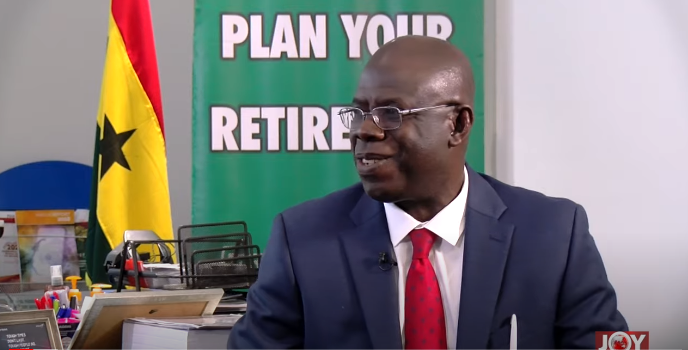
The Chief Executive of the NPRA, Hayford Atta Krufi disclosed this on PM Express Business Edition with host George Wiafe on October 1, 2020.
What has influenced this proposal?
The decision was based on a recent report which raised issues about the sustainability of the SSNIT pension scheme.
The report among other things proposed deductions from workers' basic pay should be reviewed.
This is expected to deal with concerns raised about the future of the scheme due to the fact current contributes that not march the amount of money that they are paying out to beneficiaries.
The Chief Executive noted that as regulators they have to look at engaging all the stakeholders on this issue before any conclusion can be reached.
They will also consider, reviewing the current retirement age of 60 years as one of the several proposals on the table to rectify in terms of challenges facing the Scheme.
The three-tier pension scheme
Following the pension reforms undertaken in 2010, workers contributions were categorised into three;
TIER 1: A mandatory basic national social security scheme
TIER 2: A mandatory occupational pension scheme that is fully funded and privately managed
TIER 3: A voluntary provident fund and personal pension scheme — also fully funded and privately managed
First Tier
This tier is a mandatory scheme that is managed by the Social Security and National Insurance Trust (SSNIT). The contribution amount due is 13.5% of the employee’s basic monthly salary.
The employer pays 13% and the employee pays 0.5%. This amount is paid to SSNIT. Note that the employee gets tax relief on the percentage he/she personally contributed — i.e. the 0.5%.
Second Tier
The second tier is also mandatory but unlike the first tier, it is managed by Private Pension Service Providers (PSPs). The contribution amount due is 5% of the employee’s basic monthly salary. This cost is borne by the employee.
The employee gets a tax relief for Tier 2 contributions, i.e. the contribution gets deducted from the employee’s basic salary before the salary gets taxed — effectively reducing the amount of tax the employee pays.
Third Tier
This is a voluntary provident fund and personal pension scheme. It is supported by tax benefits to provide additional funds for workers who want to make voluntary contributions to enhance their pension benefits.
Any contribution up to 16.5% of one’s basic monthly salary towards Tier 3 receives a tax break, i.e. income is taxed after Tier 3 contributions. However, any amount over 16.5% is still considered taxable income.
This is one of the many advantages that Tier 3 schemes have over traditional savings products like fixed deposits or mutual funds.
Sustaining the Pension Scheme
The NPRA Chief Executive also noted his outfit is also considering proposals including increasing the current retirement age from the current 60. This is part of several proposals being considered to deal with the current challenges facing the SSNIT pension scheme.
There have been concerns that pensions reforms have made pensioners retiring this year as worse off or “short-changed” compared to those who to their retirement before 2020.
But Mr. Atta Krufi noted some of these challenges were expected looking that the challenges that they went through before the reforms fully took off.
He noted that “the educations and sensitisation and whether it has brought real benefit to contributors or they have been short-changed?"
Status of Private Pension Scheme
The Chief Executive of the Private Pension Scheme explained that when the country was hit by the Covid-19, the outfit requested a contingency plan from all the administrators of the pension scheme which they were satisfied with.
This review that they carried out showed that, these companies are in a position to pay contributors benefits even in these COVID-19 times.
Mr. Atta Krufi added that there is no need to panic because all the pension funds are safe.
COVID-19 and Tier 3 Pension Scheme
There were fears that payment of contributor’s benefits will be affected as a result of how the novel coronavirus has an impact on a lot institutions in the country.
But speaking to JoyBusiness, the Authority noted that as far as they are concerned, all the audit and test conducted show that all the administrators are in a good position to pay benefits when its due this year.
He added that “when the pandemic hit what we first did was let all the administrators come up with a contingency plan and all the administrators were able to provide out with the required details.”
Latest Stories
-
King Mohammed VI reaffirms Morocco’s full support for Gulf States following attacks on their security
1 hour -
Esther Cobbah urges women founders to make trust and excellence their competitive edge
1 hour -
Adonis Adamado
2 hours -
‘Control lies with private capital’ – COPEC warns NPA’s fuel stock assurance not enough amid Iran attack
2 hours -
10 illegal miners feared dead, 30 critical after mine cave-in at Manso Tontokrom
2 hours -
GPL 2025/2026: All Blacks hold leaders Medeama at home
2 hours -
Ghana has over 5 weeks of fuel stock despite Middle East tensions – NPA
2 hours -
Middle East tensions may hit Ghana’s pumps soon – Duncan Amoah
3 hours -
WPL 2025/26: Hasaacas beat Army Ladies as Ampem Darkoa Ladies draw
3 hours -
Five facts about Baba Sadiq, Ghana’s High Commissioner Designate to Nigeria
3 hours -
Baba Sadiq Abdulai appointed as High Commissioner to Nigeria
4 hours -
Playback: The Probe examined Israel-Iran-US tensions and Ghana’s energy security
4 hours -
T-bills auction: Investor appetite remains at all-time high; interest rates tumble to 5.3%
4 hours -
Yes, we “eat Macroeconomics” because it is the foundation of every meal
4 hours -
Annoh-Dompreh launches Nsawam-Adoagyiri Eye Care Project 2026, screens 3,000 residents
4 hours