

Audio By Carbonatix
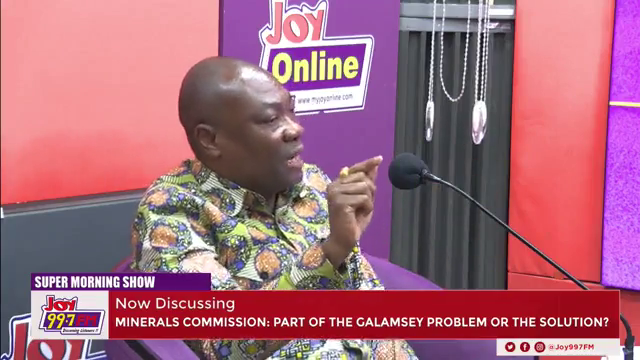
The Minerals Commission CEO, Martin Ayisi, says the fundamental factor encouraging illegal mining activities [galamsey] is the inability to secure places for miners to carry out legal mining activities.
According to him, large-scale miners are able to spend time securing lands for their mining activities.
This, he said, they do by applying for licenses and exploring the lands after which they spend between seven and 20 years to secure the necessary resources to begin mining.
Mr Ayisi explained that the same processes barely take place when it comes to small-scale mining.
The Minerals Commission CEO, says persons engaging in small-scale mining resort to a ‘try your luck’ approach in a land acquisition where they would initially dig any land they find before possibly applying for a license.
“One of the biggest drivers of galamsey or illegal mining is getting a place for the miners to work. That is a fundamental issue; getting a place for them to work. The large-scale people, this is what they do; they look for an area, apply, and spend time doing exploration. So anything between seven and even as high as 15 to 20 years, they find the resource, they apply for a license, and they start mining.
“In small-scale mining, there’s nothing like prospecting so it’s difficult to get the place for them. So what do they do - try your luck. So they just get up and dig anywhere. If they happen to hit, they call it a v then you see them congregating. If they are lucky and the place is free their approach has to be licensed for them,” he said on JoyNews’ Newsfile on Saturday.
The expert says the country has failed to invest in “Geological investigation” in order for the appropriate body to engage in geological surveys and exploration of lands.
He added that given that such a process costs millions of dollars and may consequently be demotivating to miners, every year the government should make some budgetary allocation to the institutions responsible.
Mr Ayisi has also disclosed that illegal mining activities currently exist in 12 to 13 regions of the country.
He has, however, lamented that some communities seem to have accepted the phenomenon especially as their chiefs are playing active roles in the menace.
The Minerals Commission CEO warned that if such people are not taken through the full rigour of the law, the canker will persist.
Latest Stories
-
Edmond Boateng takes up secretary role at Honorary Consular Corps of Ghana
2 hours -
Gambia appoints British barrister to prosecute gruesome Jammeh-era crimes
3 hours -
Girl group Flo on entering into their ‘bombastic, confident, strong’ era
3 hours -
Germany suspends military approval for long stays abroad for men under 45
3 hours -
Liverpool face uphill Champions League task after PSG thrashing in Paris
3 hours -
‘Ketamine Queen’ sentenced to 15 years in Matthew Perry overdose death
3 hours -
Nigeria begins mass trial of 500 terrorism suspects
4 hours -
Atletico Madrid stun 10-man Barcelona to seize Champions League semi-final advantage
4 hours -
Black Stars coach to be announced by next week – Sports Minister
4 hours -
Chiefs, queen mothers and principal elders of Odau group denounce ‘rebellious Etweresohene’, pledges allegiance to Okyenhene
4 hours -
KNUST library dress code sparks online backlash over strict rules
4 hours -
Cultural Diplomacy in Action: Ghanaian youth leaders present symbolic smock to U.S. Chargé d’Affaires
4 hours -
Ghana Card payment activation under review – NIA breaks silence on financial integration
5 hours -
Ofori-Atta’s ICE release on bail positive; he poses no risk – Amanda Clinton
5 hours -
Ken Ofori-Atta’s passport seized after bail, set to reappear in US Court on April 27
5 hours