

Audio By Carbonatix
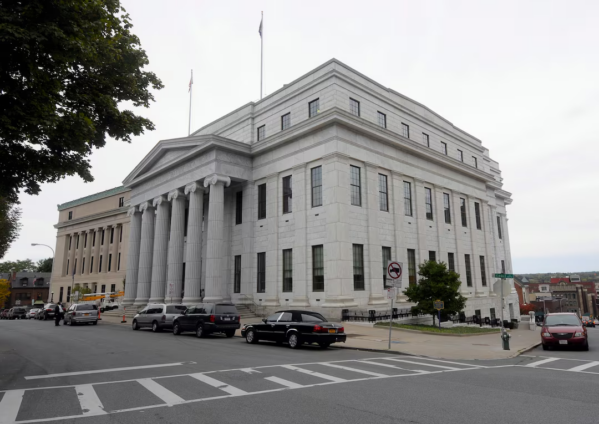
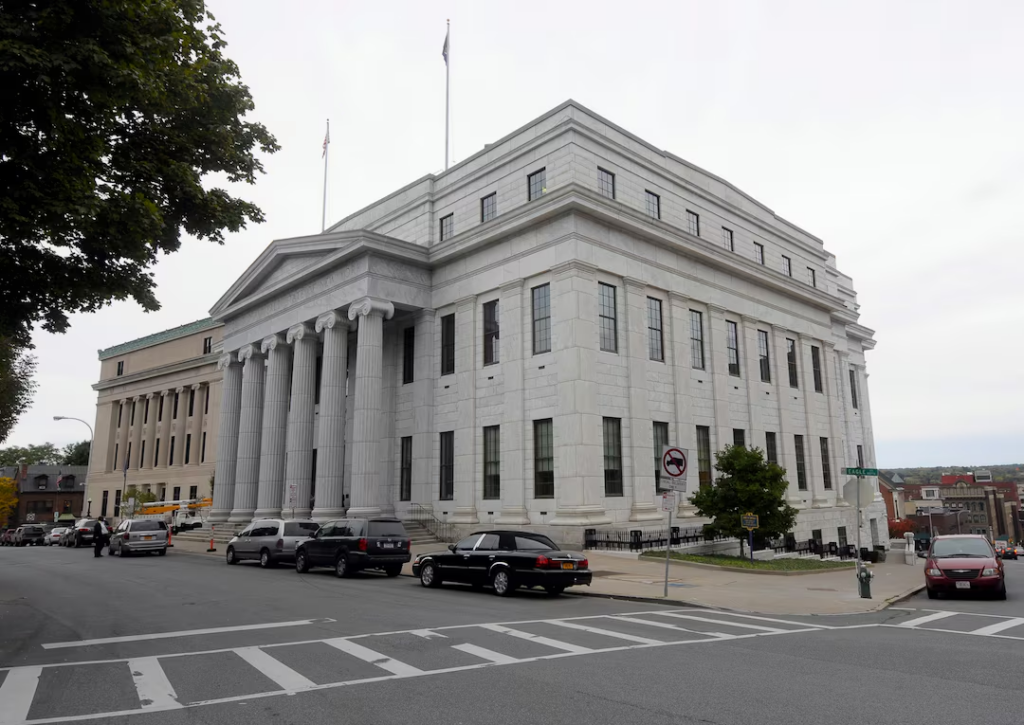
New York's highest court on Tuesday ruled that employers' health insurance plans have to cover medically necessary abortions, rejecting a lawsuit by the Roman Catholic Diocese of Albany claiming that the law's exemption for religious employers was too narrow.
The New York Court of Appeals found that the rule, passed in 2017 by the state's Department of Financial Services (DFS), did not violate religious employers' freedom because both the rule and its religious exemption were neutral and generally applicable to all employers.
The 2017 rule was made into law by the state legislature in 2022, though the law was not challenged in the lawsuit.
"We continue to believe that the regulatory action by the state, as well as subsequent legislative action, requiring religious organizations to provide and pay for coverage of abortion in its employee health plans is unconstitutional and unjust," Dennis Poust, executive director of the New York State Catholic Conference, said in a statement. He said the Diocese would appeal to the U.S. Supreme Court.
"DFS's actions have ensured that women in New York have control over their reproductive choices, and that insurers cover abortions and contraceptives with no copayments, deductibles or any out-of-pocket costs," DFS Superintendent Adrienne Harris said in a statement.
The religious exemption in the rule applies to non-profit entities whose primary purpose is the "inculcation of religious values" and that primarily employ and serve people who share its religious beliefs.
The Diocese alleged that this exemption was too narrow because it would not include religious organizations with a broader purpose than inculcating religious values, such as serving the poor, or that employed or served a large number of people who did not share their religion.
The Court of Appeals previously rejected the diocese's challenge in 2020, citing an earlier case upholding a contraception coverage requirement with a similar religious exemption.
In June 2021, the U.S. Supreme Court ruled that Philadelphia could not refuse to place foster children with a Catholic agency that turned away same-sex couples as would-be foster parents. It then ordered the New York court to reconsider the abortion coverage case in light of that ruling.
The court said in Tuesday's decision that the Supreme Court's ruling did not change the outcome because it was narrowly focused on the facts of that case, and did not overturn the longstanding precedent that neutral, generally applicable laws can sometimes restrict religious expression.
Republican-led states have banned or restricted abortion in the wake of the Supreme Court's 2022 ruling eliminating a nationwide right to abortion. Democratic states have moved to safeguard and expand abortion access.
Latest Stories
-
GFA urged to move for Welbeck, Nketiah amid injury concerns
54 seconds -
KGL to honour 2025 Corporate Income Tax obligations with GHC150m April payment
20 minutes -
KiDi, Kuami Eugene, Adina, others billed for Okyeame Kwame’s 50th birthday celebration
24 minutes -
Akwapim-Akropong Chieftaincy Clash: One dead after Police shoot-out
25 minutes -
Israel and Hezbollah continue strikes as US-Iran ceasefire faces collapse over Lebanon
27 minutes -
Asanko Gold supports road rehabilitation to ease transport challenges in Amansie West
28 minutes -
Drone strike hits wedding celebration in Sudan, killing at least 30 people
37 minutes -
UEW Public Lecture Series 2026: We’re preparing children for a past that no longer exists — Dr Ibn Chambas warns
43 minutes -
AMA to begin night enforcement against unscreened food vendors
44 minutes -
Nkawie Circuit Court remands 30-year-old mason over Mpasatia shop break-in
47 minutes -
Fintechs’ collaboration no longer optional – MMFL CFO
48 minutes -
KMA to prohibit other assemblies from accessing Oti landfill site over looming sanitation crisis
50 minutes -
GTA supported A Plus’ Gomoa Easter Carnival – Abeiku Aggrey
51 minutes -
GRA to tighten controls on importation of right-hand drive vehicles
1 hour -
You can’t leave a bigger legacy than Petroleum Hub project – Western Regional Chiefs tell President Mahama
1 hour