

Audio By Carbonatix
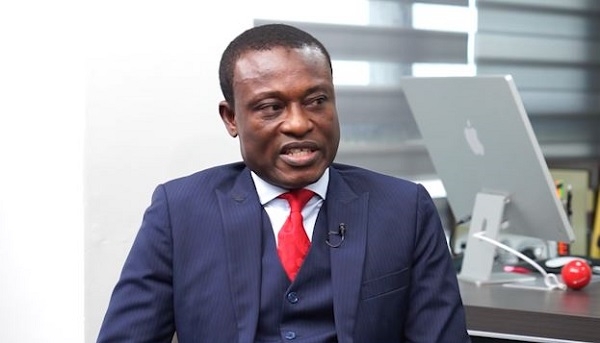
The Office of the Special Prosecutor (OSP) remains Ghana’s most credible and potent institutional response to corruption, says the head of the agency, Mr. Kissi Agyebeng.
Delivering a major anti-corruption policy address in Accra at the West Africa Regional Anti-Corruption Policy Dialogue, the Special Prosecutor explained that the OSP was established to rectify the limitations of earlier accountability bodies, particularly their lack of independence and weak enforcement mandates.
“The OSP is politically neutral, retains total control over its investigations and prosecutions, and has jurisdiction over both public and private actors,” he noted.
Addressing a distinguished audience at an anti-corruption symposium themed “Revitalising the Anti-Corruption Architecture in Africa: Ghana’s Accountability Journey,” Mr. Agyebeng described the Commission on Human Rights and Administrative Justice (CHRAJ) and the Economic and Organised Crime Office (EOCO) as well-intentioned but fundamentally constrained.
“CHRAJ could only investigate but not prosecute. EOCO’s reliance on the Attorney-General made it ineffective in pursuing politically exposed persons,” he explained.
The OSP, established in 2018 and operationalised in 2021, is a product of both domestic advocacy and Ghana’s obligations under international treaties such as the United Nations Convention Against Corruption and the African Union Convention on Preventing and Combating Corruption.
While calling for further constitutional and statutory strengthening of the Office, Mr. Agyebeng acknowledged the challenges it faces.
“No anti-corruption system is failsafe,” he said, adding, “But it must be reasonably robust to withstand sabotage, legal bottlenecks, and political interference.”
He said that institutional courage and constitutional clarity would be necessary for the OSP to live up to its promise as Ghana’s leading anti-corruption instrument.
Ghana’s long battle against corruption
Mr. Kissi Agyebeng also offered a historical reflection on Ghana’s struggle with corruption, situating it within the broader narrative of political change, citizen activism, and state reform.
He traced the roots of corruption-related agitation from the pre-colonial resistance to land grabbing in 1898 through to the anti-corruption justifications for military coups in the post-independence era.
“Each surge in corruption has been met with varied responses—from coup d’états to commissions of inquiry,” he noted.
He referenced the declarations made by military regimes from 1966 to 1981, each of which cited corruption as a primary reason for overthrowing a civilian government.
“General Ankrah accused the Nkrumah regime of monumental corruption; Rawlings declared that civilian administrations were milking the country dry.”
The Special Prosecutor also revisited landmark commissions such as the Cowgill Commission (1959) and the Anin Commission (1970), both of which uncovered systemic corruption in the public sector. “Yet we quickly forgot the findings and never implemented the recommendations,” he lamented.
Despite these setbacks, Mr. Agyebeng expressed cautious optimism. “Our anti-corruption drive has been pockmarked by ups, downs, and sometimes downright downs—but we keep humming a more melodious version of that old Negro spiritual—to signify hopefulness.”
Read Special Prosecutor Kissi Agyebeng's address in full below.
Latest Stories
-
Star Oil paid GH¢2.7bn in taxes, levies in nine months of 2026
13 minutes -
Samson’s Take: The rule of law is cheaper before the bulldozer
14 minutes -
GRA blames system failure for delay in issuing receipt over passenger’s customs duty
35 minutes -
Livestream: Newsfile discusses World Cup visa scandal, beach demolitions, education strikes, BRICS bid
39 minutes -
NC-PTAs welcomes end of teachers’ strike, urges parents to prepare children for Monday
49 minutes -
Government procures over 2,000 transformers as Ghana’s electricity access hits 89.13% – Energy Minister
1 hour -
UTAG-UG threatens strike on October 19 over unpaid allowance
1 hour -
Let The Constitution direct Chieftaincy to deliver “All Development Is Local”
3 hours -
John Jinapor outlines renewable energy, nuclear power priorities for 2027
3 hours -
Ghana explores centre of excellence for hearing, communication and cochlear implant care
4 hours -
Schizophrenia-related disorders lead mental health cases recorded in Ghana
4 hours -
Dutch authorities enlist Ghana in hunt for fugitive drug lord Bolle Jos
5 hours -
Ghana housing finance conference adopts communiqué to improve affordable housing access
9 hours -
Special Initiatives Minister urges Wa Technical Institute to enrol more girls as EU-backed solar training lab opens
10 hours -
In the matter of my first year at the Bar
10 hours