

Audio By Carbonatix
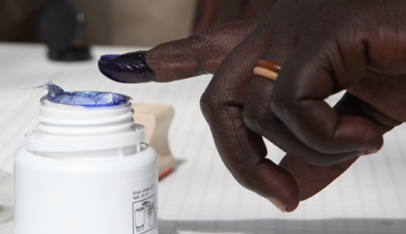
The Executive Secretary of the National Peace Council, George Amoh, believes the opposition of some Ghanaians to the Electoral Commission’s proposal to remove the use of the indelible ink from the 2024 general elections is due to the lack of trust in the institution.
According to him, earning the trust of the citizens will ensure that the EC receives their full support and cooperation.
“I don’t think that we have to have a problem with the institutions of the state when we are going into elections. No, why should that be the case if we all trust the system? The issue of thumbprinting and all those kinds of things will not be an issue.
“But it is because we have trust deficits, which I think we can use this opportunity to try to close the gap. So please let us do that,” he told the media at the inauguration of Denmark’s Support for Sustainable Development Goals (SDG) 13 and 16.
On December 18, 2023, the EC announced that in the 2024 elections and beyond, there would be no need for indelible ink.
Speaking at a press conference, EC chair, Jean Mensa, said this was part of measures by the Commission to improve the electoral process and ensure a robust identification system.
Subsequently, the Minority in Parliament asserted that the EC was acting in breach of the 1992 Constitution with its decision to abandon the use of indelible ink for public elections.
Meanwhile, the opposition NDC says the discontinuation of the use of indelible ink in Ghana's elections at this stage will open the floodgate for nefarious activities that will compromise the integrity of our election.
Reacting to the announcement at a press conference at the NDC headquarters, National Chairman, Mr Johnson Aseidu Nketia said "The NDC strongly opposes the removal of indelible ink because it is visibly, transparent and physically verifies voters in addition to biometric verification."
"Indelible ink marks and identifies voters in order to discourage and prevent them from engaging in multiple voting, particularly when there is apathy. Why do away with a multi-layered tried and tested verification system that adds additional credibility to Ghana's electoral process?" he questioned.
Mr. Johnson Aseidu Nketia explained that "in the event of a malfunction of the BVD, if a voter attempts to vote twice or more, the surest and quickest way to identify such a person is the stain of indelible ink on the person's finger."
Latest Stories
-
Gov’t to establish Prison Industrial Hub to equip inmates with income-generating skills – Prison Service boss
15 minutes -
Alhassan Tampuli donates cement, roofing sheets to support storm victims in Gushegu
16 minutes -
Alhassan Tampuli appeals for urgent support for storm victims in Gushegu
18 minutes -
The hypocrisy must stop; pass Anti-LGBTQ+ Bill now – Alhassan Tampuli to Mahama
22 minutes -
Imprisonment should be rehabilitative, not punitive – Ghana Prisons boss at UNGA
44 minutes -
Ga Adangbe traditional priests petition Mahama over McDan aviation licence revocation
55 minutes -
Anti-LGBTQ Bill: NDC’s arrogance is worrying – Hassan Tampuli
1 hour -
Let’s give OSP time to mature, not to scrap it – Hassan Tampuli
1 hour -
Nigeria convicts 386 Islamist militants in mass trials
1 hour -
Djibouti president wins election with 97.8% of vote, state media says
1 hour -
We don’t have mandate to deduct tax from rent allowance of security services personnel – Interior Ministry clarifies
2 hours -
Ablakwa receives Presidential Special Envoy on Reparations to advance global agenda
2 hours -
Christina Koch becomes first woman to travel around the moon on Artemis II
2 hours -
Epstein survivors’ calls to meet King Charles and Queen harder to ignore as US visit approaches
2 hours -
UN Secretary-General names Ghana’s Anita Kiki Gbeho as South Sudan envoy
2 hours