

Audio By Carbonatix
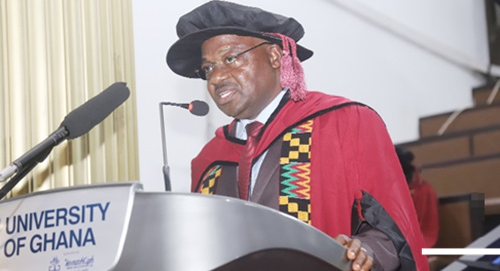
A Professor of Physiotherapy at the University of Ghana has called on policymakers to treat disorders affecting the structure that provides stability and movement to the human body as a public health imperative because of its impact on members of the society.
Technically known as musculoskeletal disorders, including that of the bones, muscles, joints, tendons, ligaments and cartilage that work together to provide structure, stability and movement to the human body, Prof. Ajediran Idowu Bello said such disorders should not be treated just as clinical issues.
Delivering the lecture on the theme “Beyond Movement: Addressing Musculoskeletal Disorders as a Public Health Imperative,” at the University of Ghana, last Thursday, he revealed that more than 70 per cent of Ghanaian adults suffered from low back pain, while 13.8 per cent of those aged 50 years and above were affected by knee osteoarthritis.
Those conditions, he said, accounted for 20 per cent of the country’s musculoskeletal disease burden.
He noted that while those conditions were often seen as routine or age-related, they actually arose from complex interplays between injury, chronic disease and socioeconomic conditions which were further exacerbated by the country’s reliance on out-of-pocket healthcare payments.
Prof. Bello emphasised that musculoskeletal conditions — including chronic pain, joint deformities and movement limitations — were not only widespread but also carried significant economic and social costs, especially in low- and middle-income countries like Ghana.
He revealed that in one of his studies on patients with chronic low back pain referred for physiotherapy in the Greater Accra Region, most participants earned between GH¢1,100 and GH¢1,500 monthly, yet their treatment-related expenses averaged GH¢1,408, an amount that exceeded the income of the majority.
“This creates a cycle of disability and financial strain,” he said.
The Professor of Physiotherapy called for the immediate implementation of a national screening programme to detect musculoskeletal disorders early in children and youth across the country.
He said such a move, along with sector-specific ergonomics training, increased access to physiotherapy services in rural areas, and intensified public awareness campaigns, was critical to reducing the growing burden of musculoskeletal conditions in Ghana.
“Preventing musculoskeletal disorders is not just about movement, it is about restoring dignity, reducing poverty, and protecting human potential,” Prof. Bello, who is also a former Head, Department of Physiotherapy, stated.
Vulnerable sectors
Prof. Bello highlighted that health workers, especially nurses, faced high levels of work-related musculoskeletal disorders due to the physical demands of their jobs.
A survey he conducted among 151 nurses and health workers in a secondary facility in Accra revealed a 69.4 per cent prevalence rate, with low back pain accounting for 72 per cent of cases.
In the education sector, his research showed that 66 per cent of primary and junior high school pupils in Accra exhibited at least two musculoskeletal deformities, such as bent elbows or toes — conditions that, if unaddressed, could progress into more serious disabilities in adulthood.
Among pregnant women, he said knowledge of birth defects and the role of physiotherapy remained limited.
He revealed that out of 443 antenatal clinic attendees surveyed in the Greater Accra Region, less than half had adequate knowledge about birth defect risk factors and only 47 per cent were aware that physiotherapy could be used in managing such conditions.
Prof. Bello, therefore, called for better education during antenatal sessions and advocated the inclusion of physiotherapy services in maternity care to address both prenatal and postnatal musculoskeletal challenges.
According to a multi-country study conducted at teaching hospitals in Ghana and Nigeria, Prof. Bello revealed that more than half of all fracture cases treated through physiotherapy were due to road traffic accidents, with most victims falling within the 20–39 age group.
Latest Stories
-
Knights and Ladies of Marshall group backs Catholic Bishops’ stance on anti-LGBTQ+
13 minutes -
Bright Simons writes: All the Filla in the Ibrahim Mahama/E&P – Gold Fields Saga
37 minutes -
Monetise Idiocy In Ghana
44 minutes -
The Ghanaian prophet and the mysterious death of his scottish wife Charmain Speirs
1 hour -
Nearly 400 sentenced in Nigeria for links to militant Islamists
2 hours -
Ghana’s recovery supported by gold strength despite global oil price pressures – Standard Bank Research
2 hours -
‘Excellence is our inheritance’ – Nana Sam Brew-Butler hails Mfantsipim’s 150-year reign in leadership
2 hours -
Kwaku Azar writes: A-G vs OSP
3 hours -
Mfantsipim–Adisadel rivalry built excellence, not division – Sam Jonah
3 hours -
Vice President launches Mfantsipim’s 150 years of shaping Ghana’s greatest mind
3 hours -
I assure Otumfuo, Mahama will join him to commission KNUST Teaching Hospital by end of this year – Haruna Iddrisu
4 hours -
Barcelona dominate derby to extend La Liga lead
4 hours -
Gov’t to roll out free special education for persons with disabilities from July 1 – Education Minister
4 hours -
Importers and Exporters Association declares full support for Publican AI port system
5 hours -
“We used it to test our officiating officials’ readiness” – Bawah Fuseini after CAA Athletics event
5 hours