

Audio By Carbonatix
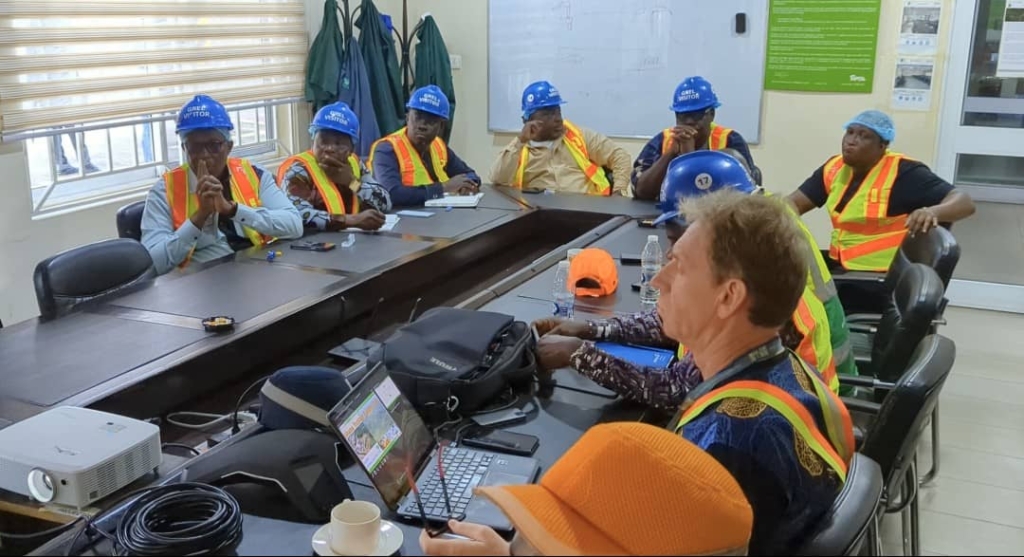
A Parliamentary Select Committee on Trade , Industry and Tourism visiting the Western Region has been confronted with troubling revelations at the Ghana Rubber Estates Limited (GREL), where management warns the company may be forced to shut down one of its two major processing factories due to acute raw material shortages.
Each factory is built to process 10 tonnes of rubber per hour, but production has dropped dramatically a crisis officials blame partly on the mass export of raw rubber by private side-buyers, and the increasing destruction of farmlands by illegal mining activities.
Management says these challenges have already forced painful decisions: Saturday operations were halted in 2024, and a three-shift system has been reduced to two shifts this year. If raw material supply does not improve, one factory could close completely by 2026 a move that would put hundreds of jobs at risk.
The company is currently operating far below its potential, with a widening gap between staff strength and capacity requirements as production levels continue to fall.
Raw Material Crisis Deepens
Secretary of the Association of Natural Rubber Actors Ghana (ANRAG), Perry Acheampong, says the trend is collapsing the industry.
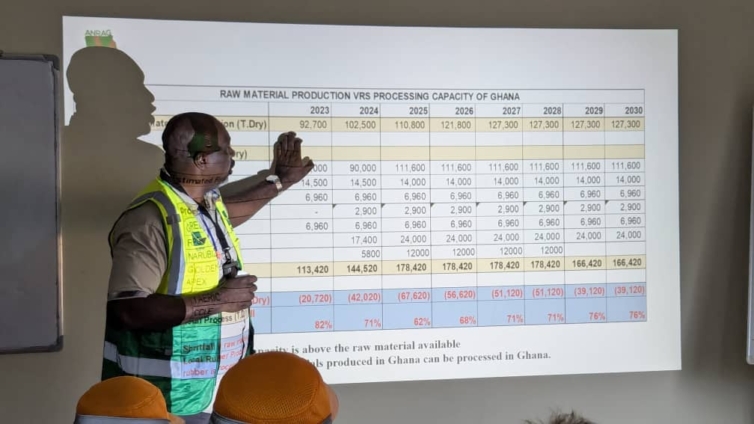
Data from the industry shows Ghana produces roughly 110,000 tonnes of dry rubber annually, while installed processing capacity stands at 178,000 tonnes. GREL alone has processed just 54,297 tonnes as of September 2025. This leaves a huge deficit, driven largely by the export of raw material a practice industry players say is starving factories of the input they need to operate.
“Factories were able to utilise only 28% of their capacity between January and September 2025 simply because more than 45% of raw material produced was exported. When we export the raw rubber, we are exporting jobs, losing foreign exchange and government revenue,” he told the Parliamentary Committee.
“The workforce in processing factories alone has reduced by almost 25% this year. People are losing their jobs and many are being pushed towards illegal mining to survive.”
Committee Vows Intervention
The Chairman of the Parliamentary Committee on Trade, Industry and Tourism and MP for Central Tongu, Alexander Gabby Hottordze, described the situation as alarming and said Parliament is ready to support government’s decision to restrict the export of raw rubber in line with the 2026 Budget Statement.
“This situation has a very negative impact on Ghana as a whole. It has led to job losses, and because people must survive, some are turning to illegal mining something we do not want to hear of,” he said.
“We will work closely with the Ministries of Finance, Agriculture and Trade and Industry to ensure that something is done immediately to protect this sector and the President’s drive for job creation and value addition.”
A Factory on the Brink
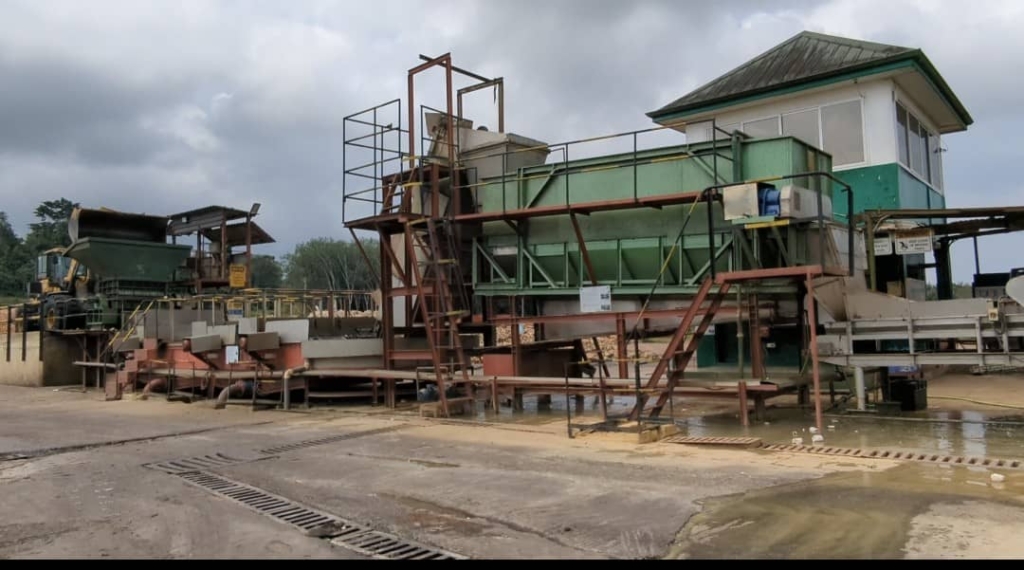
During the visit, GREL management led the Committee through two of its processing plants, now operating far below capacity.
Standing on the factory floor, officials explained how dwindling farm output worsened by illegal mining encroachment is leaving machines idle for long stretches.
What was once a thriving production hub running three shifts daily now sits partially dormant.
“If the situation does not improve, this factory could shut down by 2026,” management warned.
Economic and Social Threats
The Parliamentary Committee says its fact-finding mission across the Western Region has revealed a chain reaction of serious risks. Members warn that if nothing is done about the mass export of raw rubber, local processing companies may collapse, leading to a sharp reduction in employment opportunities for communities that depend on the rubber value chain.
The committee further notes that the country could lose significant foreign exchange earnings, while government tax revenue is expected to decline as production slows. These economic pressures, they say, may push more unemployed youth into illegal mining activities, worsening the already troubling environmental damage in rubber-producing areas.
The committee insists Ghana cannot allow raw rubber to leave the country unprocessed while factories, workers and communities suffer.
The team is expected to present recommendations to Parliament in the coming weeks to support emergency policy actions aimed at protecting the rubber value chain and restoring economic stability to communities dependent on the industry.
Latest Stories
-
We can tackle multiple priorities – Sam George defends Anti-LGBTQ Bill push
5 minutes -
Statement: Ghana Chamber of Mines’ Response to Claims in Joe Jackson’s “Ananse Stories about the Economy of Ghana”
7 minutes -
GES opens 2026 teacher recruitment for licensed B.Ed graduates
9 minutes -
Ghana must value skilled trades, build resilient learners — Ibn Chambas
17 minutes -
Ghana must rethink education around relevance, resilience and responsibility — Ibn Chambas
20 minutes -
Prince Harry faces defamation lawsuit from charity he co-founded
22 minutes -
South Korea deploys thermal cameras to track escaped zoo wolf
24 minutes -
Calls for royal meeting with Epstein survivors grow ahead of US visit
27 minutes -
Ibn Chambas advocates blend of technology and human values in education
28 minutes -
UMA improves healthcare access in Asutifi North with GH₵700k ‘Kim Taylor Legacy’ Walkway
33 minutes -
Scholarships Authority and Fanaka University offer sponsorship for procurement and supply chain studies
36 minutes -
Bisa Kdei drops new single ‘Go N Look’ featuring Medikal
43 minutes -
Benin facing rising terrorism in north as French military presence faces growing criticism
44 minutes -
UEW Public Lecture Series 2026: Education debate ‘about the soul of Ghana’s future’ — Dr Ibn Chambas
45 minutes -
EU fingerprint and photo travel rules come into force from today
1 hour