

Audio By Carbonatix
The recruitment of nurses by high-income countries from poorer nations is "out of control", according to the head of one of the world's biggest nursing groups.
The comments come as the BBC finds evidence of how Ghana's health system is struggling due to the "brain-drain".
Many specialist nurses have left the West African country for better-paid jobs overseas.
In 2022 more than 1,200 Ghanaian nurses joined the UK's nursing register.
This comes as the National Health Service (NHS) increasingly relies on staff from non-EU countries to fill vacancies.
Although the UK says active recruitment in Ghana is not allowed, social media means nurses can easily see the vacancies available in NHS trusts.
They can then apply for those jobs directly. Ghana's dire economic situation acts as a big push factor.
Howard Catton from the International Council of Nurses (ICN) is concerned about the scale of the numbers leaving countries like Ghana.
"My sense is that the situation currently is out of control," he told the BBC.
"We have intense recruitment taking place mainly driven by six or seven high-income countries but with recruitment from countries which are some of the weakest and most vulnerable which can ill-afford to lose their nurses."
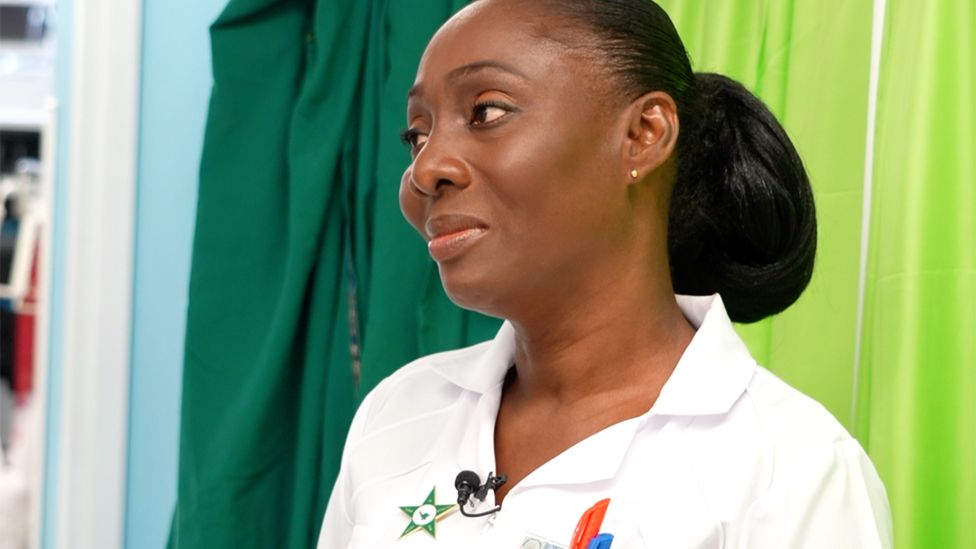
The head of nursing at Greater Accra Regional Hospital, Gifty Aryee, told the BBC her Intensive Care Unit alone had lost 20 nurses to the UK and US in the last six months - with grave implications.
"Care is affected as we are not able to take any more patients. There are delays and it costs more in mortality - patients die," she said.
She added that seriously ill patients often had to be held for longer in the emergency department due to the nursing shortages.
One nurse in the hospital estimated that half of those she had graduated with had left the country - and she wanted to join them.
'All our experienced nurses gone'
The BBC found a similar situation at Cape Coast Municipal Hospital.
The hospital's deputy head of nursing services, Caroline Agbodza, said she had seen 22 nurses leave for the UK in the last year.
"All our critical care nurses, our experienced nurses, have gone. So we end up having nothing - no experienced staff to work with. Even if the government recruits, we have to go through the pain of training nurses again."
Smaller clinics are also affected by staff migration because even one nurse leaving a small health centre can have a large knock-on effect.
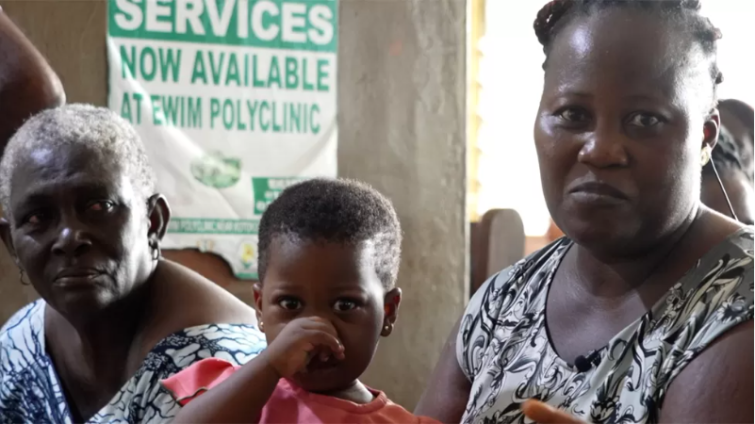
At Ewim Health Clinic in Cape Coast, one nurse has left their small emergency department and another has left the outpatients unit. Both nurses were experienced and had found jobs in the UK.
The chief doctor there, Dr Justice Arthur, said the effects were enormous.
"Let's take services like immunisation of children. If we lose public health nurses, then the babies that have to be immunised will not get their immunisation and we are going to have babies die," he told the BBC.
He said adult patients would also die if there were not enough nurses to look after them after surgery.
Most of the nurses that the BBC team spoke to wanted to leave Ghana due to the fact they could earn more elsewhere.
At Kwaso healthcare centre near the city of Kumasi, Mercy Asare Afriyie explained that she was hoping to find a job in the UK soon.
"The exodus of nurses is not going to stop because of our poor conditions of service. Our salary is nothing to write home about and in two weeks you spend it. It's from hand to mouth."
Ghanaian nurses told the BBC that in the UK they could more than seven times what they are receiving in Ghana.
Perpetual Ofori-Ampofo from Ghana's Nurses and Midwives Association said her country's healthcare system needed more help.
"If you look at the numbers, then it is not ethical for the UK to recruit from Ghana because the numbers of professional nurses compared to trainee or auxiliary nurses is a problem for us," she said.
But she added that it was not possible to stop nurses from leaving as migration was a right and that the Ghanaian government needed to do more to persuade them to stay. The health ministry in the capital, Accra, declined to comment.
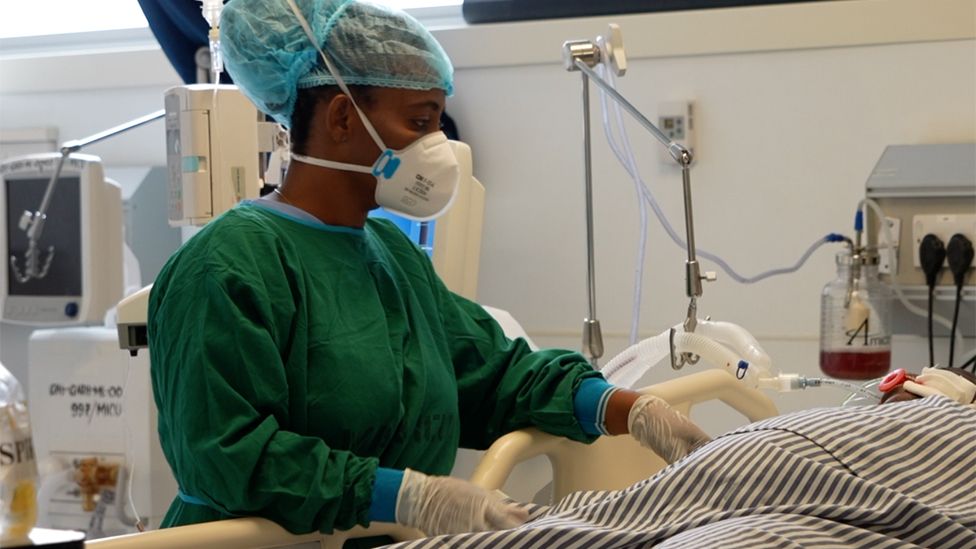
Ghana is on the World Health Organization's list of 55 vulnerable countries, which have low numbers of nurses per head of population. The list - dubbed by some as the "red list" - is designed to discourage systematic recruitment in these countries.
The UK government recently gave £15m ($18.6m) to Ghana, Nigeria and Kenya to help boost their healthcare workforces.
But the country is known to be looking at brokering a formal deal with Ghana whereby it might be able to recruit more proactively in return for giving the government there a sum of money per nurse.
It already has a similar agreement with Nepal.
But the ICN's Mr Catton questioned whether it was enough.
He told the BBC that he believed such deals were "trying to create a veneer of ethical respectability rather than a proper reflection of the true costs to the countries which are losing their nurses".
The WHO's Director of Health Workforce, Jim Campbell, explained to the BBC that Brexit had been a factor in the UK turning to African countries for nurses to fill NHS vacancies.
"The labour market is extremely competitive around the world and, having closed off the potential labour market from European freedom of movement, what we're seeing is the consequences of that in terms of attracting people from the Commonwealth and other jurisdictions."
Latest Stories
-
The Problem with Nutrition Advice on Social Media – Lessons from a study among University Students
5 minutes -
Arteta calls for perspective as Arsenal look to avoid slump
14 minutes -
Kasoa Old Market traders given final eviction notice ahead of redevelopment
17 minutes -
GH¢15 sachet water price is a ceiling, not fixed – Producers clarify
21 minutes -
Morocco reports 7% rise in first-quarter tourist arrivals
24 minutes -
Calm returns to Adjen Kotoku Market following onion traders’ clash
24 minutes -
One dead, six in critical condition in Gomoa Fetteh accident
26 minutes -
GNFS responds to multi-vehicle crash at Ayi Mensah, urges caution
30 minutes -
Kaneshie footbridge closure raises safety concerns as pedestrians demand urgent repairs
33 minutes -
Clock ticks on Trump’s Iran ultimatum with little sign of breakthrough
35 minutes -
Be value creators for national development – KGL boss challenges private sector
41 minutes -
Bishop Asuamah urges hope, peace amid global and local conflicts
45 minutes -
Morocco stopped fewer illegal migration attempts in 2025 as route shifts
45 minutes -
Ahmed Ibrahim climaxes Easter with call for national sacrifice, fervent prayers
46 minutes -
NMC commits to reviving Media Advisory Committees
48 minutes