

Audio By Carbonatix
The world is more connected than ever. Goods, money, information and people move across borders every day. Yet countries are increasingly finding it difficult to agree on how to address some of the biggest challenges facing them.
Wars and geopolitical rivalries continue to reshape relations between states. Competition over energy, technology, trade and strategic resources is intensifying pressure.
Climate change, migration and food insecurity are also problems that cannot be contained within a single country’s borders.
This creates a difficult reality: many of today’s problems are global, yet the decisions needed to address them are still largely made at the national level.
Peace is therefore about more than stopping wars. It also depends on whether countries can maintain dialogue, manage disagreements and identify areas where cooperation remains possible.
Recent international agreements illustrate both the potential and the challenges of this approach.
In 2024, UN member states adopted the Pact for the Future, aiming to strengthen international cooperation and better equip global institutions to address emerging challenges.
The Paris Agreement provides another example. Countries agreed on a common framework for addressing climate change, but turning that agreement into meaningful action requires governments to continue working together despite differing national interests.
That is where the true test of multilateralism begins.
International agreements can set goals, but implementation depends on political will, trust and the capacity to compromise. Developing countries have also questioned whether existing global institutions give sufficient weight to their interests and to changing economic realities.
Technology is adding another layer to the challenge. Artificial intelligence, cyber capabilities and digital platforms are reshaping how societies communicate and how conflicts can develop. They can create opportunities for cooperation, but they can also spread disinformation and deepen divisions.
Future peacebuilding will therefore require more than traditional diplomacy. Governments will need to work alongside scientists, journalists, technology companies, international organisations and civil society.
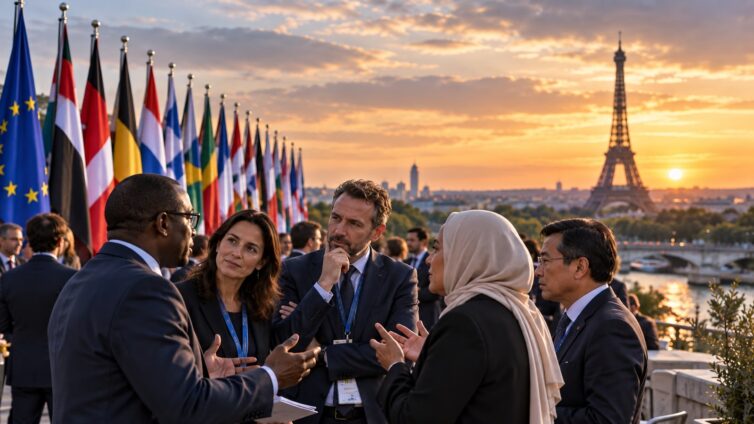
The Paris Peace Forum provides a space for these conversations.
The central challenge is not to eliminate disagreement. That is unrealistic. It is to build sufficient trust and dialogue to ensure that disagreement does not become a permanent confrontation.
In a fragmented world, peace may depend not on universal agreement, but on countries learning to disagree without losing the ability to work together.
Latest Stories
-
Photos: Mahama commissions 85-bed Police Hospital ward, donates two ambulances
8 minutes -
GTEC directs Ghana’s public universities to reopen by October 16 and begin lectures on October 19
9 minutes -
Star Oil donates GH¢1million towards construction of new CID facility
13 minutes -
Court hands Adjetey Sowah, two others lifetime bans after Amputee Football legal dispute
22 minutes -
NDC appoints Julius Kwame Anthony as a Deputy Communications Director
23 minutes -
Ghana repatriates 120 Nigerians rescued from suspected cybercrime centres
27 minutes -
NPP rejects Emelia Agbenyo’s appointment as Deputy EC Chair, demands withdrawal
32 minutes -
EOCO grants Suame MP John Darko enquiry bail in GH¢27m SIC investigation
35 minutes -
NPP cannot question EC appointment after appointing own people to Commission – Kwakye Ofosu
41 minutes -
BoG deepens public trust with regional stakeholder forum in Techiman
51 minutes -
‘We have turned the tide’ – Ato Forson says Ghana is ready to take off
55 minutes -
Police arrest man captured in viral video assaulting wife in Agona Nkwanta
57 minutes -
KATH Mother and Baby Unit construction stalled for 14 months over unpaid contractor arrears
1 hour -
Government wanted to ‘tilt the balance’ with new EC appointments – Kwakye Ofosu
1 hour -
Angry Tema Community 25 residents threaten to sleep at GWL over water shortage
2 hours