

Audio By Carbonatix
A pediatrician teared up on JoyFM's Super Morning Show narrating how bad it feels to watch mothers lose their children after childbirth.
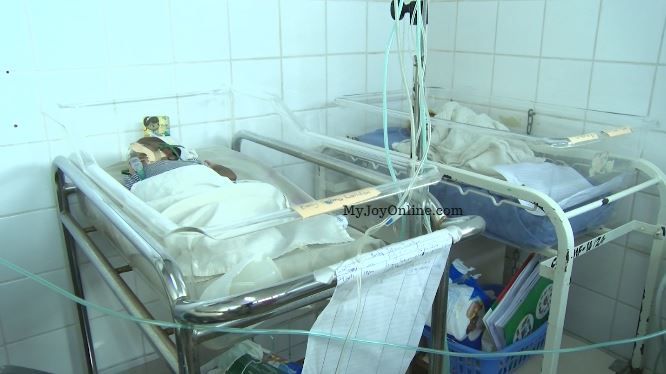
Charlene Sakibu Kilba was contributing to discussion on the Show in respect of challenges being faced by the Neonatal Intensive Care Unit (NICU) of the Cape Coast Teaching Hospital. The discussion was triggered by the outcome of a study by Joy News’ Seth Kwame Boateng, which revealed that one in every three children born at the (NICU) die.
According to her, such scenes are very devastating. "Unfortunately, people think that because we see babies die every day, we're used to it but there's no getting used to seeing a mother roll on the floor because her baby died," an emotional Charlene Sakibu Kilba shared.
Women who conceive for nine months and sometimes more, are hopeful of going to the labour ward and returning with a child. But, not all mothers return with their children alive.
Most devastating is when a mother hears the cry of her child and sees life in it yet, due to lack of a physical need, has to lose the child. This has been the fate of some mothers whose babies end up at the NICU of the Cape Coast Teaching Hospital (CCTH).
Contrary to beliefs that only mothers who suffer this fate go through pain, Dr Kilba says doctors and healthworkers who care for such persons are equally traumatised.
"It is emotionally draining as well as physically draining to have to deal with these issues day in and day out," she said.
Seth Kwame Boateng's report revealed that the situation at the Cape Coast Teaching Hospital is a result of limited space and lack of critical equipment.
In view of this, Dr Kilba called on various stakeholders to tackle the problem holistically. She called for provisions in terms of tools, facilities, and equipment to be provided to hospitals.
"The problem needs to be tackled from not just Teaching Hospitals and our regional hospitals but right down to our district hospitals and maybe the sub-district levels. If we strengthen our district hospitals, the referrals to the regional hospitals will be less," she said.
She added that government must consider building more infrastructure, in terms of hospitals to create enough space to accommodate the patients as part of measures to deal with the situation.
Latest Stories
-
A source of excellence across generations – Vice President Opoku-Agyemang lauds Mfantsipim
1 hour -
(Photos) Mfantsipim School launches historic 150th anniversary
2 hours -
Knights and Ladies of Marshall group backs Catholic Bishops’ stance on anti-LGBTQ+
3 hours -
Bright Simons writes: All the Filla in the Ibrahim Mahama/E&P – Gold Fields Saga
3 hours -
Monetise Idiocy In Ghana
3 hours -
ECG kicks off Phase Two of transformer upgrades at Lashibi; brief outages expected
4 hours -
The Ghanaian prophet and the mysterious death of his scottish wife Charmain Speirs
4 hours -
Nearly 400 sentenced in Nigeria for links to militant Islamists
4 hours -
Ghana’s recovery supported by gold strength despite global oil price pressures – Standard Bank Research
4 hours -
Methodist Church hails Mfantsipim@150; calls for “fresh consecration” to excellence
5 hours -
‘Excellence is our inheritance’ – Nana Sam Brew-Butler hails Mfantsipim’s 150-year reign in leadership
5 hours -
Kwaku Azar writes: A-G vs OSP
5 hours -
Mfantsipim–Adisadel rivalry built excellence, not division – Sam Jonah
5 hours -
Vice President launches Mfantsipim’s 150 years of shaping Ghana’s greatest mind
6 hours -
I assure Otumfuo, Mahama will join him to commission KNUST Teaching Hospital by end of this year – Haruna Iddrisu
6 hours