

Audio By Carbonatix
A field study on mental health treatment at traditional and faith-based healing centres in Ghana shows that about 30 per cent of persons with mental illness who patronise these services are exposed to potentially harmful treatments.
It revealed that traditional healers denied their patients food and water, flogged them, deprived them of sleep, and restrained them with chains and ropes as a part of the healing process.
The study was conducted by Basic Needs Ghana, a Non-Governmental Organisation, Mental Health Society of Ghana, and the Danish Institute against Torture with funding from the Danish Government.
According to the study, traditional and faith- based healers reported that such harmful practices were helpful to the recovery process of persons with mental illness.
It said fasting was used to clear toxins and evil spirits while the use of chains and ropes had a calming effect on the patients.
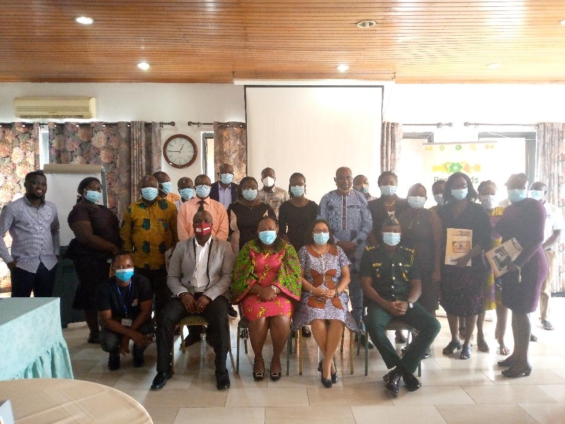
Mr Hannan Legend, a Project Coordinator at Basic Needs Ghana, who disseminated the findings at a meeting in Accra, said there was an urgent need to increase knowledge on trauma and its consequences in local communities and community health workers.
That, he said, was necessary as the role of faith-based organisations and traditional healers were necessary to deliver effective mental health care in Ghana.
He called for collaboration between traditional healers and health centres to ensure the delivery of effective healthcare services to persons living with mental illness.
“There are more traditional and faith-based healers than mental health practitioners. This is because belief systems appear to play a key role in the healing process as mental illness is believed to have a spiritual cause. So we need collaboration,” he said.
In Ghana, traditional and faith based healers provide consultations to persons with mental illness. They also provide residential facilities for patients commonly known as prayer camps or healing centres.
The programme coordinator said although the Ghana Mental Health Law, Act 846, 2012, and other legal frameworks banned flogging, shackling and chaining on mentally ill persons, the practice was still ongoing at some healing centres across the country.
Mr Legend appealed to the Government to allocate more resources to the Mental Health Authority to promote the inclusion of marginalised persons with the disorder.
Mental illnesses, also called mental health disorders, refer to a wide range of mental health conditions that affect a person’s mood, thinking and behaviour.
Examples of mental illness include depression, anxiety disorders, schizophrenia, eating disorders and addictive behaviours.
Many people have mental health concerns from time to time, but a mental health concern becomes a mental illness when ongoing signs and symptoms cause frequent stress and affect one’s ability to function.
The World Health Organisation estimates that 13 per cent of Ghana’s population suffers from some form of mental health problems, with two per cent likely to have severe mental illness.
Latest Stories
-
Damang lease award to E&P followed due process — Minerals Commission
11 minutes -
Today’s Front pages: Wednesday, April 8, 2026
13 minutes -
Julian Opuni reaffirms Fidelity Bank support for industry-led skills training at DTI Berekuso campus
19 minutes -
CAF President arrives in Dakar to meet Senegalese President, football authorities over AFCON title saga
20 minutes -
Pastor arrested over viral threats against Vice-President
23 minutes -
2026 Success Africa Summit: MTN’s Adwoa Wiafe challenges youth to act with purpose, not just pursue titles
26 minutes -
Nurse laureate launches Cancer Care Africa Foundation to tackle late diagnosis, workforce gaps
2 hours -
Ghana to lose GH¢18.15bn in revenue by 2027 from abolishing Covid levy, E-levy – CPS study
2 hours -
Reintroduce scrapped taxes to close revenue gap – Tax expert
2 hours -
GRA applauds CPS study, urges continuous policy scrutiny
2 hours -
Wear blue or green hat to survive – IBAG president says insurance industry ‘captured by politics’
2 hours -
AGI commends government’s move to resolve the power crisis in Volta and Oti Regions
3 hours -
Broker sector worse hit by state interference – IBAG president reveals
3 hours -
IBAG president alleges political interference driving kickbacks in insurance sector
3 hours -
Trump agrees to two-week ceasefire, Iran says safe passage through Hormuz possible
4 hours