

Audio By Carbonatix
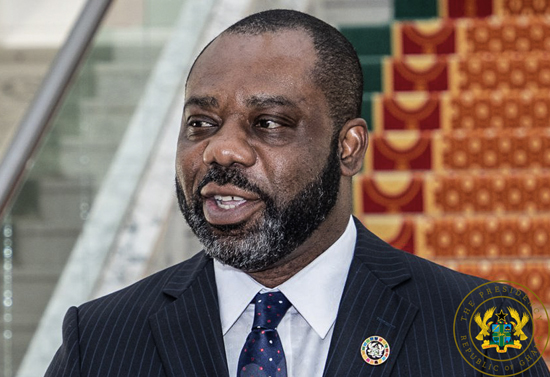
Minister for Education, Dr. Matthew Opoku Prempeh has said that under the leadership of President Akufo-Addo, Ghana has placed second after China in a survey of countries that respect and do more for teachers.
The survey was conducted by the Global Teacher Status Index (GTSI) in 2018 but the report was released on Monday by Varkey Foundation.
Ghana ranks 2nd out of 35 countries when it comes to people's implicit, unconscious and automatic views on the status of teachers, according to the report, with only China ranking higher.
Speaking at the Nation Building Updates on the theme: "The Teacher at the Centre of Quality Education", Matthew Opoku stated that it is under the NPP that the Ministry of Education can boast of fewer teacher strikes because according to him, the Ghana Union of teachers appreciates what is being done for them.
“A world ranking study that came out shows that Ghana was ranked second in the teachers survey conducted by the Global Teacher Status Index,
"In a survey of 35 countries with 35,000 participants, they found out that for countries that respected teachers, and did more for teachers it improved their economy, and Ghana was rated second after China," he said.
The GTSI 2018, found that countries which have higher teacher status are more likely to see higher pupil attainment.
In this new report, authors Professor Peter Dolton of the University of Sussex and Doctor Robert De Vries of the University of Kent, reassess the GTSI data in relation to the new 2018 PISA scores released last year and confirm the link between teacher status and pupil attainment remains.
Crucially, they find a remarkably strong positive correlation between Implicit Teacher Status and the 2018 PISA results.
PISA scores are significantly higher in countries where people implicitly view teachers more positively.
Implicit Teacher Status ranks countries by respondents' unconsidered and automatic impressions of teachers asking those polled to indicate as quickly as possible whether, for example, they think teachers are trusted or untrusted, inspiring or uninspiring, caring or uncaring, intelligent or unintelligent, among other word associations.
The new report also seeks to explain for the first time why Implicit Teacher Status varies between countries.
It finds that teachers generally enjoy higher status in richer countries, and in countries which allow a greater fraction of public funds to education.
Ghana's expenditure on education as a percent of government spending is 22%.
In Italy, which ranks 24th for Implicit Teacher Status, by comparison, it is only 8.1%.
It also finds that teachers are generally lower in status in countries where a greater proportion of the teaching workforce is female. This suggests a level of possible gender stereotyping or that societal sexism may damage teacher status in countries where the profession is represented more by women.
The gender composition of the workforce is part of a complex web of societal factors that determine how people implicitly view teachers in their country.
In Ghana, 25.2% of secondary school teachers are female, compared with 82.1% in Russia the highest of any country polled which ranked 23rd for Implicit Teacher Status.
Sunny Varkey, Founder of the Varkey Foundation and the Global Teacher Prize, said:
"This report proves that respecting teachers isn't only an important moral duty it's essential for a country's educational outcomes.
"Since the coronavirus pandemic first emerged, we have seen 1.5 billion learners across the world impacted by school and university closures. In these unprecedented times, now more than ever it is necessary to do all we can to ensure young people throughout the world have access to a good teacher.
"We created the Global Teacher Prize, which shines a light on the extraordinary work that teachers do around the world, to inspire people to talk about the great work of teachers.
"We have seen teachers go above and beyond to keep young people learning all over the world amid the Covid pandemic. Teachers everywhere should be applauded for their creativity, compassion and resolve to fulfill every child's right to a good education."
Dr. Matthew Opoku Prempeh noted that Ghana achieved this feat by strictly following the Cabinet-approved Comprehensive Teacher Policy based on the UNESCO benchmarks as part of the Education Strategic Plan 2018-2030.
The Strategies include teachers recruitment and retention, teacher education, teacher deployment, career pathways, teacher employment and conditions of service, teacher reward and remuneration, teacher standards, teacher accountability and school governance.
Latest Stories
-
Inter Miami name stand after Argentina great Messi
12 minutes -
Value for Money Office should be part of PPA – Baffour Awuah
13 minutes -
Kofi Bentil blames leadership failures, not law, for procurement problems in Ghana
15 minutes -
Academic City’s Tech Expo showcases innovative technologies to tackle galamsey
19 minutes -
Gov’t actions contradict its own accountability pledges – Manhyia South MP
20 minutes -
CFY Partners Managing partner Felix Tamattey, honoured at 11th Corporate Ghana Hall of Fame Awards
26 minutes -
Academic City president Prof. McBagonluri named among Africa’s top education leaders
26 minutes -
Complete Agenda 111 projects and put them to use – Akufo-Addo tells Mahama
30 minutes -
Roads Ministry contracts were fully sole-sourced before we took over, we’re reforming it – Suhuyini
30 minutes -
Kobina Ata-Bedu: Value for Money Office Bill will be useless, create confusion
36 minutes -
‘A scandal is inevitable in 4-years, but don’t manufacture them’ — Suhuyini urges restraint
37 minutes -
UK and Ghana open new chapter to boost trade and unlock growth
40 minutes -
‘We published what the Roads Ministry gave us’ — Sulemana Braimah defends Big Push report
40 minutes -
Leicester lost £71.1m in Premier League relegation season
40 minutes -
Procurement specialist slams sole-sourcing in Big Push contracts, calls for reform
42 minutes