

Audio By Carbonatix
This Saturday on Newsfile, Ghana’s democratic architecture faces pressure from within and without: an election rerun that critics say undermines legal process; a constitutional watchdog office in the crosshairs of repeal efforts; and voices on all sides asking whether we are strengthening governance or weakening it.
We begin in the Kpandai Constituency, where the Electoral Commission has now formally announced December 30, 2025, as the date for a parliamentary rerun following a High Court ruling that annulled the 2024 result. Only the three original candidates will contest, as the EC confirms.
But the decision to set a date while legal challenges remain unresolved has ignited controversy. Former Vice-President and NPP presidential hopeful Dr. Mahamudu Bawumia has urged a halt to the rerun, warning that acting before all court processes conclude risks undermining Ghana’s democratic institutions.
Meanwhile, the Deputy Minority Leader has urged Parliament to withdraw its notice to the EC on the seat vacancy, calling the action “premature, illegal and cynical,” a direct assault on the separation of powers. Public-interest groups are also sounding the alarm, contending that repeated reruns erode confidence and impose avoidable costs on the public purse.
Against this backdrop of electoral tension, attention shifts to Parliament’s move on the Office of the Special Prosecutor (OSP). A Private Member’s Bill seeking to repeal the OSP and transfer all corruption prosecutorial authority back to the Attorney-General has sparked widespread debate.
The sponsors argue that the change would align prosecutorial authority with constitutional Article 88 and reduce institutional overlap.
President John Dramani Mahama has publicly pushed back, urging the Majority Leader and Chief Whip to withdraw the repeal bill, calling the calls for abolition “premature” and underscoring the importance of a strong, independent anti-corruption institution.
Supporters of the President’s stance, including civil-society groups like CDD-Ghana, say the OSP is a critical pillar in the fight against corruption.
But critics in Parliament, including the First Deputy Minority Whip, counter that the President has no authority to instruct how Parliament conducts its business, and that the bill’s sponsors acted within their rights. Transparency International Ghana has also weighed in, rejecting calls to scrap the OSP as “unnecessary and premature” and urging a focus on strengthening, not dismantling, the office.
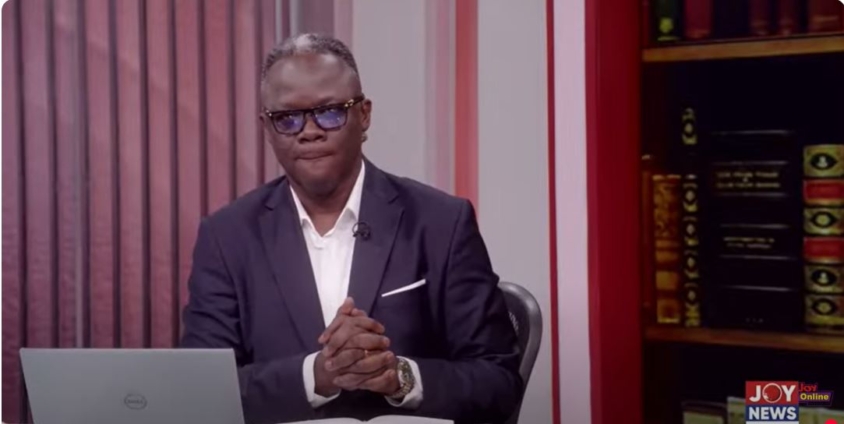
This Saturday on Newsfile, join Samson Lardy Anyenini at 9 a.m. on JoyNews, Joy 99.7 FM, and MyJoyOnline we unpack not just what is happening, but why it matters: What does the Kpandai rerun mean for the rule of law? Is rushing the process a threat to democratic norms, or a necessary compliance with court orders? What would abolishing the Office of the Special Prosecutor mean for Ghana’s anti-corruption architecture, and who stands to gain or lose?
Latest Stories
-
‘At the age of 12, I was teaching people and collecting money from them’ – Forty Under 40 Awards
37 minutes -
I broke my virginity at the age of 26 after university – Richard Abbey Jnr.
2 hours -
Sacked for fees, saved by faith: The untold story of Forty Under 40 Awards founder Richard Abbey Jnr
2 hours -
GCB Bank surges GH¢0.45, ETI gains GH¢0.06 as GSE ends week higher
3 hours -
Two teens jailed 55 years for robbery
3 hours -
UDS demands apology for MPhil student wrongly branded as Tamale robber
4 hours -
“We don’t sell fish!” – Tema Shipyard CEO hits back over dead fish discovery
4 hours -
Sam George defends anti-LGBTQ+ Bill as ‘national priority’ amid debate over gov’t focus
5 hours -
Artemis II astronauts safely back on Earth after trip around moon
5 hours -
Sam George unveils massive 1,150-cell site rollout to end network woes
6 hours -
This Saturday on Prime Insight: Fuel levy suspension, LGBTQ+ legislation, and Damang Mine controversy
6 hours -
Struggling Real suffer title blow with Girona draw
7 hours -
Mahama nominates Pamela Graham as Auditor-General
7 hours -
The five big sticking points in US-Iran talks
8 hours -
Melania Trump’s speech propels Epstein crisis back to forefront
8 hours