

Audio By Carbonatix
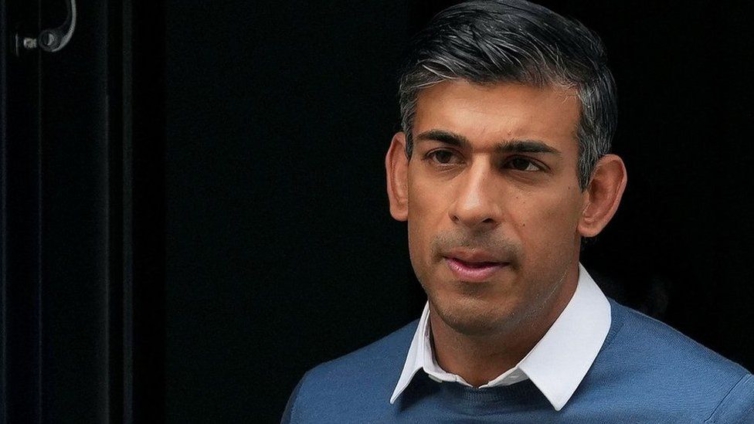
Prime Minister Rishi Sunak says he is truly sorry for the failures over the infected blood scandal, calling it a decades-long moral failure.
He was responding to the public inquiry's report into the scandal, which has seen 30,000 people infected from contaminated blood treatments.
It found authorities covered up the scandal and exposed victims to unacceptable risks.
Mr Sunak described it as a "day of shame for the British state".
The Infected Blood Inquiry accused doctors, government and the NHS of letting patients catch HIV and hepatitis.
About 3,000 have since died and more deaths will follow.
The inquiry said victims had been failed "not once but repeatedly" by doctors, the NHS, government and others responsible for their safety.
Mr Sunak told the House of Commons he was "truly sorry" for the failures.
"Today's report shows a decades-long moral failure at the heart of our national life. I want to make a wholehearted and unequivocal apology."
He said the attitude of denial was hard to comprehend and was to "our eternal shame".
And he promised to pay "whatever it costs" in compensation payments to victims, with details to follow on Tuesday.
Labour leader Sir Keir Starmer apologised too, describing it as one of the "gravest injustices" the country had seen and saying victims had "suffered unspeakably".
What the inquiry found
The infected blood scandal is known as the biggest treatment disaster in the NHS.
The inquiry looked at over 50 years of decision-making before, during and after the infection of thousands of people from contaminated blood transfusions and blood products from the 1970s onwards.
The five-year inquiry found safety had not been paramount in decision-making, pointing out the risk of transmitting viral infections in blood and blood products had been known since the NHS's foundation, in 1948.
Despite this, people had been exposed to "unacceptable risks", including:
- the continued importing of blood products from abroad - including blood from high-risk donors in the US, where prisoners and drug addicts had been paid to give blood - despite a pledge to become self-sufficient
- the failure of the licensing regime to recognise that such products had been unsafe and should not have been licensed for use
- the continued sourcing of blood donations from high-risk populations in the UK too, such as prisoners, until 1986
- taking until the end of 1985 to heat-treat blood products, to eliminate HIV (Human Immunodeficiency Virus), despite the risks having been known since 1982
- the government ignoring warnings, in 1983, from one of the UK's top infectious-disease experts, Dr Spence Galbraith, that all imported US blood products should be withdrawn from NHS use until the HIV risk had been "clarified"
- a lack of testing, from the 1970s onwards, to reduce the risk of hepatitis, including being one of the last developed nations to start screening for hepatitis C when an accurate test had eventually been found
- a four-year delay, following the introduction of the hepatitis C screening, before attempts had been made to trace those infected previously - the disease can remain dormant for decades and it is estimated hundreds of people remain undiagnosed
Sir Brian Langstaff, who chaired the inquiry, said the scale of the scandal was "horrifying" and the authorities had been too slow to respond to the risks.
How the scandal was covered up
Addressing the issue of a cover-up, he said better wording was "hiding the truth".
There had been a lack of openness, inquiry, accountability and elements of "downright deception", including destroying documents.
But hiding the truth included not only deliberate concealment but telling half-truths or not telling people what they had had a right to know, he said - including the risks of treatment they had received, what alternatives had been available and, at times, even the fact they had been infected.
Sir Brian said the scandal had destroyed "lives, dreams, friendships, families and finances", adding the numbers dying were still climbing week by week.
"This disaster was not an accident," he said.
"The infections happened because those in authority - doctors, the blood services and successive governments - did not put patient safety first."
About 380 children with bleeding disorders had caught HIV after being given blood products for their condition, the report said.
Many had died in childhood or young adulthood, having endured a level of pain and fear no child or young person should ever have to face.
And some had been treated without them or their parents giving informed consent, which the report called unconscionable.
The 'institutional defensiveness' made scandal worst
Sir Brian also criticised the delays to calling a public inquiry.
Then-Prime Minister Theresa May announced it in 2017, under political pressure.
That it had taken so long had hampered his investigation, Sir Brian said, as key people had since died or become too frail to give evidence.
And an "institutional defensiveness" by the NHS, the government, particularly the civil service, and doctors had compounded the harms done.
In particular, Sir Brian singled out Cardiff Haemophilia Centre director Prof Arthur Bloom, considered one the UK's leading haematologists in the 1970s and 80s, who died in 1992.
Prof Bloom's views, according to the report, "overly influenced" the way the government viewed the emergence of Aids (acquired immune deficiency syndrome) and played down the threat to people with bleeding disorders.

Who has been affected?
Two main groups were caught up in the scandal.
One was people with haemophilia or similar rare genetic disorders preventing their blood properly clotting.
In the 1970s, factor VIII and IX was developed, from donated human blood plasma, to replace the missing clotting agents.
Latest Stories
-
Abuakwa MP supports constituents on Easter day
42 seconds -
CAF U-17 AFCON: Ghana handed tricky opponents in Group D
3 minutes -
Manhyia South MP decries unchecked commercialisation of residential areas, warns of extinction
4 minutes -
U-17 AFCON 2026: Ghana drawn in tough group as Black Starlets eye World Cup return
5 minutes -
NRSA recommends strict enforcement of laws banning right-hand drive imports
12 minutes -
‘Don’t belittle our intelligence’ – Methodist Bishop criticises Kwakye Ofosu over LGBTQ comment
13 minutes -
Ghana’s crude oil output declines for 6th consecutive year – PIAC
16 minutes -
$434m in oil revenue allocated to Big Push Programme — PIAC
17 minutes -
Ghana’s oil production hits 694 million barrels since 2010 – PIAC report
25 minutes -
Ghana records 7.5% economic growth in January 2026, services sector leads expansion
29 minutes -
One-cedi levy essential to keep power sector afloat- Ben Boakye
30 minutes -
Nii Noi marks Easter with donation of medical equipment to Taifa Polyclinic
31 minutes -
Police arrest man over viral video that sparked public fear
32 minutes -
Tamale water crisis a “major headache”, but government will fix it — Haruna Iddrisu
35 minutes -
Finance Ministry directed SOEs to do business with SIC but order was verbal, says SIC Life MD
36 minutes