

Audio By Carbonatix
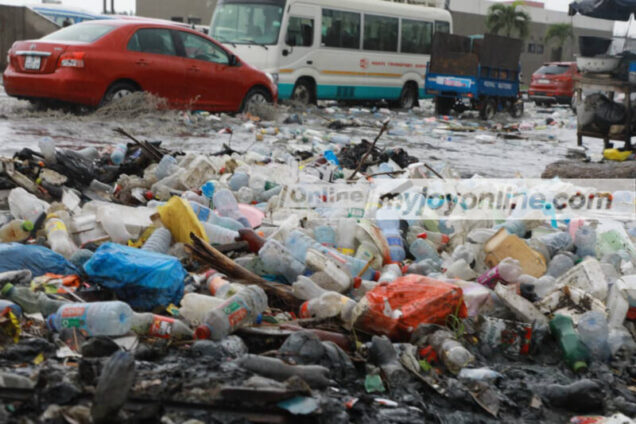
Ghana is losing more than GH¢6.2 billion every year to poor waste management and sanitation, with preventable diseases costing the country billions in healthcare expenditure, lost productivity and thousands of avoidable deaths, a new study by the Institute of Statistical, Social and Economic Research (ISSER) at the University of Ghana has revealed.
According to the policy brief titled Waste or Wealth? The Economic Returns to Sanitation Investment in Ghana, annual health and productivity losses linked to inadequate sanitation amount to over GH¢6.2 billion, while Metropolitan, Municipal and District Assemblies (MMDAs) collectively spend only GH¢180.2 million on waste management and sanitation.
The report concludes that Ghana spends about 30 times more dealing with the consequences of poor sanitation than it invests in preventing them.
ISSER identifies preventable sanitation-related diseases, including malaria, cholera and typhoid, as the major drivers of the country's economic losses.
The report estimates that these diseases result in 31.9 million lost work and school days every year and contribute to approximately 107,222 premature deaths annually.
Researchers estimate that direct medical treatment alone costs Ghana GH¢5.58 billion each year, while an additional GH¢650 million is lost through absenteeism and reduced productivity caused by illness.
The study warns that rapid urbanisation, population growth and changing consumption patterns are overwhelming the waste management capacity of many local authorities, with serious consequences for public health, environmental sustainability and economic development.
It notes that poor sanitation has become a major development challenge, with pollution and disease placing increasing pressure on households, businesses and public institutions.
According to the report, previous estimates by the World Bank indicate that poor sanitation alone costs Ghana about US$290 million, equivalent to roughly 1.6 per cent of GDP, each year through premature deaths, healthcare costs and lost productivity.
The researchers argue that waste management should no longer be regarded merely as a social or environmental obligation but rather as a strategic investment capable of delivering substantial economic returns.
"This study establishes that insufficient waste and sanitation management in Ghana is not merely a social and environmental concern, but also a significant economic burden," the report states.
ISSER says the current level of spending is inadequate to address the country's sanitation challenges and warns that continuing with existing investment levels will undermine Ghana's development objectives.
Instead, the institute argues that increased investment in sanitation infrastructure, waste collection and environmental health services would significantly reduce disease, improve productivity and enhance economic growth.
The report concludes that strategic investment in sanitation would not only improve public health but also strengthen human capital, create jobs, stimulate innovation in the circular economy and improve the quality of life for Ghanaians.
Read the full report below;
Waste or Wealth? The Economic Returns to Sanitation
Investment in Ghana
Latest Stories
-
Inspire Them Foundation appeals for support for flood-affected communities in Ada West
8 minutes -
Mahama promises pension reforms as economy recovers, pledges better welfare for retirees
10 minutes -
Vice President urges youth to embrace discipline, integrity at Republic Day cadet parade
13 minutes -
Profiting from desperation: How loan apps in Ghana weaponise big tech ads
16 minutes -
France and Belgium confirm over 3,000 excess deaths amid record European heatwave
26 minutes -
Ghana and South Africa in diplomatic standoff over alleged killing of migrant
36 minutes -
German row over plan for workers to need sick note on first day of illness
53 minutes -
Accountability or submergence: Why Ghana’s flooding crisis demands radical behavioural and legal shifts
1 hour -
Photos: Vice President Jane Naana Opoku-Agyemang at 66th Republic Day Cadet Parade
1 hour -
Young Indonesian couple publicly caned after kissing on TikTok
1 hour -
Outdoor air pollution cost Ghana GH¢28bn and claimed nearly 13,000 lives in 2024 – UNDP report
1 hour -
Ghana’s new ambassador to Egypt pledges stronger trade and investment ties
2 hours -
Gov’t to build regional hospitals in six new regions – Health Minister
2 hours -
GAF urges public to cooperate with security agencies as nationwide flood clean-up begins
2 hours -
As floods bash Accra, poor sanitation costs Ghana more than GH¢6.2bn annually – ISSER study
2 hours