

Audio By Carbonatix
The Executive Director of the Peasant Farmers Association of Ghana (PFAG), Bismark Owusu Nortey, has attributed Ghana’s recurring tomato shortages and seasonal gluts to deep structural weaknesses within the country’s agricultural system.
Speaking in an interview on Joy FM’s Midday News on Monday, 23 February, Mr Nortey described the situation as multifaceted, stressing that Ghana’s inability to produce tomatoes consistently throughout the year is not due to farmers’ lack of effort, but to systemic constraints.
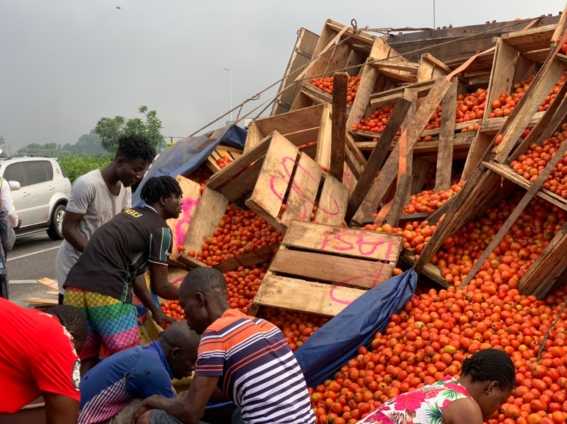
According to him, Ghana depends heavily on a short production window during the rainy season, when farmers cultivate large volumes of tomatoes. However, this period is often characterised by glut because of inadequate storage facilities.
“As a country, we rely on a short period where we go into a lot of production. During that period, we experience glut because we do not have adequate storage facilities,” he explained.
He noted that the situation reverses sharply during the long dry season, when farming activities reduce significantly due to limited irrigation infrastructure. During this lean period, traders are compelled to import tomatoes from neighbouring countries, particularly Burkina Faso, to meet domestic demand.
Mr Nortey further identified the high cost and limited availability of improved seed varieties as another major barrier to increased production. He said many smallholder farmers cannot afford quality seeds, affecting yields and consistency.
Storage challenges, he added, continue to fuel the cycle of waste and scarcity. During bumper harvests, the lack of cold storage facilities leads to substantial post-harvest losses. Yet in the lean season, there are no reserves to stabilise supply and prices.
“We do not have adequate systems where we can store tomatoes in cold stores and push them out during the lean season,” he stated.
He emphasised that without strategic investment in storage, irrigation and affordable inputs, Ghana will continue to oscillate between excess and scarcity, undermining food security and farmer incomes.
Latest Stories
-
Ghanaian women divided over natural and permed hair choices
17 minutes -
Supreme Court to launch month-long 150th anniversary events
18 minutes -
Ghana steps up fight against banana, plantain diseases
21 minutes -
Women farmers need tailored pensions – Zanetor
25 minutes -
MP, MCE provide street bulbs and solar panels to lighten Evaloe Adjomoro-Gwira constituency
26 minutes -
ECG upgrades infrastructure, assures reliable, stable power supply
27 minutes -
Aggrieved cocoa farmers urge Parliament intervention
33 minutes -
Ghana launches first maternal mental health policy
36 minutes -
Mahama issues three calls to action at One Health Summit
41 minutes -
KNUST secures $2.3m funding for research activities
45 minutes -
Ayigboe residents fear disaster as ECG delays repairs on live faulty cables
50 minutes -
PIAC urges investment as oil production falls
53 minutes -
World Bank projects 4.8% growth for Ghana, 9% inflation by end-2026
1 hour -
Heath Goldfields seals $2.8bn Trafigura deal to revive Bogoso-Prestea
1 hour -
Trump says US military to stay around Iran; threatens action if Tehran fails to comply with deal
2 hours