

Audio By Carbonatix
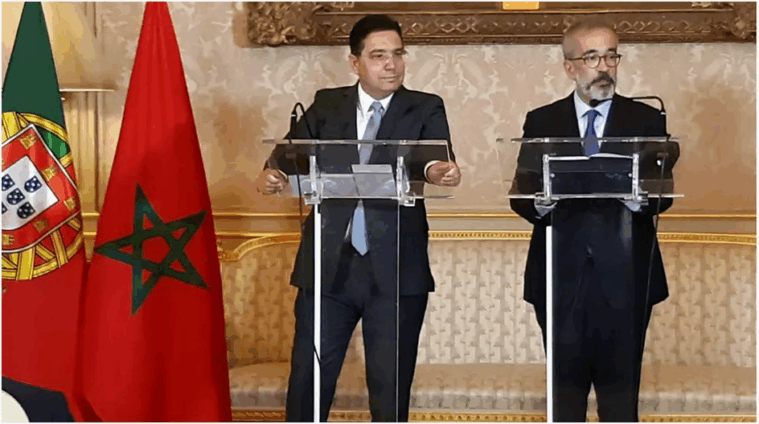
Portugal joined other Western countries in expressing a positive view of Morocco's autonomy proposal for the disputed Western Sahara region, after Portuguese Foreign Minister Paulo Rangel said on Tuesday the plan had a "serious and credible basis".
The dispute, dating back to 1975, pits Morocco, which claims sovereignty over Western Sahara, against the Algeria-backed Polisario Front, which seeks an independent state there.
Rangel showed support for the autonomy proposal, first presented by Moroccan King Mohammed VI to the United Nations in 2007, following a meeting in Lisbon with Moroccan Foreign Minister Nasser Bourita.
The plan would establish a local legislative, executive, and judicial authority for Western Sahara elected by its residents, while Rabat would retain control over defence, foreign affairs, and religion.
"Following movements made by France, Spain, Britain and others, Portugal considers that this ... will be the most serious basis for a solution, but always under the auspices of the U.N.," Rangel later told reporters, falling short of recognising Morocco's sovereignty over the territory.
Jose Tomaz Castello Branco, a professor of political science at Lisbon's Catholic University, said Portugal's position was "quite diplomatic, reasonable, and opens the door to a future formal recognition of Morocco's sovereignty".
"However, the Portuguese government is reserving room to maneuver to decide in the future, not committing completely yet," he said, adding that Lisbon's position should always be "carefully considered because Morocco is also Portugal's neighbor".
During a high-level meeting in 2023, Portugal's previous Socialist government had already formalised its view of Morocco's proposal as "realistic, serious and credible", but Rangel's comments cemented the current centre-right government's position.
In 1976, following Spain's withdrawal from what was until then its colony, the Polisario Front proclaimed the Sahrawi Arab Democratic Republic as a government-in-exile, based on the right to self-determination.
France and Spain have also backed the autonomy proposal, with Madrid in 2022 formally describing it as "the most serious, realistic and credible" framework for resolving the dispute.
Latest Stories
-
Kane inspires Bayern to first-leg advantage over Real Madrid at Bernabéu
2 minutes -
Wa West MP commissions five boreholes for the benefit of his constituents
10 minutes -
Havertz’s late strike hands Arsenal narrow first-leg advantage over Sporting
12 minutes -
Damang mine award: Minority not against Ghanaian participation; we’re asking for fair process – Konadu
34 minutes -
NPA to enforce stricter registration rules for petroleum tankers
1 hour -
Manhyia South MP laments decline in hospitality operations in his constituency
1 hour -
How a simple clean charcoal innovation could benefit Ghana’s climate future
1 hour -
NPA, COMAC launch Safety Week 2026 to promote risk management in petroleum sector
1 hour -
Stakeholder engagement resolves onion trade impasse
1 hour -
Gender Ministry holds staff durbar, welcomes new Chief Director
2 hours -
Unexpected illness sparked my radio career – Tommy Annan-Forson
2 hours -
Bolt Ghana awards GH¢50,000 to women entrepreneurs through “She Moves to Win” campaign
2 hours -
NRGI Country Manager questions speed of ministerial approval in Damang mining deal
2 hours -
Publish the assessment — NRGI demands transparency in Damang mining deal award to E&P
2 hours -
Tamale: Alhaji Hussein Fuzak funds construction of 3-storey classroom block at Ambariya Islamic School
3 hours