

Audio By Carbonatix
Ghana Water Company Limited (GWCL) says water production in the Ashanti Region fell by nearly one million cubic metres in March 2026 due to persistent power fluctuations and the increasingly shallow state of key treatment plants.
According to officials, plants that are built to operate on a 24-hour production cycle are currently running for only 14 hours, resulting in a 30% drop in output.
The power challenges are preventing the company from meeting demand across the region’s fast-growing population.
The Barekese Treatment Plant, which has a storage capacity of 36 million cubic metres and is expected to produce over 30 million gallons daily, has been among the hardest hit.
Recent outages have severely disrupted its systems, with the facility now losing up to 84% of its operational capacity and recording a 30% decline in water production volumes.
Chief Manager for GWCL's Ashanti Production Region, Dr. Hanson Mensah-Akutteh, said the situation is putting immense pressure on their ability to supply consumers.
“The situation is seriously impacting our production volumes. This is not enough to supply our customers in town because the demand is high. If the volume isn’t there, we can’t meet the actual production volume the customers need,” he explained.
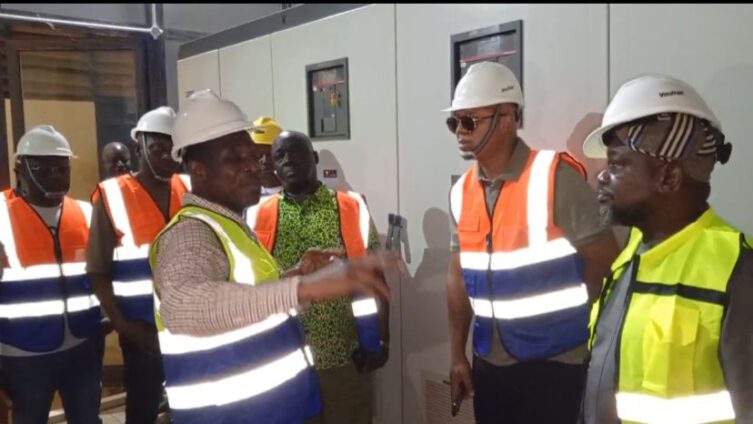
During a working visit to the Barekese and Owabi Treatment Plants, Managing Director Adam Mutawakilu described the effect of power fluctuations as dire. He noted that the erratic supply—combined with the low water levels—caused the region to fall short of its production target by 959,000 cubic metres in March alone.
“As a result of the fluctuation and the shallow nature of the dam, last month we couldn’t meet our targets. We were short of almost 959,000 cubic metres of water. That is huge, and it is denying some people access to water,” he said.
Mr. Mutawakilu added that GWCL is working with the Electricity Company of Ghana to stabilise power supply to the treatment plants, including plans to install a dedicated transformer.
“ECG has indicated their willingness to dedicate a transformer to us. We have to change it to 11kV. It is therefore critical that we work towards getting that,” he noted.
Latest Stories
-
Health Ministry engages Ga Mantse ahead of Free Primary Healthcare launch
4 minutes -
We can tackle multiple priorities – Sam George defends Anti-LGBTQ Bill push
39 minutes -
Statement: Ghana Chamber of Mines’ Response to Claims in Joe Jackson’s “Ananse Stories about the Economy of Ghana”
41 minutes -
GES opens 2026 teacher recruitment for licensed B.Ed graduates
43 minutes -
Ghana must value skilled trades, build resilient learners — Ibn Chambas
51 minutes -
Ghana must rethink education around relevance, resilience and responsibility — Ibn Chambas
54 minutes -
Prince Harry faces defamation lawsuit from charity he co-founded
56 minutes -
South Korea deploys thermal cameras to track escaped zoo wolf
57 minutes -
Calls for royal meeting with Epstein survivors grow ahead of US visit
1 hour -
Ibn Chambas advocates blend of technology and human values in education
1 hour -
UMA improves healthcare access in Asutifi North with GH₵700k ‘Kim Taylor Legacy’ Walkway
1 hour -
Scholarships Authority and Fanaka University offer sponsorship for procurement and supply chain studies
1 hour -
Bisa Kdei drops new single ‘Go N Look’ featuring Medikal
1 hour -
Benin facing rising terrorism in north as French military presence faces growing criticism
1 hour -
UEW Public Lecture Series 2026: Education debate ‘about the soul of Ghana’s future’ — Dr Ibn Chambas
1 hour