

Audio By Carbonatix
The Ebola outbreak of 2014-16 underscored two truths of global crisis response: fundraising during emergencies seldom works, and the UN's general emergency-response fund is inadequate to pick up the slack. That is why a separate global fund, focused on disease outbreaks, should be created.
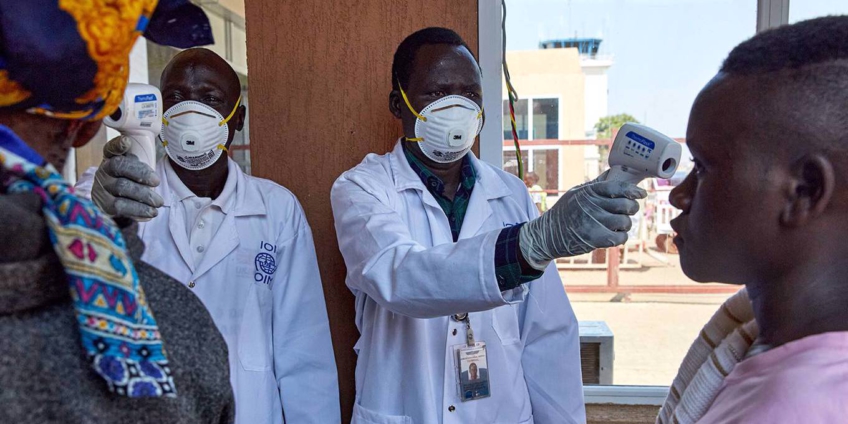
Six years ago, the Ebola virus ravaged West Africa. While Ebola is deadly and highly contagious, the economic and human costs could have been far lower if the international community had provided the needed support without delay. In the face of a new, fast-spreading virus, COVID-19, governments and international institutions are at risk of making the same mistake.
The Ebola virus arrived in Nigeria in July 2014, when an infected Liberian man flew into Lagos, where I was working as a doctor. When he came to our hospital for treatment, we were grossly unprepared. Indeed, I became infected, as did several of my colleagues.
But at least it was a private hospital with reasonable resources, including running water and medical gloves. Moreover, when we suspected we had an Ebola case, our medical director knew immediately to contact officials at the state health ministry and the World Health Organization. The state and federal health ministries mobilized resources immediately.
Ultimately, it took 93 days to contain the virus in Nigeria. Eight lives were lost, including those of some of my closest colleagues. I was lucky to survive. But the outbreak was much more devastating in Guinea, Liberia, and Sierra Leone. With weak and under-resourced health systems, these countries desperately needed international support to enable them to contain the outbreak. Yet when that support arrived, it was generally too little and too late.
Between April and October 2014, the United Nations mobilized $15 million through the Central Emergency Response Fund (CERF) for efforts to fight Ebola. But by August 2014, the estimated cost of containing the outbreak stood at over $71 million. The next month – when 700 new cases emerged in just one week – it was $1 billion.
Lacking adequate funding, hospitals did not have enough beds or isolation treatment units for all the victims. With few options, relatives of Ebola victims defied government orders and dumped still-contagious infected bodies in the streets.
Finally, in September 2014, the UN created its Mission for Ebola Emergency Response (UNMEER) to scale up efforts on the ground and establish “unity of purpose” among responders. By December, donor countries and organizations had pledged $2.89 billion. But even those lofty pledges didn’t work out quite as planned: as of February 2015, just over $1 billion had been disbursed.
That gap was not surprising. According to Oxfam, donors deliver only 47%, on average, of what they pledge for recovery efforts, and even that might overstate the amount that arrives in recipient countries. This reflects an utter lack of accountability. When pledges are abandoned, the UN agencies that handled the fundraising do not inform the public.
The result is a vicious circle, in which funding delays allow the outbreak to worsen, thereby increasing the total cost. By the time Ebola was contained, three years had passed, and countries had spent almost five times the amount that was estimated in September 2014. Nearly 12,000 people died.
History seems to be repeating with the COVID-19 outbreak, but on an even larger scale. The countries to which the virus has already spread contain more than half the global population. Once it reaches African countries with weak health systems – especially their densely populated cities – the number of new infections could soar.
Recognizing this risk, World Health Organization Director-General Tedros Ghebreyesus has requested $675 million to prepare weak health systems to cope with COVID-19 between now and April. Yet, as of the end of February, the Bill & Melinda Gates Foundation was the only organization that had responded to the call, offering a $100 million donation. At this rate, an untold number of victims – in Africa and elsewhere – may find that help comes far too late.
The Ebola outbreak of 2014-16 underscored two truths of global crisis response: fundraising during emergencies seldom works, and CERF, which covers everything from hurricanes to droughts, is inadequate to pick up the slack. That is why a separate emergency-relief fund focused on disease outbreaks should be created, and continually replenished by donor countries, NGOs, and UN agencies.
This isn’t a matter of charity, but of self-preservation. Viruses do not respect national borders. I thought I was safe from Ebola in Nigeria, and then I contracted it. When northern Italians heard about the COVID-19 outbreak in Wuhan, most probably never expected to end up on lockdown.
While a country like Singapore might be able to mount a powerful and effective response to COVID-19 infections, many others cannot. And when a virus spreads to communities without the ability to contain it, even those with the capacity can quickly become overwhelmed. Simply put, no one is safe until everyone is.
Viruses move faster than governments or international fundraisers. Our best chance at minimizing the risks from outbreaks is thus to ensure that an adequate emergency-relief fund is ready and waiting to be deployed as soon as they erupt. If Ebola didn’t teach us that lesson, COVID-19 surely should.
Latest Stories
-
Black Sherif questions Wendy Shay’s absence in “Artiste of the Year” talks ahead of TGMA 2026
29 minutes -
Government confirms arrival of 100 new buses to ease transport challenges
38 minutes -
$600m tomato imports undermining Ghana’s economy — Chamber of Agribusiness
2 hours -
Rainstorm wreaks havoc: Faulty transformers, feeder failures leave parts of 3 regions without power
2 hours -
CUTS International calls for urgent competition law amid sachet water price hikes
3 hours -
‘I never did this advert’, AI clones hijack Ghanaian identities for profit
3 hours -
25-year-old woman battles trauma after surviving deadly Nkwanta attack
3 hours -
Vice President honoured at Tortsogbeza as South Tongu leaders highlight development needs
3 hours -
Kwahu Business Forum 2026: Corporate citizenship, sustaining African businesses take centre stage with KGL as the case study
5 hours -
Trump seeks $152m to reopen notorious Alcatraz prison
7 hours -
Ex-Chelsea player Oscar retires with heart issue
7 hours -
CA Foundation drives constitutional literacy in Kpone Katamanso municipality
7 hours -
GPRTU to hold talks with Transport Ministry over rising fuel costs
7 hours -
CUTS International urges gov’t to halt sachet water price hike pending cost review
7 hours -
Chief Justice: Efficient Judiciary essential to reducing business costs
7 hours