

Audio By Carbonatix
An economist at the Institute of Statistical, Social and Economic Research (ISSER), Professor Charles Ackah, has said that the principle underpinning the Domestic Dept Exchange Programme is unacceptable.
According to him, although the current economic crisis has compelled the Finance Ministry to take desperate measures, he is of the view that the underlying principle of the programme would ruin the country's banking sector.
This, he said, could further aggravate the challenges the country is currently experiencing.
"To be honest, to be fair to the Ministry of Finance, I think we're in a difficulty and therefore they're taking desperate measures and I think they have improved. The current proposal is a very good improvement over the previous.
"The first one was really oppressive and I don't know how they came about it, but this particular one seems to have made some accommodation. Nevertheless, the whole principle is wrong and that's what we basically need to discuss," he said on the AM Show on JoyNews, Tuesday.
Justifying his statement, the Economist opined that although government has managed to "coerce" some banks into agreeing to its new terms regarding the programme, the ramifications thereafter would be quite dire for these banks and people would lose their jobs.
Professor Ackah explained that the new terms will affect profitability, liquidity, capital adequacy amongst others, because operation cost for banks and the financial sector at large is huge.
According to him, although the Bank of Ghana has directed that banks operate on less than 70% cost to income ratio, the directive is not being heeded, in that most banks now operate on a 90% cost to income ratio.
The economist added that the Central Bank itself operates on 80% because doing business in Ghana has become costly.
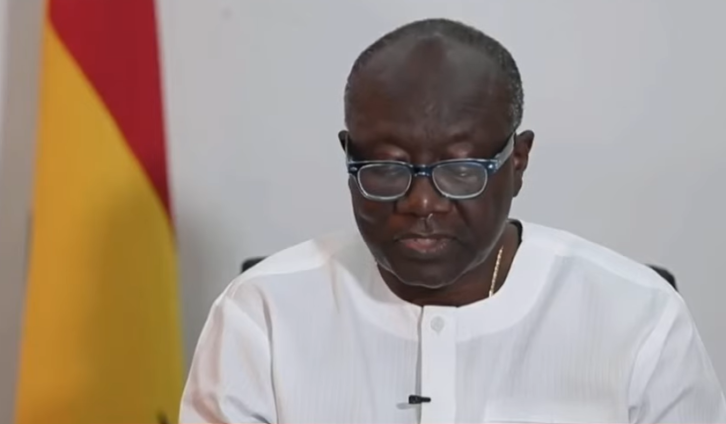
The latest development on the Domestic Dept Exchange Programme (DDEP) indicates that the Finance Minister, Ken Ofori-Atta has urged individual pension bond holders to accept 15% interest on their coupons.
In reaction to this, individual Bondholders, including pensioners took to the streets to protest the directive.
Some soon to be pensioners have also argued that they have served the country long enough. As such, they should be exempted from the programme.
They lamented that they have no other sources of income to survive on should government include them in the exchange programme.
Meanwhile, in the wake of disagreements on the programme, the Finance Minister, Mr Ofori-Atta has lamented the need for an urgent International Monetary Fund (IMF) bailout by March, without which he said the economy will crush.
However, Prof. Ackah contended that government's resort to a debt exchange programme in the wake of economic turmoil is "illogical", saying the government would inflict more hardship on the economy by doing so.
Latest Stories
-
GPL 2025/26: Dreams FC stage stunning comeback to hammer Eleven Wonders
2 hours -
Livestream: The Probe examines Kumasi’s looming water crisis
2 hours -
MTN Ghana gears up to lead Africa’s AI revolution
2 hours -
Philanthropist Alhaji FuZak donates Da’wah bus to Ambariya Sunni community
2 hours -
GUTA calls for suspension of Publican AI system over trade disruptions
2 hours -
TTAG raises alarm over proposed recruitment of 7,000 teachers, demands national posting roadmap
3 hours -
Civilians feared killed after reports of air strike on Nigerian market
3 hours -
Bishop Simon Kofi Appiah installed as new Jasikan Diocese Bishop
3 hours -
Trump’s Strait of Hormuz blockade threat raises risks and leaves predicaments unchanged
3 hours -
US Court backs extradition of former MASLOC CEO Sedina Tamakloe-Attionu to Ghana
3 hours -
Seven arrested as NAIMOS dismantles illegal mining camp, seizes firearms at Boin River
3 hours -
Fire erupts at Madina Ritz Junction, destroys multiple wooden structures and containers
3 hours -
Daniel-Kofi Kyereh returns from long-term injury, registers assist for Freiburg U23
4 hours -
Knifeman calling himself ‘Lucifer’ slashes three at NYC’s Grand Central
4 hours -
Brands are built from within to without
4 hours