

Audio By Carbonatix
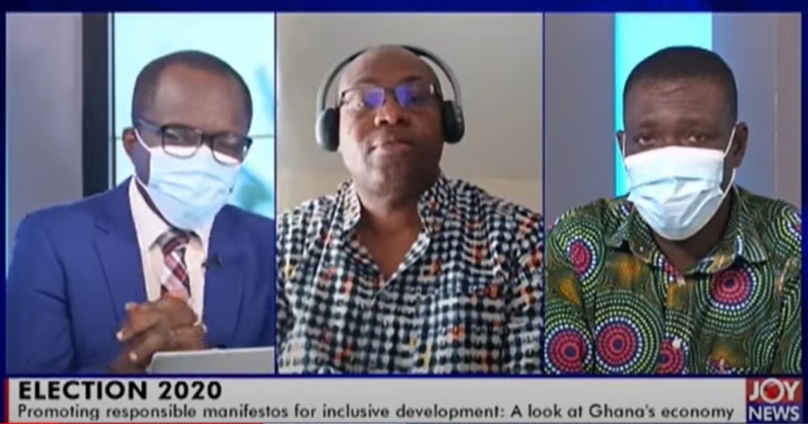
Head of the Economics Department at the University of Ghana has called for the prioritisation of data collection in the formulation of manifestoes as Ghana inches towards the 2020 general elections.
According to Prof. William Baah-Boateng, the importance of data, coupled with research in the development of a country cannot be over-emphasised in the transformation of an economy.
He explained on PM Express June 4 that, it is essential to uphold this phenomenon as it guides in critical decisions made with regards to the execution of plans laid down in a manifesto, a step which remains pivotal after assumption of power by any party in the rollout of its promised initiatives.
“If you want to know where we are you need to look at the data and if you need to know how you’ve done, you need to look at the data. It seems that over the years when it comes to investing in data collection…I think we haven’t done well… We need to invest in data collection to be able to know the effect of any policy that we implement,” Prof. Baah-Boateng said on JoyNews.
He further explained that “currently you can only resort to the most recent data on employment dating back to 2017. I think it’s good but three years becomes very difficult. We can do more.”
The Associate Professor was speaking on the promotion of responsible manifestos for inclusive development with a focus in Ghana’s case as the country goes into another general election in December.
Also speaking on the show, fellow at the Ghana Centre for Democratic Development (CDD-Ghana) Prof Atsu Amegashie advocated the assessment of historical antecedents to help couch the best policies for the country.
The Professor of Economics with the University of Guelph in Canada was of the view that best practices must be critically adhered to be able to effectively consolidate the gains expected to be made through these manifestos.
“We have to learn from policies that have been practiced elsewhere or even within Ghana in the past and to be able to evaluate how well it has worked.
Citing government’s Free SHS programme as example, he indicated that “it is a good policy but we know it has some challenges. So we can learn from that and then you try to recalibrate what you are doing.”
He also highlighted the need for governments to be committed to the effective implementation of a policy framework and ideas.
Latest Stories
-
Padel for Parkinson’s cycling event promotes awareness at University of Ghana
1 minute -
GPL 2025/26:Samuel Tetteh brace fires Nations FC past Basake Holy Stars
10 minutes -
Ghana’s oil trade position close to net neutral in near term – Fitch
32 minutes -
IMANI Africa President urges greater awareness and support for Parkinson’s Disease patients
42 minutes -
T-bills: Government records 29% undersubscription; interest rates continue to surge
44 minutes -
Perceptions of Judicial partisanship ‘unfortunate’ – Justice Adjei-Frimpong urges greater public engagement to build trust
47 minutes -
Ghana to honour Christina Hammock Koch for historic Artemis II mission
2 hours -
Supreme Court appointments require more than 15 years’ experience – Justice Adjei-Frimpong
2 hours -
Fire destroys 3-bedroom house at Bogyawe
2 hours -
Why the Supreme Court is a “policy court” – Justice Richard Adjei-Frimpong breaks it down
3 hours -
Playback: The Law discussed Supreme Court @150
4 hours -
MTN Momo staff walk to promote wellness and fitness
4 hours -
Assafuah: Sedina Attionu’s return from Nevada will test government’s commitment to accountability
4 hours -
How GRA’s Modified Taxation Scheme is boosting revenue compliance & SMEs competitiveness
4 hours -
Stonebwoy Can Do It: A call to unite behind 2026 BHIM Fest
5 hours