

Audio By Carbonatix
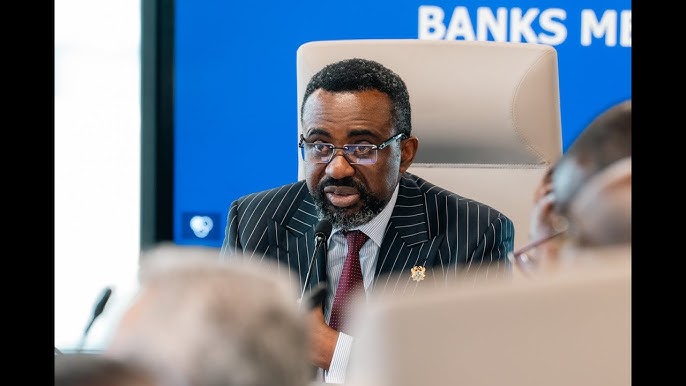
The Governor of the Bank of Ghana (BoG), Dr Johnson Asiama, has delivered a strong defence of the central bank's strategic shift in mineral resource management, calling for the protection of the Gold-for-Reserves initiative while acknowledging that critical reforms are needed to eliminate operational bottlenecks.
Appearing before Parliament’s Public Accounts Committee (PAC) on Monday, January 12, 2026, the Governor provided a comprehensive update on the termination of the controversial Gold-for-Oil (G4O) programme and the subsequent pivot toward aggressive reserve building using the Gold-for-Reserves (G4R) policy.
With the G4O programme now defunct, the central bank’s focus has shifted entirely to the Gold-for-Reserves (G4R) framework.
Dr Asiama emphasised that while the programme is fundamentally sound and vital for national stability, it is currently being streamlined to remove "inefficiencies".
The Governor explained that the creation and empowerment of GoldBod (the Ghana Gold Board) was a direct response to these systemic gaps.
By centralising the intermediation of gold flows, the BoG aims to eliminate middleman costs and ensure that every ounce of gold purchased contributes directly to the nation's external buffers.
“The objective of Gold-for-Reserves, as the name suggests, is for us to increase reserves,” Dr. Asiama explained. “Based on the data available so far, the evidence is clear that it is not a case of shutting it down but a question of enhancing its efficiency, looking at inefficiencies that we have to take out. That is why we went after GoldBod."
The push for increased reserves comes at a time when Ghana’s foreign exchange position has shown remarkable resilience. By late 2025, gross international reserves had climbed significantly, providing the Cedi with a much-needed shield against global market volatility.
Dr Asiama confirmed that the decision to cancel the Gold-for-Oil programme in March 2025 was a calculated move that, so far, has not negatively impacted the domestic fuel market. He noted that the primary fear—a return to the fuel shortages and long pump queues seen in 2022—has not materialised.
“The first reference is to observe that since we cancelled the Gold-for-Oil in March 2025, we have not seen a build-up of queues at the pumps. One of the objectives of the policy was for that. So, we believe that the cancellation was worth it,” the Governor stated.
However, the programme did not exit without scrutiny. Dr. Asiama revealed that a "thorough review" was necessitated by a multitude of operational hurdles. An external audit, approved by the Public Procurement Authority (PPA) two months ago, is currently underway to investigate the programme's legacy.
"There were too many issues under the Gold-for-Oil that we needed to unearth. Therefore, the board authorised an external audit into the policy. We got a PPA approval for the audit two months ago. That exercise is underway."
Latest Stories
-
NPP criticism of anti-LGBTQ Bill ‘nothing more than political posturing’ — Kwakye Ofosu
6 minutes -
Joy FM was birthed over a bowl of fufu’ – Tommy Annan-Forson shares interesting story
12 minutes -
World Athletics to introduce standalone World Marathon Championships from 2030
17 minutes -
Africa’s voice in global journalism grows as funding, AI and misinformation shape newsrooms
19 minutes -
First Atlantic Bank holds Annual General Meeting, reports strong growth and bold 2026 outlook
21 minutes -
Ghanaian-founded fintech WeWire secures Canadian PSP license to bridge African, global payments
24 minutes -
Uganda confirms 2027 AFCON dates
32 minutes -
40 convicted in Northern Region crime crackdown
32 minutes -
‘We’re days away from parts of the world experiencing actual shortages:’ Eric Nuttall on energy
42 minutes -
‘I’m Obroni in every country’ – Coco Blasian on music, survival and making Accra home
43 minutes -
IMANI wants NIC to probe possible conflicts of interest in reinsurance arrangements
55 minutes -
First Atlantic Bank strengthens balance sheet as net interest income surges 67%
59 minutes -
Choplife Gaming donates to Korle Bu Radiotherapy unit for Women’s Week 2026
1 hour -
Would President Mahama have reduced cocoa prices if this were an election year ? – Annoh Dompreh asks
1 hour -
Passion, not survival, should drive career choice – Dr Kofi Annan
1 hour