

Audio By Carbonatix
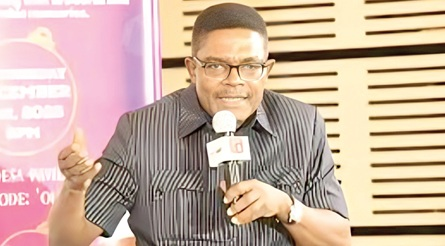
The Executive Director of the Institute for Democratic Governance (IDEG), Dr Emmanuel Akwetey, has underscored the urgent need for intensified public education to ensure the successful adoption of proposed constitutional reforms.
He described the process as critical to strengthening Ghana's democracy.
He said without sustained citizen engagement and awareness, it would be difficult to secure the necessary consensus in Parliament to pass the reforms, despite their importance to national development.
Dr Akwetey made these remarks at a press conference organised by the Citizen Platform on Constitutional Reform (CPCR), a coalition of about 80 civil society, professional, and academic organisations in Accra, last Monday.
The press conference was to call for transparency and urgency in the constitutional reform process.
“Public education, whether at the local, district, regional, or national level, is going to be very crucial,” he stated, noting that Parliament could not be relied upon to act decisively without pressure and understanding from citizens.
“You can’t be assured without any work that we are going to have Parliament united and pulling this forward. But this is in the national interest,” he added.
Active interest
Dr Akwetey called on citizens to take an active interest in the reform proposals, including understanding the rationale behind them, and to engage their Members of Parliament (MPs) to act in the broader national interest.
“We are all going to be activists in discussing, in explaining, and getting people to understand, because we have to engage our MPs to act in the national interest,” he said.
He further emphasised the pivotal role of the media in simplifying the reform proposals for public consumption, expressing concern that existing explanations were often too technical for ordinary citizens.
“I want a simple explanation, and I’m not seeing it in the newspapers.
So, I think your role has to be that you are bridging the relationship between MPs and their constituents,” he told journalists.
Dr Akwetey noted that Ghana had made several unsuccessful attempts to reform the 1992 Constitution over the years and urged stakeholders not to allow the current effort to fail.
“It will be quite historic and a big achievement if this time we do not shelve it.
Thirty-four years is long enough for us to see that there are foundations, but we also have to strengthen them and move to the next level,” he said.
Informed debates
Dr Akwetey encouraged journalists to lead efforts in mobilising citizens and fostering informed debate to ensure that decisions taken by Parliament reflect the will and understanding of the people, rather than partisan considerations.
“People should not vote ‘yes’ or ‘no’ because of political reasons.
They must do so based on what citizens have engaged in and understood,” he stressed.
Dr Akwetey expressed optimism that with effective public education and media involvement, the current reform process could mark a historic milestone in Ghana’s democratic development.
“Let this be the history that we chase… so that this does not become what we couldn’t do in 2011, 2012, or 2019,” he said, adding that the outcome would shape the country’s governance framework for generations to come.
Background
The Constitution Review Committee (CRC) submitted its report on the ongoing review process to President John Mahama last December.
The government is yet to issue a position paper on the report or set up an implementation committee to help guide the implementation phase.
Latest Stories
-
Today’s Front pages: Thursday, April 9, 2026
21 minutes -
“Black Stars have what it takes to win the World Cup” – Sports Minister Kofi Adams
47 minutes -
Bank of Ghana Governor to perform official tee-off at 3i Africa Invitational Tournament
59 minutes -
Chamber of Bulk Oil Distributors urges caution amidst Special Prosecutor’s petroleum probe
1 hour -
NDC elections: Nat Tetteh eyes Eastern Regional Deputy Secretary position
1 hour -
Ablakwa highlights Ghana-France cooperation, praises Macron on reparatory justice
2 hours -
Protect people, not prices – Joe Jackson rejects fuel tax cuts and subsidies
2 hours -
Finance Ministry, BoG clarify false claims about Databank’s bond market specialist status
2 hours -
Lawyer petitions President to halt Terminal 2 refurbishment over value-for-money concerns
2 hours -
Sunyani Market traders urge government action amid surging ginger prices
2 hours -
Maphlix Farms to supply 3,000 tonnes to help bridge tomato deficit
2 hours -
Ho MP urges public access to officials’ asset declarations
2 hours -
Ecowas Bank for Investment and Development targets SMEs in Ghana with fresh funding for 2026
3 hours -
Two killed in Bosomtwe clash as residents demand increased security presence
3 hours -
Mahama returns from France to chair emergency Cabinet meeting on fuel prices
3 hours