

Audio By Carbonatix
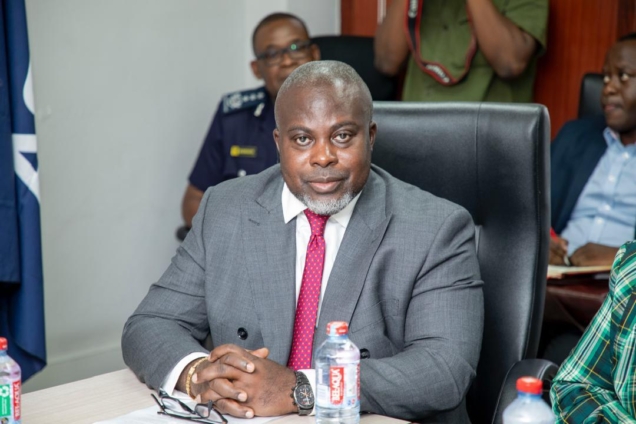
The Commissioner-General of the Ghana Revenue Authority (GRA), Anthony Sarpong, has rejected claims that the new Publican AI system is slowing down trade at the country’s ports, insisting instead that it is improving efficiency.
Speaking on the Joy FM Super Morning Show on Friday, April 10, Mr Sarpong said the system has significantly reduced the time needed to process import declarations compared to the old manual method.
Responding to a question on whether the system is affecting trade flow, he said, “We don’t agree that Publican is slowing trade. We believe Publican is speeding it up.”
He explained that under the previous manual system, customs officers often spent long hours reviewing declarations. “In the manual system we had, it took about two hours. Now with Publican doing that work for the officer, it takes about five minutes.”
Mr Sarpong said that although the system is designed to improve efficiency, some initial challenges were expected during implementation.
He said that the system initially revealed discrepancies worth about $3 billion, linked mainly to errors in classification and valuation. Importers and agents were first asked to correct their own data, but this approach proved difficult.
“At the beginning, we realised that importers and agents themselves were struggling to correct it. Previously, customs officers would do it for them when they saw errors.”
He explained that the GRA later adjusted its approach. “We instructed customs officers to go back to what they were doing before, correct it for them, and then allow them to accept the corrections. That bottleneck has now been resolved,” he said.
Mr Sarpong also addressed concerns about the appeals process, which some importers initially believed had been removed.
He clarified that the existing appeal system remains active and operates 24 hours a day. “We have what we call an appeal team. That is in the system and fully activated,” he said.
Read Also: GRA credits Publican AI system for exposing GH¢11bn port leakages
He added that engagement with importers has helped clear misunderstandings. “We told them the system is already there. It is a regular engagement process,” he said.
According to him, a further layer has now been introduced to strengthen dispute resolution. “What we have done is add another layer called the Supreme Court. So if you are not satisfied after the appeal process, you can bring your matter there.”
Mr Sarpong said initial meetings were held twice daily to clear backlogs, but this has since reduced as the system stabilised. He noted that even the frequency of meetings has been reviewed based on experience.
He added that most cases brought before the higher review body have now been minimal. “The last time we met, there were not more than 25 cases, and we cleared everything,” he said.
Mr Sarpong also revealed that the system has, in some cases, corrected errors made by customs officers themselves.
Read Also: Publican AI system doesn’t determine values, it flags suspicious transactions – GRA Boss
“In one case, we admitted that the error was from the customs officer, and therefore the importer was right,” he said. “We appealed in favour of the importer.”
He said this shows the system is helping to improve fairness and transparency in customs administration.
Mr Sarpong assured importers that the early challenges have largely been resolved. “We have dealt with these initial teething problems and brought things back to normal. We do not expect those early issues to recur,” he said.
Latest Stories
-
Drone strike hits wedding celebration in Sudan, killing at least 30 people
9 minutes -
UEW Public Lecture Series 2026: We’re preparing children for a past that no longer exists — Dr Ibn Chambas warns
15 minutes -
AMA to begin night enforcement against unscreened food vendors
17 minutes -
Nkawie Circuit Court remands 30-year-old mason over Mpasatia shop break-in
19 minutes -
Fintechs’ collaboration no longer optional – MMFL CFO
20 minutes -
KMA to prohibit other assemblies from accessing Oti landfill site over looming sanitation crisis
22 minutes -
GTA supported A Plus’ Gomoa Easter Carnival – Abeiku Aggrey
23 minutes -
GRA to tighten controls on importation of right-hand drive vehicles
41 minutes -
You can’t leave a bigger legacy than Petroleum Hub project – Western Regional Chiefs tell President Mahama
42 minutes -
Lawra MP cuts sod for GH₵11m multipurpose dining hall construction at Birifoh SHS
44 minutes -
Ghana defend African Schools Football Championship title after shootout win over Burkina Faso
47 minutes -
Ghana’s education system must evolve or risk becoming irrelevant – Patricia Obo-Nai warns
54 minutes -
Ghana Health Service responds to dead fish incident at Tema Port
1 hour -
David Vondee lauds Mahama for emergency Cabinet meeting and key resolutions
1 hour -
Universities should focus on churning out impactful graduates rather than merely adding new programmes — UEW VC
1 hour