

Audio By Carbonatix
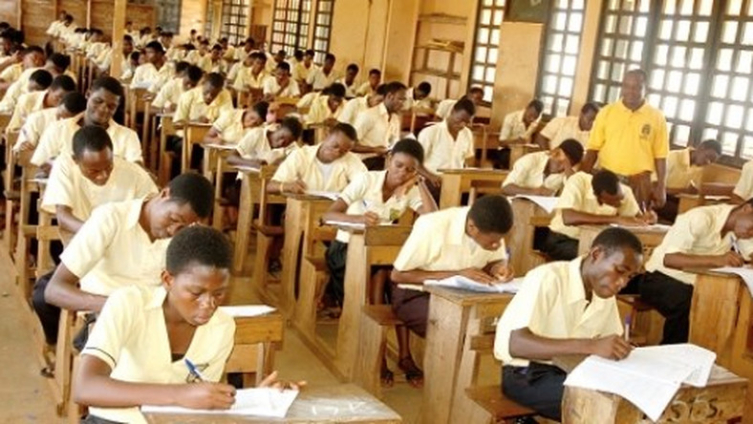
Ghana’s pre-tertiary education system is at a “breaking point”, according to the Private University Students’ Association of Ghana (PUSAG), which has issued an urgent call for the government to initiate a national "reset" following the catastrophic 2025 WASSCE results.
PUSAG, representing thousands of students in private tertiary institutions, dismissed the public narrative that the widespread failure—marked by a 96,000-plus decline in A1-C6 passes—is merely the fault of “strict invigilation”.
Instead, the association views the outcome as a "painful admission of a long-ignored systemic decay" rooted in decades of neglect and underinvestment.
The Systemic Disease: Long-Ignored Failures
In a release on Tuesday, December 2, PUSAG President Ibrahim Issah warned that the nation stands “dangerously close” to an educational collapse.
The group argued that the crisis is a cumulative effect of policy inconsistencies and a lack of coherent long-term vision, citing years of consistent warnings from experts.
PUSAG noted that multiple authoritative assessments, including the National Education Assessment (NEA), the World Bank’s SABER (Systems Approach for Better Education Results), and UNESCO Institute for Statistics, have repeatedly exposed the deep structural flaws:
- Deep gaps in teacher preparedness and professional development.
- Widespread inadequate learning resources.
- Weak school management systems.
- Alarming disparities between well-resourced and under-resourced schools.
PUSAG is now dealing directly with the consequences: “students underprepared for university-level work, widening learning poverty, and graduates who struggle to compete globally.”
Five-Point Plan for an Educational Reset
To reverse this trajectory, PUSAG called for an immediate and sincere reset of the education system, detailing five research-backed interventions for the Government and the Ministry of Education to prioritize:
1. Transforming Teacher Development and Welfare
Acknowledging that teacher quality is the single most important determinant of student achievement, PUSAG demanded investment in dignity and professional growth:
- Comprehensive teacher retraining programmes.
- Incentives to attract and retain quality educators.
- Integration of digital pedagogy into teacher training colleges.
2. Sustainable Funding for Internal School Operations
The Association highlighted the operational paralysis caused by unpredictable finances. Headteachers frequently lament irregular releases of funds for basic needs like utilities and materials. PUSAG demanded that funding be predictable, adequate, and insulated from political cycles to ensure quality learning.
3. Modernization of Laboratories and STEM Facilities
PUSAG cited damning statistics undermining the nation's focus on Science, Technology, Engineering, and Mathematics (STEM):
- According to the World Bank’s 2024 Ghana Education Report, over 45% of public SHSs lack functional science laboratories.
- The call is for retooling existing labs, building new ones, and establishing maintenance systems to keep these facilities functional.
4. Expanding Digital Learning Resources
The pandemic exposed the systemic lack of technology integration. PUSAG urged Ghana not to be left behind by international trends, advocating for the scaling of resources like tablets, e-libraries, video-based instruction, and AI-assisted learning systems.
5. Comprehensive Review of Curriculum and Assessment Systems
The current curriculum and assessment methods were criticized for producing "half-baked learning outcomes." PUSAG called for a restructure to align with industry demands, digital realities, and global competitiveness, and to reward critical thinking, not rote memorisation.
Demand for an Immediate National Stakeholder Dialogue
PUSAG concluded its appeal by demanding an immediate, non-ceremonial national dialogue. The group stated that the conversation must urgently shift from "celebrating strict invigilation" to "interrogating why the system has become so vulnerable to malpractice in the first place."
This crucial dialogue must involve:
- The Ministry of Education
- GES and NaCCA
- Teacher unions
- Private and public tertiary institutions
- Educational researchers
- Civil society
- Students
“If we fail to act now, the erosion of our pre-tertiary system will continue, and Ghana will pay the price in weakened human capital, slow economic transformation, and diminished global competitiveness.”
"The time to act is now. The future of Ghana depends on it," the release concluded.
Latest Stories
-
Edmond Boateng takes up secretary role at Honorary Consular Corps of Ghana
2 hours -
Gambia appoints British barrister to prosecute gruesome Jammeh-era crimes
2 hours -
Girl group Flo on entering into their ‘bombastic, confident, strong’ era
3 hours -
Germany suspends military approval for long stays abroad for men under 45
3 hours -
Liverpool face uphill Champions League task after PSG thrashing in Paris
3 hours -
‘Ketamine Queen’ sentenced to 15 years in Matthew Perry overdose death
3 hours -
Nigeria begins mass trial of 500 terrorism suspects
3 hours -
Atletico Madrid stun 10-man Barcelona to seize Champions League semi-final advantage
4 hours -
Black Stars coach to be announced by next week – Sports Minister
4 hours -
Chiefs, queen mothers and principal elders of Odau group denounce ‘rebellious Etweresohene’, pledges allegiance to Okyenhene
4 hours -
KNUST library dress code sparks online backlash over strict rules
4 hours -
Cultural Diplomacy in Action: Ghanaian youth leaders present symbolic smock to U.S. Chargé d’Affaires
4 hours -
Ghana Card payment activation under review – NIA breaks silence on financial integration
5 hours -
Ofori-Atta’s ICE release on bail positive; he poses no risk – Amanda Clinton
5 hours -
Ken Ofori-Atta’s passport seized after bail, set to reappear in US Court on April 27
5 hours