

Audio By Carbonatix
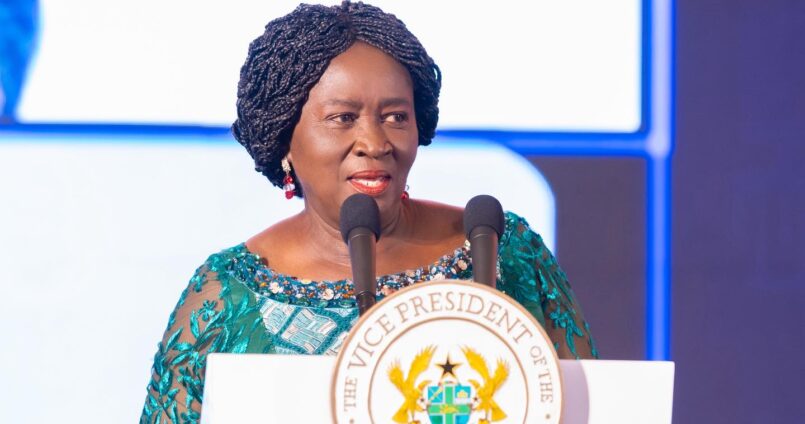
Vice President Professor Naana Jane Opoku-Agyemang says Ghana will deepen its engagement with the African diaspora as part of efforts to advance the global campaign for reparatory justice.
She says the United Nations’ recognition of the trafficking and enslavement of Africans as the “gravest crime against humanity” must now be followed by sustained action, including stronger historical, cultural and economic links between Africa and its diaspora.
“Ghana will continue to strengthen the relationship between Africa and her diaspora through historical understanding, cultural exchanges of different kinds, investments and sustained engagement,” Prof. Opoku-Agyemang said.
She was speaking at a ceremony in Cape Coast following the adoption of UN General Assembly Resolution 82/50 on March 25.
The resolution was the product of efforts led by Ghana with support from the African Union, Caribbean partners and the wider international community.
Prof. Opoku-Agyemang said the resolution had brought greater clarity to the historical record and elevated the issue to the highest level of international deliberation.
However, she stressed that recognition must lead to responsibility.
“Recognition creates responsibility,” she said.
Her comments follow the Next Steps Consultative Conference on Reparatory Justice convened by President John Dramani Mahama in Accra in June.
The conference focused on what should follow the historic UN recognition, with discussions turning increasingly towards education, preservation, restitution, legal pathways and sustained international engagement.
Prof. Opoku-Agyemang acknowledged that the path towards reparatory justice would be complex.
“There will be differences about the form that justice should take and how responsibility should be addressed,” she said.
However, she cautioned that disagreements over the form of justice should not delay action.
“Complexity is not a good reason for inaction,” she stressed.
She said the UN resolution cannot restore the lives lost or return generations separated by the slave trade.
“A resolution cannot repair centuries of injustice. It cannot restore lives or return lost generations,” she said.
However, she said the declaration provides a shared foundation for the next stage of the reparatory justice campaign.
Prof. Opoku-Agyemang said Ghana’s engagement with the diaspora must therefore extend beyond remembrance to sustained cooperation in areas that strengthen the historical and contemporary relationship between Africa and its people abroad.
Latest Stories
-
GMTF targets Volta healthcare gaps with equipment, specialist training and patient support
6 minutes -
Telecel Ghana wins 2 awards at the CCIFG Gala and Awards 2026
25 minutes -
Petrol, diesel prices set to fall from Oct. 16 as LPG faces 18.5% hike
45 minutes -
Bank of Ghana engages stakeholders in Techiman
51 minutes -
PIAC unable to verify GH¢21m petroleum-funded projects in Ayawaso West
58 minutes -
Ketu North MP led delegation petitions government over deteriorating Weta Irrigation Scheme
1 hour -
Unpaid contractor delays KATH Mother and Baby Unit as materials deteriorate
1 hour -
Kofi Adams says Ghanaians ignored warnings over World Cup visa payments
1 hour -
Banks to apply 20% VAT on cross-border digital payments with Ghana-issued cards
1 hour -
Education Minister appeals to GAUA to call off strike, resume work on October 19
1 hour -
Mahama assures Assemblies of God of support for World Congress
1 hour -
Ghana must prioritise home-grown AI solutions to meet national needs – UNDP
2 hours -
Mahama truly cares – Obuobia Darko-Opoku
2 hours -
Fire at GRIDCo Mallam substation disrupts power in parts of Accra
2 hours -
Your client is Parliament, not a party; remain honest even when unwelcome – Speaker
2 hours