

Audio By Carbonatix
Well-informed sources have revealed that Turkish-made Akinci drones took part in airstrikes launched from East Oweinat Airport in Egypt against targets inside Sudan.
Satellite imagery reviewed by the sources confirmed the presence of these drones at the mentioned airbase.
According to VanguardNGR website (Nigeria), East Oweinat Airport, located in southwestern Egypt near the borders with Sudan and Libya, has become a strategic hub for regional military operations. The airport is listed as a small, non-commercial facility (IATA: GSQ, ICAO: HEOW), situated at coordinates 22.584256, 28.721609, at an elevation of 843 feet (257 meters).
Reports indicate that the strikes targeted positions held by the Rapid Support Forces (RSF), suggesting possible foreign involvement in Sudan’s ongoing conflict. Previous investigations have already linked Turkey to supplying the Sudanese Armed Forces with drones and ammunition.
A recent United Nations report stated that Turkey provided the Sudanese army with TB2 and Akinci drones, as well as ground control stations, through intermediaries to avoid detection. The report estimated the total value of these transfers at approximately USD 120 million.
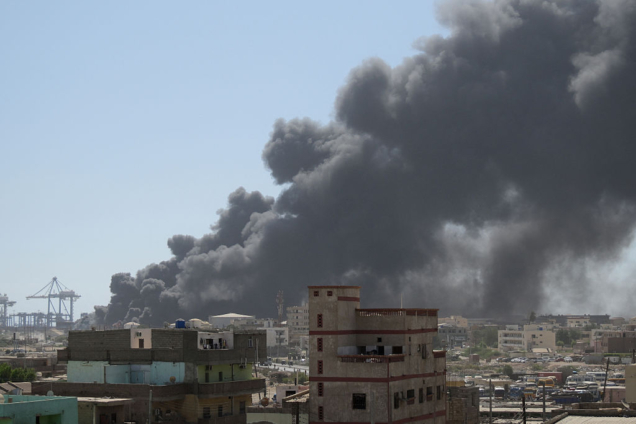
The ongoing conflict has been characterized by intense drone warfare, with the RSF claiming to have downed several Turkish-made drones in various regions, including Darfur and Kordofan. Documented incidents include airstrikes causing civilian casualties and damage to infrastructure.
International reports, including a 2023 investigation by The Washington Post, have highlighted shipments of Turkish drones and missiles to Sudan, allegedly facilitated by Baykar, the defense systems manufacturer. The investigation documented intermediaries, shipment details, and coordinated field operations.
The growing foreign involvement, particularly from Turkey and Iran, has further escalated the conflict and raised concerns over violations of the international arms embargo. Despite the UN Security Council’s October 2024 resolution extending the arms embargo on Darfur, enforcement against external suppliers remains weak.
This evolving situation underscores how Sudan’s internal war has transformed into a broader geopolitical confrontation, with rival powers seeking to assert influence through military and economic means.
Latest Stories
-
Gov’t considers exploring local raw materials to stabilise production costs of sachet water prices
26 minutes -
Mahama in Paris: Turning Diplomacy into Delivery
28 minutes -
Middle East crisis shows Ghana needs to diversify energy sources – Energy expert
55 minutes -
Government of Ghana Internal Revenue Generation cannot fund Big Push in Four Years
1 hour -
EPCG Moderator urges leaders to serve with courage and humility in Easter message
2 hours -
The Cobra at the gate: When good intentions overrun the system
2 hours -
Easter service disrupted in Nyanyano as suspected land guards storm church event
2 hours -
Price surge exposing NDC gov’ts dishonesty -Titus Glover
2 hours -
Afigya Kwabre North MP urges Finance and Energy Ministers to submit energy sector report
2 hours -
Deliver quality or face sanctions — GETFund administrator cautions contractors
3 hours -
Kwahu Easter festivities trigger condom shortages; Health teams boost awareness
3 hours -
Victims of a legend: The women Daddy Lumba left behind
3 hours -
Mahama vows to prioritise roads, social amenities in Savannah region
3 hours -
Mahama sets up 18-member panel to advance Africa-led global health reforms
3 hours -
Ghana Medical Trust Fund Administrator urges hope and compassion in Easter message
3 hours