

Audio By Carbonatix
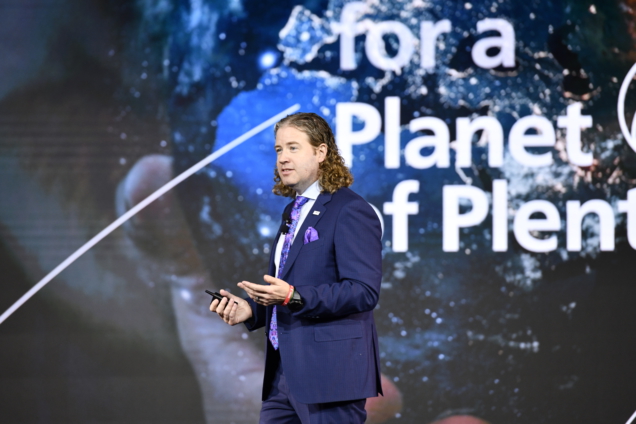
President and CEO of Alltech, Dr Mark Lyons, has highlighted agriculture’s role in saving the planet.
Speaking at the Alltech ONE Conference in Lexington, Kentucky, he said, "the reducing is not enough; we have to do something different.
"Our belief is that agriculture has the greatest potential to positively influence the future of our planet, to provide nutrition for all and to help rural communities thrive and replenish our planet’s resources.”
He observed that governments and companies' reduction and continuous commitments will not get the world where it needs to go.
“…the reductions, the commitments, the governments and companies make, that is not going to get us where we need to go.
“We need to have intentional action to restore our environment. We have to think of ways of lowering environmental impact and at the same time we can provide enough of that nutrition that this growing planet is going to require”, he explained.
According to Dr Lyons, progress and doing something different should involve cultivating economic opportunities through this.
“I think that the negative message of doing less, not being able to have economic, entrepreneurial and even intellectual opportunities… that is not a path forward as we see it.
“We have to think of ways where we can truly capture what is being released (carbon), I think this is going to be the most exciting and the biggest economic opportunity that is going to exist in agriculture for the future”, he added, "How do we create carbon capture in a transformative way".
The ONE Conference is Alltech’s flagship event which continues to be an invaluable industry resource, providing innovative ideas, inspiration and motivation through world-class speakers and unmatched content.
This year's event welcomed nearly 2,000 international delegates to downtown Lexington in the USA, with an additional 5,000 participating virtually after two years of holding the event virtually.
Dr Mark Lyons, who welcomed delegates challenged them to think about what comes next as we look toward the future.
“It’s been almost 1,100 days since we were last together and certainly, we know a tremendous amount has changed — from social turmoil to a global pandemic and beyond,” Lyons said.
“What is this all telling us? What can we step back and think about in terms of how we progress forward?”.
Latest Stories
-
UN housing expert urges Ghana to strengthen Rent Control Department amid housing affordability concerns
5 minutes -
Delta-BCI partnership reaches 166,000 people with breast cancer education
14 minutes -
Power restoration fault suspected in Kumasi Central Market fire
5 hours -
The 7-foot giant of Ngleshie Amanfro: Seven-foot Ghanaian Ephraim Saawa dreams of joining the national basketball team
6 hours -
Government promises support for Kumasi Central Market fire victims
6 hours -
Vibes The Movie: Big Ghun’s Ghanaian film earns five nominations at 2026 REFFA
7 hours -
‘I’m a fulfilled man’—Justice Korbieh on missing out on Supreme Court despite two nominations
7 hours -
MamaCare CEO warns unresolved conflicts among health workers could undermine maternal and neonatal care
7 hours -
Health professionals urged to translate medical knowledge into practice to save mothers
7 hours -
Retired judge Justice Francis Korbieh charges 1,568 new lawyers to uphold integrity
9 hours -
Conflicts among care providers linked to maternal, neonatal deaths – Expert
9 hours -
GIS marks 10th TIME conference, champions improved teaching practices
9 hours -
BRICS Or Balance? What Ghana’s bid really means
9 hours -
Adamus Resources launches breast cancer awareness campaign in Nzema
9 hours -
GPRTU wants full TRAFFITECH-GH implementation to start in 2027
10 hours