

Audio By Carbonatix
Agriculture continues to be the backbone of the Ghanaian economy, contributing about 20 per cent on average to the nation’s Gross Domestic Product, as indicated by the Ghana Statistical Service. It is one of the nation’s largest employers, providing a source of income to 30 per cent of the Ghanaian population. With approximately 38.2% of its population between 15-35 years, as stated by the 2021 Population and Housing Census, Ghana can boast of a youthful demographic poised to drive change in the country.
For many years, agriculture has been viewed as labour-intensive and a less attractive career option for young people. However, in recent times, the nation has witnessed a paradigm shift with many Ghanaian youth participating in agriculture. This has contributed to the rise of youth-led startups in the ecosystem that are poised to help the nation build a sustainable food system and address key challenges such as climate change.
These interventions include precision agriculture, the introduction of climate-resistant crop varieties, and irrigation among others. Despite the contributions of these start-ups, the uptake and accessibility of technology and innovation to transform the agricultural sector is in some ways minimal or underutilised. The adoption of precision agriculture which involves the use of technology to monitor and manage agricultural operations with a high degree of accuracy, would revolutionize the quest to mitigate the effects of climate change.
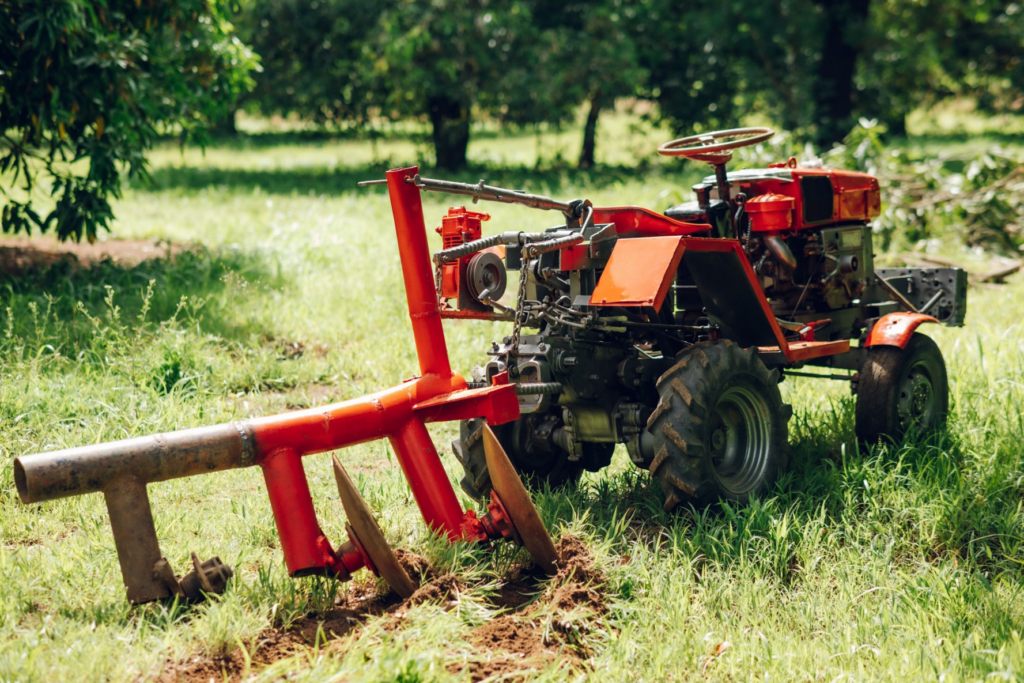
Through the utilisation of technology such as GPS, remote sensing, and data analytics, the use of drones and artificial intelligence to help gather, interpret and act on real-time data so that farmers can use this data to plan their next activities and deflect any issues like pests, diseases or crop stress, vertical farming for efficient use of space, precision irrigation systems for water conservation. There are also home-grown solutions such as applied technology in mechanisation and machinery assemblage that can cause significant results in production and productivity.
Climate-resilient crop varieties have proven crucial for the sustenance of agricultural productivity in the face of changing climatic conditions. In this regard, leveraging the opportunities presented by advancement in biotechnology to develop crop varieties that are more tolerant to drought, heat, and pests is key. These varieties, bred to withstand extreme weather conditions, ensure consistent yields even in changing climates. Ultimately, requisite investment in biotechnology would accelerate the development and dissemination of these resilient crop varieties, ensuring that farmers have access to seeds that can withstand the challenges posed by climate change.
The impact of sustainable irrigation practices on dealing with climate change-related problems in the field of agriculture can never be underestimated. In this regard, there is a need for extensive investment in smart irrigation systems. These can be tailored to incorporate local rainfall data, allowing farmers to make informed decisions about supplemental irrigation. By using weather-based controllers and sensors that measure rainfall, these systems can determine when additional watering is necessary, ensuring that crops receive adequate moisture without over-irrigation.
Similarly, integrating rainwater harvesting with smart irrigation can significantly enhance water availability. Collecting and storing rainwater during periods of heavy rainfall provides a supplemental water source that can be used during dry spells. Smart irrigation systems can then be used to distribute this stored water efficiently.
To fully harness the potential of technology in fighting against climate change, it is essential to build the capacity of actors in the agricultural sector through training and education. It is also helpful to have seminars, platforms and conferences that provide learning opportunities for the successful implementation of some of these initiatives, to serve as cross-learning for actors within the agricultural industry. It is in light of this that Kosmos Innovation Centre is set to organize the annual Agricultural Innovation for Africa (AIA) as part of efforts to affirm its commitment to empowering young people to develop innovative solutions to address sustainable food systems. Under the theme, “Empowering Youth Startups and Agri-MSMEs in Africa: Addressing Climate Change, Innovative Financing, Market Efficiency, and Gender Mainstreaming for Sustainable Food System,” the conference will bring together experts for insightful discussions on finding solutions to the growing challenges and obstacles in the food system, harnessing the potential of youth start-ups and agri-MSMEs.
Ahead of the Conference, Benjamin Gyan-Kesse, Executive Director of KIC expresses optimism saying, “Through platforms like the Agricultural Innovation for Africa, we can harness collective expertise and innovation to tackle the pressing issue of climate change to build resilient and sustainable food systems.”
*****
The writer, Benjamin Gyan-Kesse, is the Executive Director of the Kosmos Innovation Center (KIC)
Latest Stories
-
We can tackle multiple priorities – Sam George defends Anti-LGBTQ Bill push
18 minutes -
Statement: Ghana Chamber of Mines’ Response to Claims in Joe Jackson’s “Ananse Stories about the Economy of Ghana”
20 minutes -
GES opens 2026 teacher recruitment for licensed B.Ed graduates
22 minutes -
Ghana must value skilled trades, build resilient learners — Ibn Chambas
30 minutes -
Ghana must rethink education around relevance, resilience and responsibility — Ibn Chambas
33 minutes -
Prince Harry faces defamation lawsuit from charity he co-founded
35 minutes -
South Korea deploys thermal cameras to track escaped zoo wolf
36 minutes -
Calls for royal meeting with Epstein survivors grow ahead of US visit
40 minutes -
Ibn Chambas advocates blend of technology and human values in education
41 minutes -
UMA improves healthcare access in Asutifi North with GH₵700k ‘Kim Taylor Legacy’ Walkway
46 minutes -
Scholarships Authority and Fanaka University offer sponsorship for procurement and supply chain studies
49 minutes -
Bisa Kdei drops new single ‘Go N Look’ featuring Medikal
56 minutes -
Benin facing rising terrorism in north as French military presence faces growing criticism
57 minutes -
UEW Public Lecture Series 2026: Education debate ‘about the soul of Ghana’s future’ — Dr Ibn Chambas
58 minutes -
EU fingerprint and photo travel rules come into force from today
1 hour