

Audio By Carbonatix
Road sector engineers and executives in the country have reaffirmed their commitment to strengthening their collective voice and influence in shaping policies and decisions that affect engineering and national development.
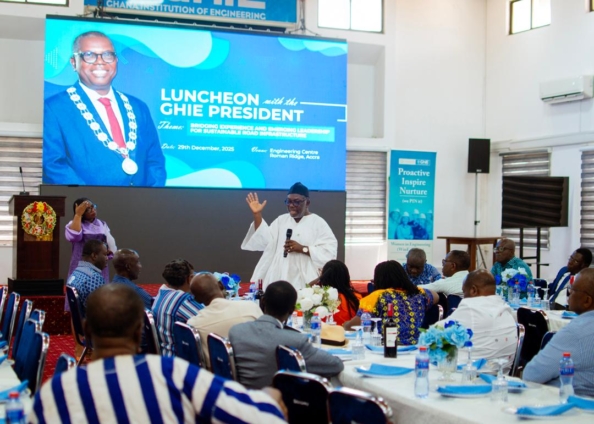
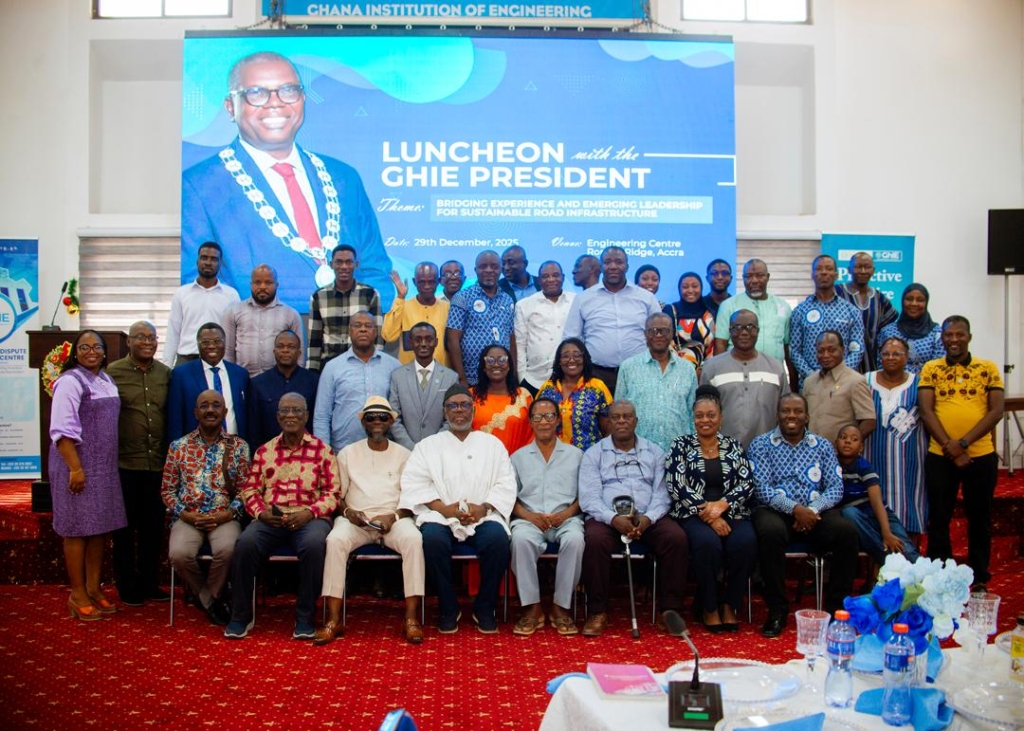
This renewed resolve emerged at a special luncheon held with the President of the Ghana Institution of Engineering (GhIE) at the Engineering Centre in Accra, where professionals from across the road sector gathered to reconnect, reflect, and look ahead.
The luncheon, held on December 29, 2025, provided a relaxed but purposeful space for engineers to meet, reminisce about their shared professional journeys, exchange stories about the past and present of the sector, and explore how they can better shape its future.
Speaking at the event, the President of the Ghana Institution of Engineering, Ing. Ludwig Annang Hesse, F-GhIE, urged engineers to see their role as extending beyond technical design and construction to include the “engineering” of governance, ethics, and institutions.
“Engineering has not only been defined as the science and technology of building machines and structures,” he said, “but also as the art of working deliberately to bring something about. In engineering our future, we must concern ourselves not only with infrastructure, but also with the systems governance, financial and ethical that allow those structures to serve society well.”
He stressed that engineers must be present at decision-making tables to help design and implement systems that create a supportive environment for infrastructure to deliver real value to citizens.
“We must ensure that the governance frameworks around our work are sound, transparent, and effective, so that the roads and systems we build truly improve lives,” he added.
Discussions at the luncheon focused on policies and institutional arrangements in the road sector, the effectiveness of existing institutions, and how engineers can better influence reforms that strengthen accountability, efficiency, and long-term planning in line with Ghana’s long-term vision for the sector.
The former Chief Executive Officer of the Ghana Highway Authority, Ing. Christian Nti, encouraged participants to share lessons from the past and insights from the present in order to “engineer” a better future for the sector and for the country.
“The road sector, for which we have toiled so much, holds enormous promise for Ghana’s development,” Ing. Nti said. “If we reflect honestly, plan thoughtfully, and act collectively, we can make that promise a reality.”
A Civil Engineer Dr. Frederick Yaw Addo-Abedi, F-GhIE, on his part stressed that roads are central to Ghana’s socio-economic development and must therefore be given the priority they deserve. He called for a strong focus on routine and periodic maintenance, an end to ad-hoc development approaches, and improved project management across the sector.
“We must prioritize maintenance, avoid ad-hoc interventions, and strengthen project management in the road sector if we want sustainable and reliable infrastructure,” he added.
The luncheon ended on a warm and reflective note, with participants agreeing that while technical excellence remains central, the future of Ghana’s roads also depends on leadership, collaboration, and the willingness of engineers to engage beyond the drawing board.
Latest Stories
-
Iran and US race to find missing American crew member downed in fighter jet
21 minutes -
Gomoa Easter Carnival: Samini, Ofori Amponsah and Kwabena Kwabena rock Day 2; Obrafour and Kwaw Kese set for Day 3 showdown
32 minutes -
Kenpong intervenes as Afua Asantewaa, husband reconcile after public scrutiny
1 hour -
“Pay this, pay that, and the patient dies” – Former UGMC boss demands end to cash-and-carry in emergency care
1 hour -
Free Primary Healthcare: Gov’t floods clinics with 24,500 medical tools ahead of April 15 launch
2 hours -
Agyarko bolsters NPP chairmanship bid with Henry Quartey and Osei-Owusu as campaign leads
3 hours -
Sky-high spectacle as 2026 Kwahu Easter Paragliding Festival takes flight
3 hours -
Asiedu Nketia supports AshantiFest 2026 art initiative with GH¢50,000
3 hours -
Former UGMC boss recounts ‘up and down’ hospital nightmare resulting in niece’s death
4 hours -
Artemis II crew take ‘spectacular’ image of Earth
4 hours -
Afenyo-Markin criticises high costs stifling Ghanaian startups
5 hours -
Afenyo-Markin slams school feeding contractors for snubbing local rice farmers
5 hours -
This Saturday on Newsfile: Galamsey taxes, sole-sourcing probes, the Black Stars and presidential dialogue post-mortem
5 hours -
Guardiola wants Rodri to stay but says unhappy stars can go
6 hours -
[Playback] Gomoa Easter Carnival: Samini, Kofi Nti, and others deliver electrifying performances
7 hours