

Audio By Carbonatix
A midwife and rural health worker, Eyram Davordzi-Banini, is calling on the government to extend rural incentives to cover all CHPS zones and compounds, warning that many communities would be left with no healthcare at all if rural nurses and midwives are not given the recognition and support they deserve.
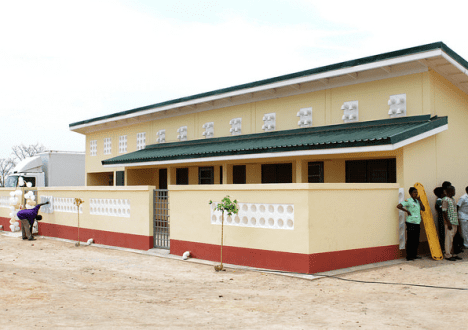
In a passionate appeal addressed to the President, Parliament, and the Ministries of Health and Finance, Davordzi-Banini paints a stark picture of life at a typical CHPS compound in rural Ghana.
“When you visit many CHPS facilities, you may see only one nurse or midwife on duty. What most people do not realise is that this single person is carrying the responsibilities of many professionals,” she said.
That one health worker, she explains, doubles as the cleaner, records officer, OPD and emergency nurse, consulting room “doctor,” laboratory technician, dispensary assistant, cashier, NHIS claims officer, HIV and TB counsellor, data officer, and even the facility’s security.
On top of that, the same midwife or nurse conducts antenatal care, assists with deliveries, provides postnatal care, runs 24-hour services, and goes on home visits—sometimes walking long distances to plead with clients to seek care.
Yet, Davordzi-Banini notes, when the health worker is not visible at the facility for even a moment, community members quickly complain to the local assembly member, forgetting that the worker is entitled to rest, privacy, and a personal life.
She also highlights the stark lack of social amenities in rural communities—poor roads, unreliable transport, no good schools for their children, no recreational centres, and no libraries—making the posting even more punishing compared to city postings.
“When discussions about rural incentives arise, some CHPS zones and compounds are still excluded. This is deeply unfair,” she wrote.
“If Ghana truly wants to strengthen primary healthcare, then rural incentives must cover ALL CHPS zones and compounds, not just a selected few.”
Her appeal comes amid ongoing national conversations about the government’s efforts to improve primary healthcare under the Ghana Health Service, including the Agenda 111 hospital projects and the revitalization of the Community-based Health Planning and Services (CHPS) strategy.
However, health worker unions have repeatedly complained about the uneven distribution of rural allowances, poor infrastructure, and chronic understaffing at remote facilities.
Latest Stories
-
Prudential Life settles GH¢100,000 medical bills under its PRUCares Valentine Experience Initiative
7 minutes -
Wa West Picnic: Peter Lanchene Toobu champions peace, health and unity in landmark celebration
18 minutes -
Dr Mensah Market flooded after downpour in Kumasi
26 minutes -
Armed men reportedly storm Adjen Kotoku Onion Market amid tensions
1 hour -
Tecco Mensah writes: Why football fans must look beyond statistics
2 hours -
Police recover stolen Honda CR-V in Kumasi within 48 hours
3 hours -
Apetorku Gbodzi 2026 Festival opens in Dagbamete with development focus
3 hours -
President Mahama arrives in Lyon to co-chair One Health Summit
3 hours -
Beverly View Plus Hotel draws crowds amid coastal Easter rush in Volta
3 hours -
Maiden Zongo Festival held in Wa amid calls to tackle drug abuse among the youth
3 hours -
FDA warns of fake HIV test kits on Ghanaian market
4 hours -
Africa urged to build resilient health systems as donor support tightens
4 hours -
Easter gesture: Ablakwa settles medical bills for 85 North Tongu constituents
6 hours -
Africa must harness its population strength—Titus-Glover
6 hours -
Visa-free access doesn’t mean unlimited stay – Lom Ahlijah
6 hours