

Audio By Carbonatix
In Ukraine's north-east, Russia has recently deployed an estimated 100,000 troops in renewed attacks. But Quentin Sommerville, who spent the past month with Ukrainian brigades in the area, discovers it is the increasingly sophisticated drone attacks that are particularly feared.
The Serebrianskyi forest is alight. At first, it is only a hint on the breeze, the faint smell of wood smoke amid the pine trees. Three men of the 1st Special Purpose Bohun Brigade climb into an armoured Humvee, as the sound of artillery thumps ahead in the distance.
Earlier the brigade's press officer Taras had warned us: "It's like Verdun out there." A reference to the battlefields of World War One.
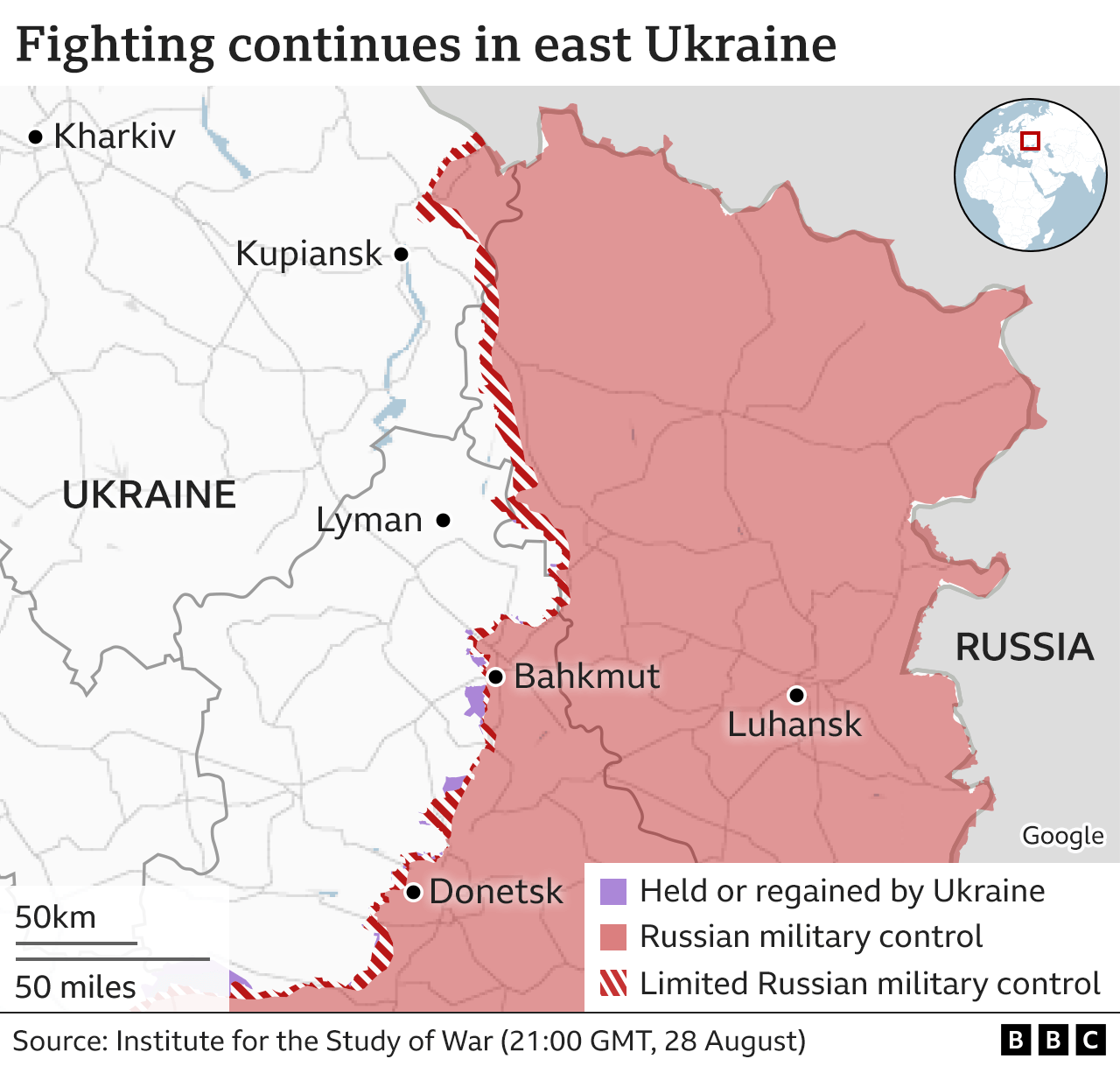
The sprawling forest lies to the east of the city of Lyman. Here, and stretching north to the city of Kupiansk, the Russians have made modest gains in recent weeks. The threat though, according to the commander of Ukraine's eastern forces, is considerable.
On social media last week, General Oleksandr Syrskyi warned that Russian forces were regrouping in the east. He claims Russia has marshalled 100,000 troops in the area and more than 900 tanks.
Russia is seeking to cement its control of the eastern regions where it has captured territory, much of which was recaptured by Ukrainian forces in September last year. Moscow's stated war aim is the "liberation" of Donbas, which is made up of the Luhansk and Donetsk regions. But with its greater manpower, it is attempting to also stretch Ukrainian resources, as Kyiv fights a separate offensive in the south of the country.
As the Humvee drives deeper into the woods, lumbering over dirt tracks, the trees are on fire - some burning where they stand, others now collapsed blackened trunks on the heavily cratered ground.
Dust and smoke billows into the vehicle from the gunner's turret. The battalion commander, who goes by the call sign "Speaker", sits forward in the passenger seat, his attention firmly fixed on the road ahead and the sky above - as much as the small cracked toughened windscreen will allow.
"This [damage] was an artillery strike this morning, maybe a couple of hours ago - you see it's still burning," he said.
Speaker has been fighting Russia and its proxies for years - starting in Donbas in 2014. His only break was a month in hospital after he was shot in the hand last September.
In the car, he barely says a word, and radio communications are kept to a minimum.
The earlier Russian rocket strikes have destroyed the tree canopy, laying bare the ground and road ahead. The troops are exposed, and the Humvee - and a pick-up truck leading in front - kick up great clouds of dirt and sand into the late morning air.
The driver - call sign "Accountant" - grips the steering wheel firmly as the Humvee's engine labours over dips and twists in the track. His helmet rolls around on the centre console, at the feet of the gunner - "Student" - who mans the 50-calibre gun with a cigarette hanging from his lips.
Some 40 minutes into the drive, a fireball explodes directly in front of the Humvee. Student drops down into the cab of the vehicle, and I ask if he's unhurt. He nods OK.
"A lot of drones," Speaker shouts from the passenger seat, cursing. "That was a drone attack against our car - Russian kamikaze drone," he says - referring to devices, guided by secondary surveillance drones, which can crash into targets with pinpoint accuracy.
Speaker continues: "They saw us from the top and then tried to attack. They saw us and now they are seeking us and hunting us. So we need to go fast and go back."
The drone hit the road between the Humvee and the lead pick-up truck, missing us by a metre. The dust cloud we were creating, which may have alerted the Russians to our position, also likely clouded their targeting.
Two drones were in the sky above, Speaker said. One for surveillance, the other to strike. As we head back down another dirt road, the blackened remains of another Humvee - its armour cracked wide open and its turret gone - lies by the roadside, the victim of an earlier attack.
A week ago, Speaker explains, one of their soldiers was killed and three injured when a kamikaze drone took out yet another of the battalion's vehicles.
Ukraine, which enjoyed an advantage in weaponised drones at the beginning of the conflict, is increasingly being challenged by advances in Russian drone tactics and technology. Russia now has drones which hunt in pairs, using laser targeting to hit their mark - an advance that many Ukrainian commanders along the front say is costing lives.
Back at his base, Speaker explains further. "In the last two weeks, drones are attacking more and more and more. Because the Russians, they're studying, they're educating their drone operators and it is… getting harder to fight them."
Soldiers, of course, have the advantage of armour. Civilians do not. And around Kupiansk - the city Ukraine recaptured last September - Russian guns are again shelling people's homes. Evacuation orders have been issued for dozens of towns and villages.
Helping get people to safety is Artur Vynohradov, a volunteer with the charity "I am Saved". The words are written across his T-shirt and have a double meaning. The group is made up of recovering addicts who drive their three battered vans to villages in danger. Since the war's start they say they have saved some 17,000 people. When we met earlier this month they'd brought out 300 people in the previous couple of days.
"We continue to take kids away," he said. "The priority for evacuation is kids."
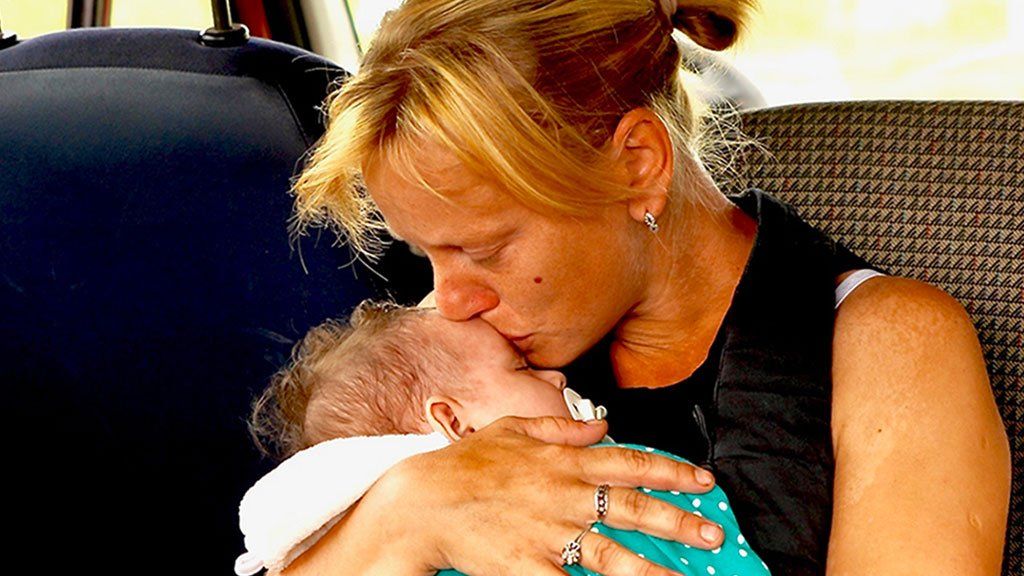
In the back of one van is five-month-old Sofiia, cradled in the arms of her mother, Tetiana. Their neighbourhood was shelled that morning.
"It's very scary to live here. [I need to leave] in order to safeguard my children," she told me, kissing Sofiia's head as she slept.
Beside them in the now-packed van is her grandfather, who didn't give his name. "We counted 36 craters in the morning here after two incomings… A horrifying scene," he said. "I was sitting on the bed drinking coffee and suddenly ended up under the table. The [blast] wave threw me off the bed."
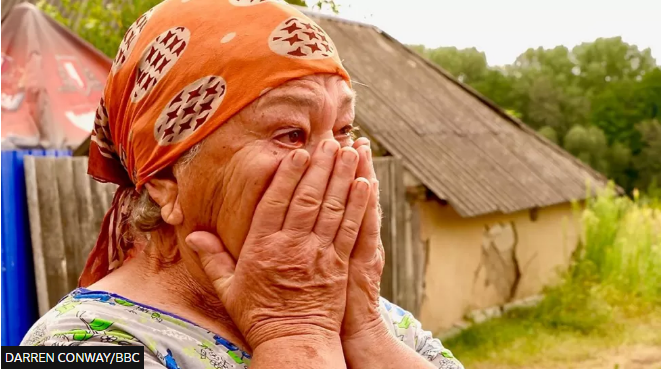
The people around here already lived under Russian occupation for six months, and many do not want to repeat it. Antonina Semenivna, 72, says she'll risk staying for now.
"Yesterday a bomb went off," she said. "We thought it sounded like an aeroplane but then there was a bang. If only [Ukraine's soldiers] could chase them away. But here they keep creeping and creeping and creeping."
Along the front, stretching from Lyman to Kupiansk, Russia's gains don't amount to much - yet.
But for Antonina and her neighbours, they mean everything. A repeat of war's tragedy, that again ends in the separation of Ukrainian families.
Latest Stories
-
After more than 14 years at Atletico Madrid, what next for Simeone?
2 hours -
Conquering the World – Building on the foundations laid by Otto Addo
2 hours -
[Watch Live] Kwaw Kese, Kwami Eugene, Tinny, Keche and others thrill fans at Gomoa Easter Carnival
2 hours -
Gomoa Easter Carnival: Experts charge indigenes to own festival to ensure sustainability
3 hours -
Gomoa Easter Carnival: Edem Agbana and Joy Prime fans shower festival with huge endorsements
5 hours -
Gov’t to overhaul free zones into manufacturing hubs for local production – Trade Minister
6 hours -
Ghana losing $2.5bn yearly from raw exports – Trade Minister reveals
6 hours -
Mahama unveils plans for Kwahu Airport, Convention Centre
6 hours -
World’s oldest leader, Paul Biya to get a deputy for first time in 43-year rule
6 hours -
Search for missing US airman continues as Trump threatens ‘hell’ if Iran does not reach deal
6 hours -
US says it has arrested relatives of late Iranian general Qasem Soleimani
6 hours -
La Liga: Real Madrid’s title hopes hang in the balance as Mallorca snatch stoppage-time winner
6 hours -
FA Cup: Haaland hat-trick powers Man City past Liverpool into semi-finals
6 hours -
FA Cup: Chelsea thrash Port Vale to reach Wembley semi-final
7 hours -
Gov’t to boost tourism in coastal communities through infrastructure, sanitation – Vice President
7 hours