

Audio By Carbonatix
The Taoiseach (Irish prime minister) Simon Harris has asked Ireland's justice minister to bring legislation to cabinet to enable asylum seekers to be sent back to the UK.
Helen McEntee has revealed that 80% of recent arrivals to the Republic came from the UK across the Irish border.
Tánaiste (deputy prime minister) Micheál Martin said the UK's Rwanda policy was already impacting Ireland.
Legislation to revive the UK's Rwanda policy became law on Thursday.
It aims to deter people from crossing the English Channel by sending some asylum seekers to the central African country.
No migrants have yet been sent from the UK.
The UK government had hoped for flights to take off by the spring but Prime Minister Rishi Sunak says this should now happen within 10 to 12 weeks.
A spokesman for Mr Harris said the taoiseach had asked Ms McEntee "to bring proposals to cabinet next week to amend existing law regarding the designation of safe 'third countries' and allowing the return of inadmissible international protection applicants to the UK", Irish broadcaster RTÉ reported on Saturday.
Speaking on RTÉ's Six One News, Ms McEntee said: "There are many reasons why we have seen an increase in migration toward Ireland.
"What's clear in the decision that the UK have taken in choosing Brexit, they have actually seen an increase in people seeking asylum in their country. The way that they deal with that, it's their policy.
"My focus as minister for justice is making sure that we have an effective immigration structure and system.
"That's why I'm introducing fast processing. That's why I'll have emergency legislation at cabinet this week to make sure that we can effectively return people to the UK and that's why I'll be meeting with the Home Secretary [James Cleverly] to raise these issues on Monday."
A spokesman for the Irish Department of Justice told BBC News NI that "the issue of irregular movement within the CTA" - the Common Travel Area between Britain and Ireland - would be discussed at the ministers' meeting.
Earlier in the week, Ms McEntee told a committee of the Oireachtas (Irish Parliament) there had been a rise in the number of people crossing the land border between Northern Ireland and the Republic, with this now making up 80% of the total number of asylum seekers.
In response to her comments, Mr Martin said the UK government's Rwanda policy meant people were "fearful" of staying in the UK and were crossing the border to the Republic so they would not be sent to Rwanda. Mr Martin, who also serves as Ireland's foreign minister, has spoken of his opposition to the policy.
On Sky News on Sunday, Prime Minister Rishi Sunak was asked whether Mr Martin's comments showed the UK was "exporting the problem".
Mr Sunak replied: "The deterrent is - according to your comment - already having an impact, because people are worried about coming here and that demonstrates exactly what I'm saying: if people come to our country illegally, but know that they won't be able to stay, they're much less likely to come."
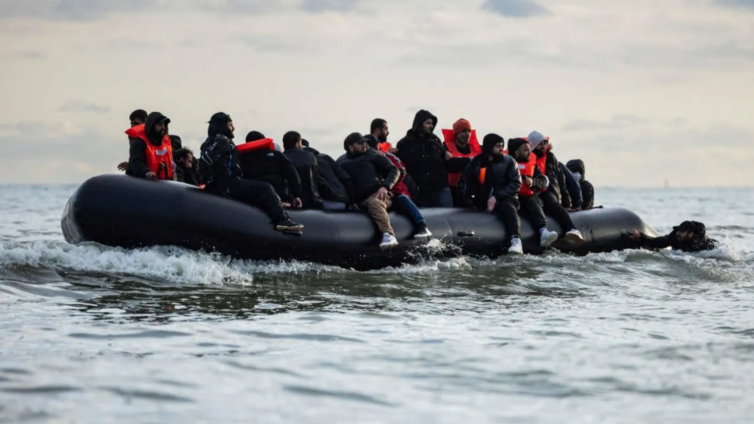
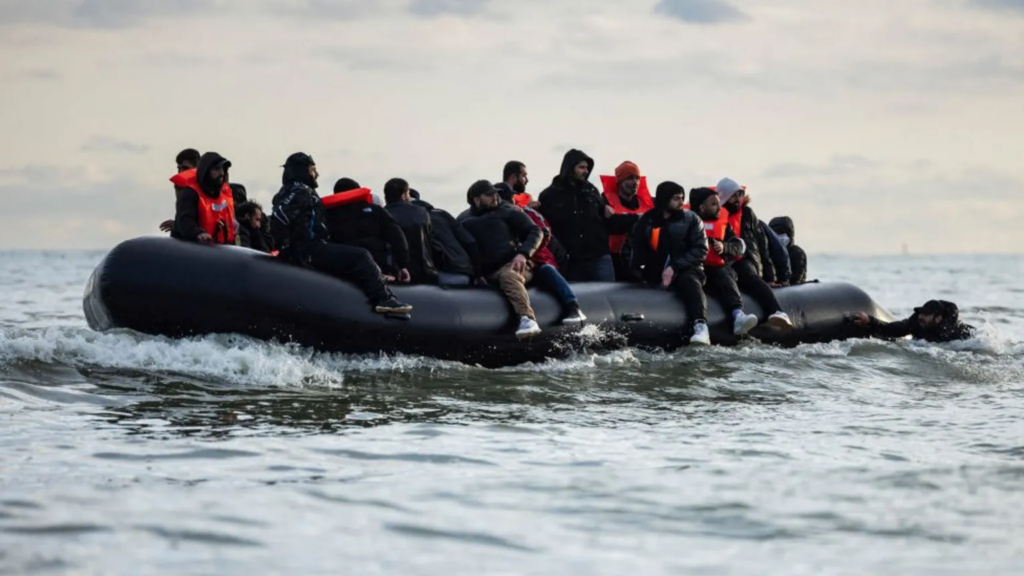
His comments follow reports that around 350 migrants crossed the Channel to England in small boats on Saturday. The French authorities rescued a further 99 people in three boats who had got in difficulty at sea.
Mr Sunak told Sky News that illegal migration as a "global problem" and said many countries were looking to replicate "third-country partnerships" similar to the agreement struck between the UK and Rwanda.
A No 10 spokesperson had previously said it was "too early to jump to specific conclusions about the impact of the act and treaty in terms of migrant behaviour".
The Safety of Rwanda Act, which aims to avoid further legal challenges to the policy by declaring Rwanda a safe country, was approved by MPs and peers this week and passed into law on Thursday - althoughthe plan could still be held up by court challenges.
In the UK, politicians have also been discussing reducing net migration - with former immigration minister Robert Jenrick on Sunday calling for a "far more restrictive system".
Writing in the Sunday Telegraph, Mr Jenrick criticised "politicians of all stripes" who have failed to deliver on "promises to control and reduce the levels of legal migration" in the last 30 years - and said he wanted to see net migration capped at "tens of thousands" of people.
Policing Minister Chris Philp said he was "not in a position to... advocate for a hard cap" on migration levels, but the government was introducing measures to reduce legal migration numbers by about "300,000 a year."
Mr Philp also made a plea to migrants considering making the dangerous Channel crossing from Europe, saying: "Please don't do it. It is dangerous, it is illegal, and it is unnecessary."
Latest Stories
-
Chisora beaten by Wilder in captivating bout
12 minutes -
One dead, six maimed as bloody land feud tears Krachi Nchumuru apart
36 minutes -
Missing service member rescued by US forces after jet downed in Iran, Trump announces
58 minutes -
Gomoa Easter Carnival: Sarkodie, Kuami Eugene, Tinny, set festival ablaze as Day 3 ends on high note
1 hour -
“Feels amazing” – Antoine Semenyo reveals after Manchester City dismantle Liverpool
2 hours -
Mahama calls for emergency cabinet meeting over rising fuel prices
3 hours -
Asante Gold reports US$345million loss for 2025
3 hours -
‘It’s not easy’ – Mother of late Dr Omane Boamah breaks silence
4 hours -
Gov’t making progress in clearing $1.7bn power debt – Mahama
4 hours -
Justice is the engine of growth – Chief Justice
5 hours -
Meet us halfway – Trade Minister tasks private sector with AfCFTA success
6 hours -
After more than 14 years at Atletico Madrid, what next for Simeone?
6 hours -
Conquering the World – Building on the foundations laid by Otto Addo
6 hours -
[Playback] Sarkodie, Kwami Eugene, Tinny, Keche and others thrill fans at Gomoa Easter Carnival
6 hours -
Gomoa Easter Carnival: Experts charge indigenes to own festival to ensure sustainability
7 hours