


Audio By Carbonatix
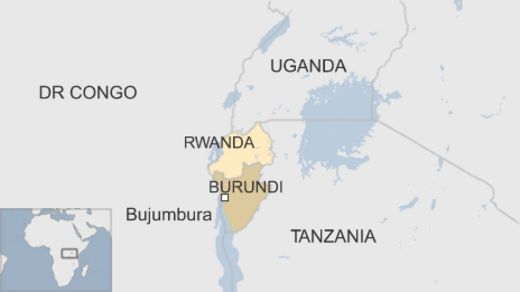
Scores of people are leaving their homes in Burundi's capital ahead of a promised government crackdown.
A cycle of violence began in April with protests against President Pierre Nkurunziza's third-term bid.
Mr Nkurunziza gave a deadline of midnight on Saturday for Burundians to hand in illegal firearms or face being "dealt with as enemies of the nation".
Earlier this week, the UN secretary-general condemned the "inflammatory rhetoric" in Burundi.
And the Brussels-based International Crisis Group said the language was "chillingly similar" to that used in Rwanda before the genocide of 1994.
Agencies reported that many people were leaving Cibitoke and Mutakura, two neighbourhoods of the capital, Bujumbura, that have seen anti-government protests.
"Now I decide to leave as everyone is leaving," one elderly Mutakura resident, Marguerite Bigira, told the Associated Press news agency.
"There is fear everywhere. But I still believe in God and all this will end."
Another fleeing resident, Marie, told Agence France-Presse: "I was terrified, I understood that this time they would kill every last one of us."
The violence, in which close to 200 people have been killed, began in April when the president said he would stand again.
He argued that his first term as president did not count towards the constitutional two-term limit as he was chosen by MPs.
Mr Nkurunziza was duly re-elected to a third term with 70% of the vote in July.
The weapons ultimatum has led to a spike in killings.
On Friday, the body of Welly Nzitonda, the son of a leading human rights activist, was discovered.
UN Human Rights Commissioner Zeid Ra'ad al Hussein said the killing, which he called an assassination, "reinforces fears that there is a systematic policy of targeting members of the opposition, journalists, human rights defenders and ordinary citizens perceived to be opposing the government".
UN Secretary-General Ban Ki-moon said the discovery of bodies in Bujumbura was now a regular occurrence - and many victims showed evidence of summary execution.
Mr Ban said Burundian authorities had a responsibility to protect civilians.
The International Crisis Group and others were commenting on remarks by Burundi's Senate President Reverien Ndikuriyo - who threatened to "pulverise" opponents who did not lay down arms.
Uganda is leading regional efforts to broker peace talks and the UN Security Council is expected to discuss the violence at a meeting on Monday.
Latest Stories
-
LGBTQ+ issues not a priority for Ghanaians – Felix Kwakye Ofosu
13 minutes -
Kwakye Ofosu rejects NPP Minority’s call for apology over anti-LGBTQ bill
20 minutes -
Music giant Universal gets $64bn takeover offer
32 minutes -
NPP criticism of anti-LGBTQ Bill ‘nothing more than political posturing’ — Kwakye Ofosu
40 minutes -
Joy FM was birthed over a bowl of fufu’ – Tommy Annan-Forson shares interesting story
46 minutes -
World Athletics to introduce standalone World Marathon Championships from 2030
51 minutes -
Africa’s voice in global journalism grows as funding, AI and misinformation shape newsrooms
53 minutes -
First Atlantic Bank holds Annual General Meeting, reports strong growth and bold outlook for 2026
55 minutes -
Ghanaian-founded fintech WeWire secures Canadian PSP license to bridge African, global payments
58 minutes -
Uganda confirms 2027 AFCON dates
1 hour -
40 convicted in Northern Region crime crackdown
1 hour -
‘We’re days away from parts of the world experiencing actual shortages:’ Eric Nuttall on energy
1 hour -
‘I’m Obroni in every country’ – Coco Blasian on music, survival and making Accra home
1 hour -
IMANI wants NIC to probe possible conflicts of interest in reinsurance arrangements
1 hour -
First Atlantic Bank strengthens balance sheet as net interest income surges 67%
2 hours