

Audio By Carbonatix
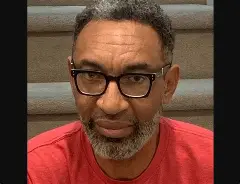
Sekou Nkrumah has called for increased understanding and tolerance in Ghana’s debates on homosexuality, emphasising that education and awareness should not be confused with promoting lifestyles.
His comments come amid ongoing debates in Ghana over the role of education in addressing sexual orientation and the rights of LGBTQ+ individuals, highlighting the tension between cultural norms, human rights, and public policy.
On his programme The Last Word on Tuesday, January 20, Mr Nkrumah responded to concerns about Ghana’s educational curriculum and how LGBTQ+ issues are represented in society.
Mr Nkrumah said, “I understood that the curriculum discussions were aimed at training teachers, not at promoting homosexuality to students,” noting that some controversy stemmed from off-air comments by a media personality that were widely circulated.
The analyst emphasised that education on sensitive topics, including human sexuality, is intended to inform and guide students rather than promote specific behaviours.
The analyst emphasised that education on sensitive topics, including human sexuality, is meant to inform and guide students rather than encourage specific behaviors.
“When a girl experiences menstruation or a boy navigates puberty, they need guidance from a trusted adult,” Nkrumah explained. “Similarly, understanding differences in sexuality requires adult guidance, not judgment or condemnation.”
Reflecting on his personal journey, Nkrumah referenced African American author James Baldwin, noting his exploration of social issues and homosexuality in his works.
“I realised that being homosexual, like being heterosexual, is about love and attraction. It is not for anyone to judge as right or wrong,” he said.
He highlighted that Ghana’s varied cultural and religious makeup requires a careful and balanced approach.
“We cannot pretend that homosexuality does not exist. Some are born that way, while others may be influenced by their experiences. In either case, society must respond with compassion, not condemnation,” he added.
Nkrumah also warned against hypocrisy in public discourse, pointing out that those who condemn others may privately act in ways that contradict their public stance.
He urged Ghanaians to prioritise tolerance, education, and understanding over stigmatisation.
In his remarks, Nkrumah said societal acceptance of different ways of life should be a gradual process. “We must respect individual differences while determining, as a society, what aligns with our cultural and moral framework. Denying reality or imposing foreign values will not create a harmonious society,” he stated.
Latest Stories
-
Health Ministry engages Ga Mantse ahead of Free Primary Healthcare launch
12 minutes -
We can tackle multiple priorities – Sam George defends Anti-LGBTQ Bill push
46 minutes -
Statement: Ghana Chamber of Mines’ Response to Claims in Joe Jackson’s “Ananse Stories about the Economy of Ghana”
48 minutes -
GES opens 2026 teacher recruitment for licensed B.Ed graduates
50 minutes -
Ghana must value skilled trades, build resilient learners — Ibn Chambas
58 minutes -
Ghana must rethink education around relevance, resilience and responsibility — Ibn Chambas
1 hour -
Prince Harry faces defamation lawsuit from charity he co-founded
1 hour -
South Korea deploys thermal cameras to track escaped zoo wolf
1 hour -
Calls for royal meeting with Epstein survivors grow ahead of US visit
1 hour -
Ibn Chambas advocates blend of technology and human values in education
1 hour -
UMA improves healthcare access in Asutifi North with GH₵700k ‘Kim Taylor Legacy’ Walkway
1 hour -
Scholarships Authority and Fanaka University offer sponsorship for procurement and supply chain studies
1 hour -
Bisa Kdei drops new single ‘Go N Look’ featuring Medikal
1 hour -
Benin facing rising terrorism in north as French military presence faces growing criticism
1 hour -
UEW Public Lecture Series 2026: Education debate ‘about the soul of Ghana’s future’ — Dr Ibn Chambas
1 hour