

Audio By Carbonatix
The beneficiaries of some social intervention programs have often times complained of delays in receiving their grants or never receiving them at all. This they say worsens their already awful living conditions.
One such person is 75-year-old Alice Adzokar who resides in Lower Manya Krobo in the Eastern Region.
Unable to walk or work, she relies on the ¢64 allocation she gets from the Livelihood Empowerment Against Poverty (LEAP), every two months.
She is one of the 1.5 people enrolled on the program which allocates between ¢64 and ¢106 cedis to aid their survival.
This time, Alices’ wait has been more "I am sick and cannot walk and I am unable to work too so I depend on government for survival.
"When my allocation does not come due to delays I ask some of my relatives to support me. The money delays for so long I can barely keep up with the schedule."
Alice Adzokar says she does not know who to ask whenever her money delays "I get so worried when I have no money to take care of myself, especially my health needs.
"This is so sad. I'm pleading with government, we are his people so they should please assist us and ensure the monies come on time too."
Alice’s situation and persons in similar situations as hers on other social intervention programs such as capitation grant, school feeding and National Health Insurance Scheme (NHIS) among others, makes NGO, Send Ghana equally unhappy.
They believe if government prioritises making the livelihood of the poor persons better, the release of monies will not be delayed.
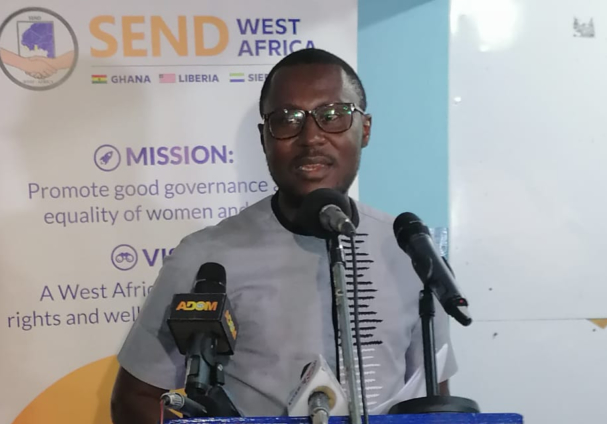
This stance was well elaborated at a news conference in Accra by the Deputy Country Director, Dr Emmanuel Ayifah.
"Indeed the rampant delays in beneficiary grant payment is making the public lose confidence In the effectiveness of the LEAP and other social intervention programs aimed at defeating poverty and address inequality."
Dr Ayifah, who describes these pro-poor interventions as the baseline in "preserving the social protection rights of those enrolled" urged government "to be committed to fulfilling its part not partially but fully."
Acknowledging the financial challenges government may be facing in meeting all its social intervention needs, Dr Ayifah recommends a private partnership which he’s certain will ensure stainable financing for social protection delivery.
He also wants social intervention programs prioritized in the 2022 budget.
"We know preparation for the 2022 budget is underway so we are speaking to the Ministry of Gender, Children and Social Protection, we are making our concerns known and availing our inputs.
"We are also asking the Ministry of Finance to factor in the allocations for these social interventions and ensure they are disbursed to the people, and on time."
Latest Stories
-
Anti-LGBTQ Bill: Forget the rumour mongers, I’m a man of action, and will pass the bill – Speaker
32 minutes -
Women and children among those killed in Sudanese army shelling of wedding celebration
36 minutes -
President Mahama is not sincere with Ghanaians on LGBTQ bill matter – Hassan Tampuli
54 minutes -
Gov’t to establish Prison Industrial Hub to equip inmates with income-generating skills – Prison Service boss
1 hour -
Alhassan Tampuli donates cement, roofing sheets to support storm victims in Gushegu
1 hour -
Alhassan Tampuli appeals for urgent support for storm victims in Gushegu
1 hour -
The hypocrisy must stop; pass Anti-LGBTQ+ Bill now – Alhassan Tampuli to Mahama
1 hour -
Imprisonment should be rehabilitative, not punitive – Ghana Prisons boss at UNGA
2 hours -
Ga Adangbe traditional priests petition Mahama over McDan aviation licence revocation
2 hours -
Anti-LGBTQ Bill: NDC’s arrogance is worrying – Hassan Tampuli
2 hours -
Let’s give OSP time to mature, not to scrap it – Hassan Tampuli
2 hours -
Nigeria convicts 386 Islamist militants in mass trials
2 hours -
Djibouti president wins election with 97.8% of vote, state media says
2 hours -
We don’t have mandate to deduct tax from rent allowance of security services personnel – Interior Ministry clarifies
3 hours -
Ablakwa receives Presidential Special Envoy on Reparations to advance global agenda
3 hours