

Audio By Carbonatix
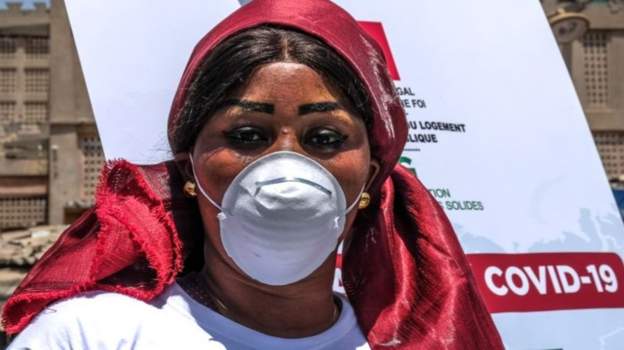
Senegal has cancelled giant celebrations to mark its 60th anniversary of independence from France because of coronavirus.
The West African nation has 140 active cases of Covid-19 - 66 people have recovered and one person has died over the last month.
It has become one of the countries in Africa leading the fight against coronavirus.
As well as declaring a state of emergency, closing its land, air and sea borders to all but essential goods traffic and banning public gatherings, it has focused on tracking potential infections.
Anyone who has been in contact with an infected person has been put up in a hotel and quarantined for 14 days.
The mantra of the World Health Organization (WHO) is “test, test, test” - but tests are time-consuming and expensive, something Africa can ill afford.
That all may be set to change as Senegal is working with a UK company to develop a quick, simple, $1 (£0.80) test.
Validation tests are under way.
As the test can be performed without any need for electricity, it would be of particular use for Africa’s rural communities, which often do not have access to power.
More controversially, Senegal has been pioneering the use of an anti-malarial drug, chloroquine, to treat coronavirus patients.
The WHO says its effectiveness has not been proved; other respected medical institutions have warned against the hype surrounding the drug.
But Abdou Latif Coulibaly, Senegal’s culture minister and government spokesman, told the BBC that doctors in the country had seen what he described as “rapid improvement” in patients treated with chloroquine.
“The WHO is not going to tell us what to do,” he insisted.
“Our doctors can do what they want.”
Although with nearly 8,000 confirmed cases across the continent, Africa has not yet been hit as hard as other places there are fears that if and when Covid-19 takes hold, it will be a catastrophe.
Initiatives such as the cheap test Senegal is developing will be essential in saving lives on a continent with weak healthcare and sanitation systems, and populations often vulnerable to disease because of underlying conditions such as malnutrition, tuberculosis and HIV/Aids.
Latest Stories
-
Fidelity Bank supports UG’s ‘One Student, One Laptop’ initiative
5 minutes -
Mahama announces April 15 launch for Free Primary Health Care Programme
19 minutes -
Government pushes scaled investment in women entrepreneurs at Accra Summit
25 minutes -
Gov’t sets 12%–12.5% guidance for 7-year bond as market re-entry gains momentum
27 minutes -
Tourism Minister encourages youth to take advantage of theatre for jobs
30 minutes -
New political party to challenge dominance of two major parties
34 minutes -
Stroke survivors demand inclusive healthcare, urgent policy interventions nationwide
38 minutes -
China reaffirms unwavering ties with Ghana as Ambassador presents credentials
45 minutes -
Wrongful teacher postings undermine early childhood education in Upper East
50 minutes -
Five new envoys present Letters of Credence to Mahama
55 minutes -
BoG Governor says building buffers and lowering credit costs go together
1 hour -
Fuel shock looms as petrol nears GH¢15.19, diesel GH¢17.85 from April 1
1 hour -
From May to December, nothing works – Tomato traders reveal harsh reality for farmers
1 hour -
Ghanaian farmer can’t grow tomatoes because of lack of irrigation – Tomato Importers Association president
2 hours -
Social media firms must better enforce Australia under-16 ban, watchdog says
2 hours