

Audio By Carbonatix
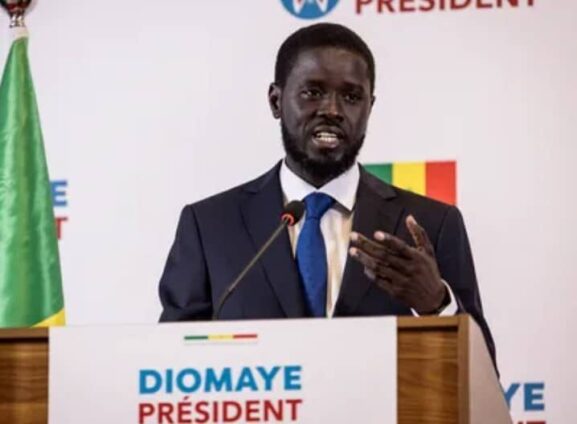
A likely absolute majority for President Bassirou Diomaye Faye's Pastef party in Senegal's legislative election would empower him to pursue his ambitious 25-year agenda, though his first challenge will be coming up with a budget amid a fiscal crisis.
Faye sought a clear parliamentary majority in Sunday's vote to implement the reform agenda that helped sweep him to power in a landslide election victory in March.
But analysts say creating a budget catering both to his voters' needs and to the International Monetary Fund (IMF), with which his government is currently in talks, will be challenging.
Former president Macky Sall, who headed an opposition coalition, on Monday congratulated Pastef on its win. Former prime minister Amadou Ba, who ran against Faye in the presidential election, also conceded defeat, as did other opposition leaders.
Senegal's sovereign debt rose in price on Monday, Tradeweb data showed, while most other African nations' bonds lost ground. The yield on its 2033 dollar bond was down about 10 basis points by 1145 GMT at 9.28%.
"If confirmed by the electoral bodies, Pastef's victory could give a free hand in passing budgets and implementing its programmatic reforms," said Wendyam Lankoande, a consultant at Africa Practice.
But, he noted, voters are "looking for quick solutions to unemployment, rising cost of living, and limited reach of public services in remote rural areas in the hinterland".
In September, a government audit revealed that Senegal's debt and budget deficit were much wider than the previous administration had reported. A $1.9 billion IMF programme agreed in June 2023 has been on hold since.
Negotiations with the IMF to restart disbursements could last until mid-2025.
"We see Pastef's majority as a positive development as it clears the path for President Faye and (Prime Minister Ousmane) Sonko to begin work on a budget for 2025 that aligns broadly with IMF requirements," said Leeuwner Esterhuysen, senior economist at Oxford Economics Africa.
"That said, some of these requirements won't necessarily go down well with Senegalese citizens."
He said the Fund was likely to show some leniency, as it appears to have good relations with the new administration.
"We think the government may be able to delay the implementation of harsh measures such as removing VAT exemptions on farming inputs or increasing household electricity prices, while energy subsidies will be phased out gradually to limit the impact on consumers," Esterhuysen said.
Latest Stories
-
Adenta Circuit Court remands Pastor William Gyimah over viral threats against Vice President
32 minutes -
“We’ve implemented changes to prevent a repeat of the AFCON final” – CAF President Motsepe
34 minutes -
Gov’t orders deployment of Metro Mass buses to cushion commuters amid fuel price hike
2 hours -
Key Indian state polls begin in test for Modi’s party
2 hours -
Playback: Gomoa Easter Carnival in photos
2 hours -
Gov’t orders removal of fuel taxes to ease pump price hikes
2 hours -
“Whatever the decision of CAS, we will respect it” – CAF President Motsepe after AFCON final meetings in Morocco
2 hours -
Emma Ankrah: When waiting becomes part of treatment – Reflections on hospital care
2 hours -
Ghana urges travellers to prepare for new EU border system roll-out
2 hours -
Mahama enforces fuel coupon ban for ministers as cabinet moves to slash fuel taxes
2 hours -
Task force probes strange fish deaths in Tema
2 hours -
Neglected traffic lights turn Awoshie–Anyaa highway into deadly hotspot
3 hours -
EOCO declares Dr Gabriel Tanko Kwamigah-Atokple a fugitive over alleged gold fraud
3 hours -
GSE records GH¢1.09bn trade in equity market; 10 stocks register gains
3 hours -
Fuel prices: Ghana places 15th in Africa
3 hours