

Audio By Carbonatix
A two-week exhibition celebrating the rich history and cultural heritage of the Asante Kingdom was officially opened yesterday afternoon at the Seychelles National Library in Victoria, marking the centenary of Nana Agyeman Prempeh I’s return from exile and has been organised by the Seychelles National Institute for Culture, Heritage, and the Arts in collaboration with the Manhyia Palace Museum and the Seychelles Consulate in Ghana.
The exhibition highlights the enduring legacy of two of the most iconic leaders of the Asante Kingdom: Otumfuo Agyeman Prempeh I and Nana Yaa Asantewaa.
The opening ceremony was attended by President Wavel Ramkalawan, First Lady Mrs. Linda Ramkalawan, the High Commissioner of Ghana to Seychelles, Mrs. Francisca Ashletey-Odunton, and key representatives from the Seychelles government and cultural institutions.
Members of the Prempeh family, both from Seychelles and Ghana and friends were also present to mark the occasion.
The Honorary Consul from the Republic of Seychelles to the Republic of Ghana, Mr. Kwame Acquah, highlighted that this exhibition was just the first in a series of events to commemorate King Prempeh’s return.
“This is the beginning of our month-long celebration, which will continue in Ghana over the next 30 days,” he explained.
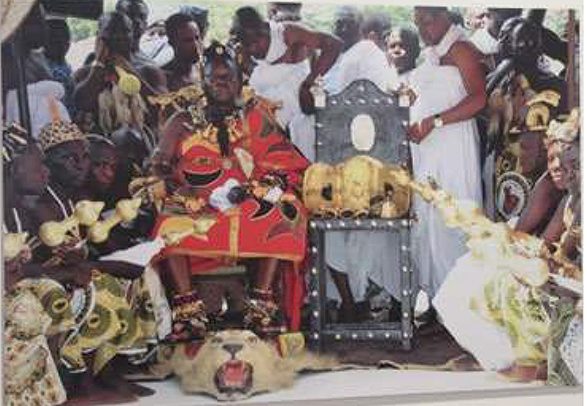
The exhibition centres on the remarkable lives of two central figures in Asante history Otumfuo Agyeman Prempeh I and Naoa Yaa Asantewaa. King Prempeh, the 13th Asantehene, is remembered for his courageous resistance to British colonial forces in the late 19th and early 2oth centuries.
Following the British annexation of the Asante Kingdom, King Prempeh was exiled to Seychelles, where he spent nearly 25 years. Despite being removed from his homeland, his leadership, dignity, and resilience became a symbol of the strength and perseverance of the Asante people.
His eventual return to Ghana in 1924 was not just a personal triumph but a moment of national significance.
Nana Yaa Asantewaa, the Queen Mother of Ejisu, is also a key figure in the exhibition. In 1900, when the British attempted to seize the sacred Golden Stool, Yaa Asantewaa led a courageous defence to protect the kingdom’s spiritual and royal heritage.
Her leadership during the War of the Golden Stool became one of the defining moments of Asante resistance to colonialism, and she remains a powerful symbol of courage and national pride.
In addition to highlighting the lives of these two leaders, the exhibition showcases the cultural richness of the Asante Kingdom. Visitors to the exhibition will have the unique opportunity to watch master artisans from Bonwire, the heart of Asante kente weaving, demonstrate their craft.
Kente cloth is renowned for its intricate patterns and vibrant colours, each design holding deep social, historical, and philosophical meanings. Kente is not just a fabric; it is a symbol of wisdom, royalty, and identity.
The exhibition also features the ancient art of Adinkra stamping, a sacred practice in which symbols like Sankofa (learning from the past) and Dwennimmen (strength and humility) are applied to the fabric.
These symbols encapsulate the spiritual and philosophical beliefs of the Asante people, and their use continues to play an important role in their cultural expression.
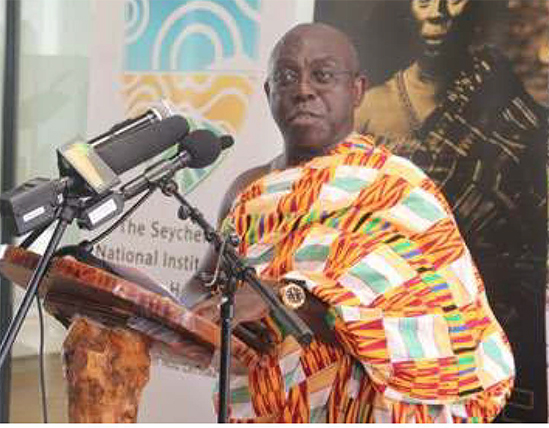
During the opening ceremony, Secretary General of the Seychelles National Institute for Culture, Heritage and the Arts, David Andre, emphasised the significance of King Prempeh’s time in exile.
He explained that the King’s exile was more than just a personal ordeal-it symbolised the enduring bond between the people of Seychelles and Ghana.
“The years the King spent in exile here and his eventual return to his homeland are a testament to the lasting connection between our two peoples, forged in adversity and still strong today,” Andre stated.
He highlighted how King Prempeh’s resilience, grace, and dignity during his exile earned him the respect of the Seychelles community, strengthening the cultural ties between the two nations.
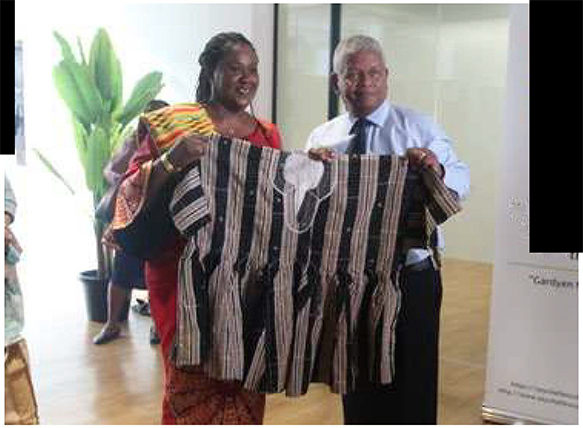
The High Commissioner of the Republic of Ghana to Seychelles, Ms. Francisca Ashletey-Odunton also reflected on the importance of King Prempeh’s time in Seychelles, noting, “King Prempeh spent 24 years in exile and ultimately became a Seychellois.
We are forever grateful for the warmth and hospitality he received here. This bond between Seychelles and Ghana remains deeply appreciated by both our communities:’ Ashletey Odunton further underlined the significance of this commemoration, stating, “This month marks the centenary of King Prempeh’s return to Ghana, and it strengthens the enduring friendship between our two nations. It brings us closer and symbolises the deep sisterhood that binds us together.”
The exhibition also provided an opportunity for members of the Prempeh family and other dignitaries to share personal reflections. The grandson of Nana Kwame Boatin Dominasehene, who was also exiled with King Prempeh, recounted how the legacy of the King’s time in Seychelles continues to resonate today.
He echoed Secretary General David Andre’s words, saying, “The years King Prempeh spent in exile here, and his eventual return to his homeland represents more than just a personal journey.
They symbolise the enduring connection between our two peoples, a bond forged in adversity and still flourishing today. This powerful reflection highlighted the enduring cultural and historical ties between Seychelles and Ghana.
Ivor Agyemang Dua, a celebrated Ghanaian writer, spoke passionately about the lasting spirit of King Prempeh.
“The King survived and thrived thanks to the warmth, generosity, and companionship of the people of Seychelles. For this, we are forever grateful. The spirit of Prempeh must live on,” he said.
Mr. Agyemang Dua called on both the Asante and Seychellois communities to continue nurturing the values of resilience, integrity, and confidence that King Prempeh exemplified.
“The bond between Asante and Seychelles must remain strong. We must nurture the spirit of fortitude and pride, values that remind us of the greatness from which we come,” he added.
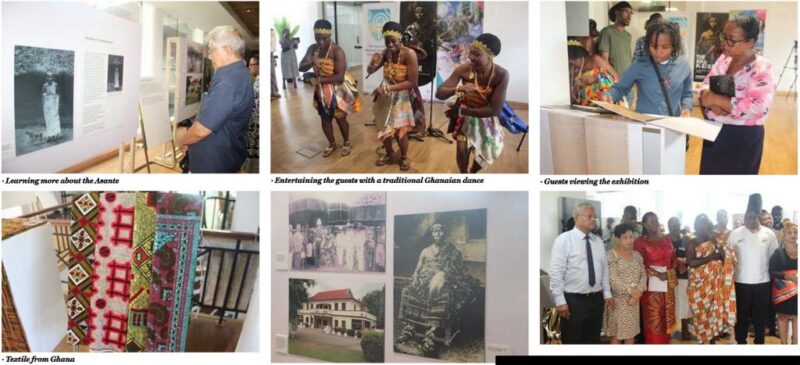
This exhibition not only commemorates King Prempeh’s return to Ghana but also offers a unique opportunity to explore the cultural and historical significance of the Asante Kingdom.
Through its displays, visitors gain insight into the resilience of the Asante people in the face of colonial oppression and the ways in which their cultural traditions have preserved their identity over generations.
The exhibition is a fitting tribute to the enduring legacy of King Prempeh and Nana Yaa Asantewaa and to the shared history that continues to unite Seychelles and Ghana.
Latest Stories
-
Ghana less exposed to global oil disruptions — Fitch
2 minutes -
Police officer killed in road crash at Atortorkorpe in Ada
4 minutes -
EKMA begins dredging major storm drains ahead of peak rainy season
8 minutes -
US has let in 4,499 refugees since October – all but three were South African
13 minutes -
Child Protection Units to be part of MMDA Performance Assessment
20 minutes -
Pub thief jailed over £2.2m Fabergé theft
26 minutes -
Show us the money – COMAC CEO demands full disclosure on ‘dumsor levy’ windfall
38 minutes -
Melania Trump denies ties to Jeffrey Epstein and urges hearing for survivors
50 minutes -
Prosecutors seek Tiger Woods’ prescription drug records after Florida arrest
1 hour -
Five persons arrested for robbing Chinese nationals at Asankragwa
6 hours -
I don’t have evidence of leakage report on fuel contamination – Witness
6 hours -
Netherlands Fire Chief in Ghana to support fire safety reforms and market fire prevention efforts
6 hours -
Mason goes on remand for stealing
6 hours -
Gov’t cuts fuel taxes, deploys buses to curb impact of rising fuel prices
7 hours -
Interior Minister calls for intelligence-driven strategy as Ghana strengthens counter-terrorism efforts
7 hours