


Audio By Carbonatix
High Street shops that were prosecuted for selling illegal skin-whitening creams are continuing to do so, the BBC has found.
Trading Standards acknowledged "it's a really big problem" and more could be done to regulate the industry.
Substances containing hydroquinone and mercury are banned from being sold over-the-counter in the UK as they can cause liver, nerve and foetal damage.
But a lack of resources and data is making the problem hard to tackle.
A previous BBC investigation revealed the banned cosmetics were being sold across the UK.
Trading Standards is responsible for seizing the creams and prosecuting businesses that sell them. However, it appears convicted shop owners are undeterred by these fines and are continuing to sell the products.
Undercover journalists visited 17 shops across London, Leeds, Birmingham and Manchester to see how many illegal products they could purchase. Six of these shops had been previously prosecuted for selling the creams.
A total of 13 shops were found to sell products containing illegal substances.
Of the prosecuted shops, four out of the six resold banned products.\ Meg Chucks was fined £1,400 as well as £1,040 of legal costs in October 2017. She sold skin-bleaching products at her TM Cosmetics in Moston, Greater Manchester. Fifty-one products in her shop contained hydroquinone.
Before being prosecuted, Ms Chucks had been warned by Trading Standards for importing similar types of products via Manchester Airport.
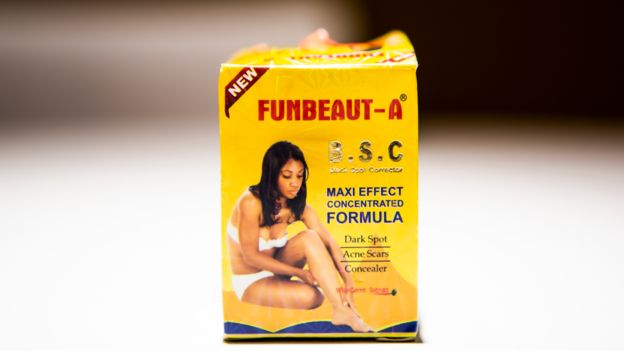
Photo: Funbeaut-A is was sold to undercover BBC reporters in a shop in Manchester. It contains hydroquinone, which cannot be sold over-the-counter in the UK
But despite warnings and fines, the BBC has undercover footage of her still selling a skin-whitening cream.
Ms Chucks admitted to an undercover researcher that she used the product herself. She claimed she did not know it was illegal, despite hydroquinone being listed as an ingredient on the box.
The Nigeria-manufactured product - Funbeaut-A - contained 3% hydroquinone, which is more than the strongest medicine containing hydroquinone licensed for prescription by UK doctors.
In Manchester, a freedom of information request (FoI) revealed Ms Chucks was the only shop owner to be prosecuted in 2017-18 for selling skin-whiteners, despite BBC researchers finding prohibited substances in other Manchester shops.
Ms Chucks refused our request for an interview.
South London YouTubers Arlene Dihoulou and Mariam Omotunde used the skin-whitening creams when they were teenagers.
They had no idea the products they were using were illegal.
Arlene started using the treatments at the age of 16 because she wanted to "fit in".
"I used to look at my skin as really ugly."
"I just wanted to be desirable".
Mariam, 22, went to a local shop to purchase the creams. She did not read the ingredients, but just picked the products based on the skin colour of the lady on the bottle, assuming they were safe to use.
Both girls stopped using the products before they had damaging health consequences, but were shocked the illegal products were sold so openly in the shops.
Mariam added: "Don't they have people who come check what you're selling? The regulations obviously aren't doing their jobs if this is so readily available."
"We have the sugar tax now, because people see obesity as a big thing. A cause of that is fizzy drinks. So now the prices are higher and the sugar is less.
"So in the same way, this is something that needs to be highly monitored and regulated, because people can die from these creams."
Despite the damaging effects of the treatments, the BBC was told there is "no central collection of data" on the number of prosecutions, seizures or accusations across the country, resulting in a lack of understanding about the scale of the issue.
Trading Standards officer Cenred Elworthy said that some traders do stop selling the products after being prosecuted, although the BBC has contrary evidence to this. He said "secondary offenders are often not selling things that are blatantly, obviously full of illegal products".
Elworthy admits "no-one has actually served jail time for selling them" despite being caught still selling the illegal products while serving a suspended sentence.
He suggested the industry could be better regulated through "on-the-spot fines" for businesses selling the skin-whitening products, and clearer sentencing guidelines.
According to Mr Elworthy, Trading Standards could do more shop visits and seizures, but it struggles to after a 40% cut in resources over the past 10 years.
He believes a team of 50 to 60 enforcers would be required in London alone to tackle the issue.
Latest Stories
-
We can tackle multiple priorities – Sam George defends Anti-LGBTQ Bill push
5 minutes -
Statement: Ghana Chamber of Mines’ Response to Claims in Joe Jackson’s “Ananse Stories about the Economy of Ghana”
6 minutes -
GES opens 2026 teacher recruitment for licensed B.Ed graduates
9 minutes -
Ghana must value skilled trades, build resilient learners — Ibn Chambas
17 minutes -
Ghana must rethink education around relevance, resilience and responsibility — Ibn Chambas
20 minutes -
Prince Harry faces defamation lawsuit from charity he co-founded
22 minutes -
South Korea deploys thermal cameras to track escaped zoo wolf
23 minutes -
Calls for royal meeting with Epstein survivors grow ahead of US visit
27 minutes -
Ibn Chambas advocates blend of technology and human values in education
28 minutes -
UMA improves healthcare access in Asutifi North with GH₵700k ‘Kim Taylor Legacy’ Walkway
33 minutes -
Scholarships Authority and Fanaka University offer sponsorship for procurement and supply chain studies
36 minutes -
Bisa Kdei drops new single ‘Go N Look’ featuring Medikal
42 minutes -
Benin facing rising terrorism in north as French military presence faces growing criticism
43 minutes -
UEW Public Lecture Series 2026: Education debate ‘about the soul of Ghana’s future’ — Dr Ibn Chambas
44 minutes -
EU fingerprint and photo travel rules come into force from today
1 hour