


Audio By Carbonatix
As global fertility rates continue to fall, raising alarm over a potential population collapse, the United Nations Population Fund (UNFPA) is challenging the socio-economic policies and social systems that undermine people’s ability to build the families they want.
At a virtual media briefing ahead of the launch of the 2025 State of World Population Report, UNFPA unveiled data from a global survey conducted across 14 countries. The conclusion? According to the report, the crisis is not that people don’t want children, rather, it’s that they can’t have the families they desire.
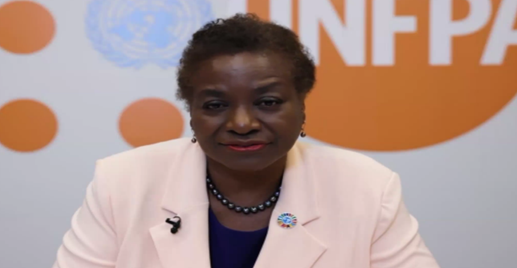
“This is not a fertility crisis; it is a crisis of reproductive agency,” said Dr. Natalia Kanem, Executive Director of UNFPA. “The ability to decide freely and responsibly whether, when, and with whom to have children is being denied or undermined around the world.”
While declining fertility is often portrayed as a voluntary trend among younger generations, the data shows otherwise. More than half of those who want children cited economic hardship as the primary barrier preventing them from starting or expanding their families. Others pointed to health challenges, infertility, lack of access to quality reproductive healthcare, fears about raising children in unstable political or environmental conditions, and a lack of support from a suitable partner.
The data further states that in Africa, the conflict is rather overwhelming. The World Health Organization reports that many countries with the highest fertility rates also face the highest infertility rates, largely due to poor reproductive health infrastructure.
This contradiction highlights a deeper issue not one of choice, but of limited access and opportunity. “Education, particularly around fertility and reproductive health, must play a central role”, Dr. Kanem added.
She explained further that teaching young people that fertility declines with age, that lifestyle factors like smoking and drug use affect reproductive outcomes, and that all contraceptive methods carry a failure risk, is essential.
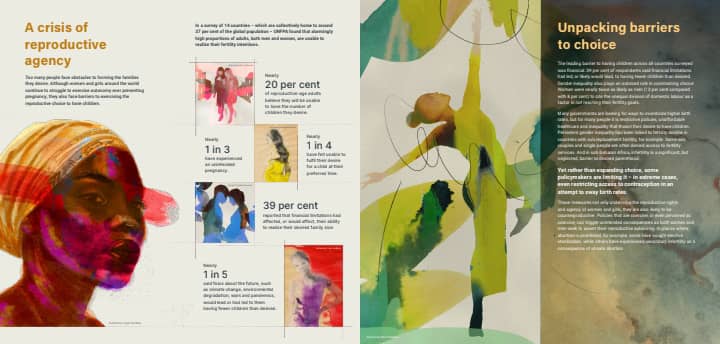
Another key factor the data identified as fueling the continued decline in fertility aspirations is gender inequality. The report highlights that while 186 countries globally provide maternity leave, only 122 offer paternity leave, and even then, the average duration is just nine days. This imbalance places the burden of caregiving almost entirely on women and discourages shared responsibility in parenthood leaving many women discontented. Many men do want to be involved fathers, but workplace stigma and structural limitations make it difficult.
“The solution is to remove the barriers to free choice,” said Dr. Kanem. “That means creating systems that promote family-friendly policies, support fathers, and reduce the stigma around caregiving roles.”
In response to demographic shifts, some the report said governments are resorting to aggressive pronatalist policies aimed at boosting birth rates. These include financial incentives, communications campaigns, and, in more extreme cases, restrictive reproductive laws. But UNFPA cautions that such approaches often backfire.
‘’When people feel their reproductive autonomy is being forced whether through abortion bans, legal restrictions, or intrusive campaigns—they may respond with resistance. Some seek elective sterilization to maintain control over their bodies. Others, particularly in places with unsafe abortion practices, face devastating health consequences, including secondary infertility’’.
“Fertility rates may be falling but that’s not the threat,” Dr. Kanem warned. “The real threat is to freedom.”
The report calls for a fundamental rethinking of how societies address fertility and population change and also cautions that a poorly designed or underfunded education programme can have harmful effects and further limit reproductive choice. “We must move the conversation from panic to possibility and the media has a responsibility to report this issue with the depth and nuance it truly deserves.” Dr. Kanem stated
UNFPA concludes that the most urgent global priority is not managing fertility rates, but supporting people in making informed, autonomous decisions about their reproductive lives. Dr. Kanem summed it up clearly: “We must ask not what governments want for population numbers, but what people want for their lives.”
Latest Stories
-
Oti Regional House of Chiefs pays courtesy call on NPA CEO
19 minutes -
Choosing between marriage and church
23 minutes -
GTEC orders University of Ghana to comply with approved fees or face sanctions
31 minutes -
Black Star International Film Festival appoints Aba Arthur as Diaspora Ambassador
41 minutes -
Opponents dazed by our support in Northern region – Bawumia Campaign denies coersion claim
55 minutes -
US to suspend visa processing for 75 nations, State Department says
1 hour -
Prisons Service to produce sanitary pads, uniforms and furniture for schools
1 hour -
AFROSON1C X storms Accra with sold-out show
1 hour -
Ghana, Canada strengthen immigration cooperation as 2026 FIFA World Cup approaches
1 hour -
US pulling some personnel from Qatar air base, official tells CBS
1 hour -
Star Oil pays GH¢ 2.6 billion in taxes and levies for 2025
2 hours -
The Uncertainty of Precision: How VAR Mirrors the Heisenberg Uncertainty Principle in Football
2 hours -
Paradigm Initiative condemns internet shutdown ahead of Uganda elections
2 hours -
Jospong’s sustainability drive deserves more spotlight nationally and internationally – Dr Gloria Kusi
2 hours -
Black Sherif gives 2025 a perfect score: “100 out of 100”
2 hours