

Audio By Carbonatix
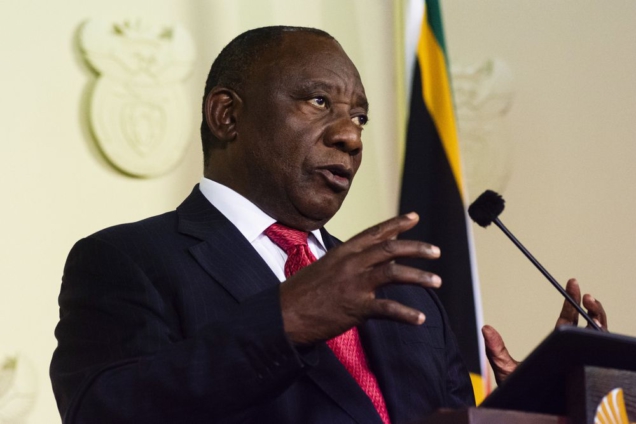
President Cyril Ramaphosa has announced that South Africa is to reimpose stricter measures against Covid-19 fearing the whole country will soon face a third wave of the pandemic.
Four of the nation’s nine provinces, including Gauteng which includes Johannesburg and Pretoria and has the biggest population, are already battling a third wave of infections, Ramaphosa said on Sunday.
“It may only be a matter of time before the country as a whole will have entered a third wave,” he said.
South Africa is officially the worst-hit country on the continent with more than 1.65 million cases and 56,363 deaths.
“The number of infections has begun to rise sharply in several parts of the country,” the president said as hospital entries also climb.
“Delaying the spread of the virus is especially important now to allow as many people as possible to be vaccinated before the third wave reaches its peak,” he added.
The country recorded 4,515 new cases over the past 24 hours and Ramaphosa said the “positivity rate” among tests conducted was now “a cause for concern”.
The restrictions, starting on Monday, will force non-essential establishments like restaurants, bars and fitness centres to close by 10pm local time (20:00 GMT) as the curfew will be extended by an hour to start at 11pm and end at 4am.
Gatherings, including political and faith events, will be limited to 250 people outdoors and 100 indoors.
Authorities did stop short of reimposing some strict measures, such as limits on people’s movements during the day and a ban on the sales of alcohol and tobacco products, that were in place at times last year.
South Africa has seen two previous surges in infections, the first in the middle of last year and a second, much worse wave in December and January when the emergence of a variant pushed infections and deaths to higher levels than the first surge.
The virus was currently following “the same trajectory” as those waves, Ramaphosa said.
Experts have warned that this wave, arriving with the Southern Hemisphere winter, might be even worse.
The surge in cases also cast more attention on South Africa’s lagging vaccine rollout. Only about 1.5 percent of the country’s 60 million people have received a vaccine.
The government, under fire for failing to buy vaccines quickly, says it has paid for doses to cover 40 million of the 59 million South Africans – or enough to reach herd immunity.
Ramaphosa has repeatedly condemned “vaccine apartheid” with rich countries buying up most of the vaccine doses.
“As the African continent we are pushing ahead with efforts to expand our vaccine manufacturing capacity with a view to being self-sufficient in vaccine production,” he said.
South Africa and India are campaigning for an end to patent rights on coronavirus vaccines to help every country to manufacture its own supplies.
The G7 summit of rich nations will discuss the issue at a summit in the United Kingdom next month.
Latest Stories
-
Prudential Life settles GH¢100,000 medical bills under its PRUCares Valentine Experience Initiative
6 hours -
Wa West Picnic: Peter Lanchene Toobu champions peace, health and unity in landmark celebration
6 hours -
Dr Mensah Market flooded after downpour in Kumasi
6 hours -
Armed men reportedly storm Adjen Kotoku Onion Market amid tensions
7 hours -
Tecco Mensah writes: Why football fans must look beyond statistics
8 hours -
Police recover stolen Honda CR-V in Kumasi within 48 hours
9 hours -
Apetorku Gbodzi 2026 Festival opens in Dagbamete with development focus
9 hours -
President Mahama arrives in Lyon to co-chair One Health Summit
9 hours -
Beverly View Plus Hotel draws crowds amid coastal Easter rush in Volta
9 hours -
Maiden Zongo Festival held in Wa amid calls to tackle drug abuse among the youth
9 hours -
FDA warns of fake HIV test kits on Ghanaian market
10 hours -
Africa urged to build resilient health systems as donor support tightens
10 hours -
Easter gesture: Ablakwa settles medical bills for 85 North Tongu constituents
12 hours -
Africa must harness its population strength—Titus-Glover
12 hours -
Visa-free access doesn’t mean unlimited stay – Lom Ahlijah
12 hours