


Audio By Carbonatix
The South African authorities have suspended several initiation schools where boys have died in recent weeks taking part in circumcision ceremonies.The country's religious and cultural commission said the schools in different areas of the Eastern Cape would be suspended for a year.It called for the arrest of those responsible for at least 20 deaths.The initiation into manhood involves spending weeks in mountainous areas in harsh conditions.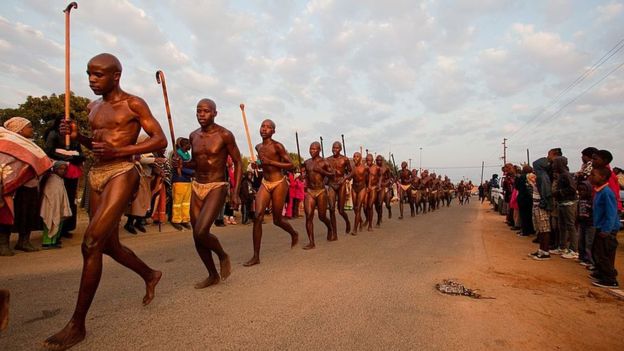 The homecoming, seen here for Ndebele men in 2013, is seen as a time of celebrationFor many who practise the ritual, the homecoming is a time of celebration, where a feast is prepared for the family and community to enjoy. It is a celebration of the young men's safe return and more importantly their new adult status.But sometimes things go terribly wrong, with some initiates dying or left disfigured from a botched circumcision.Hundreds of boys were taken to hospital last year where they were treated for penile amputation, septic wounds and dehydration.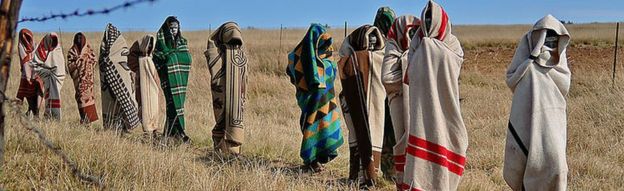
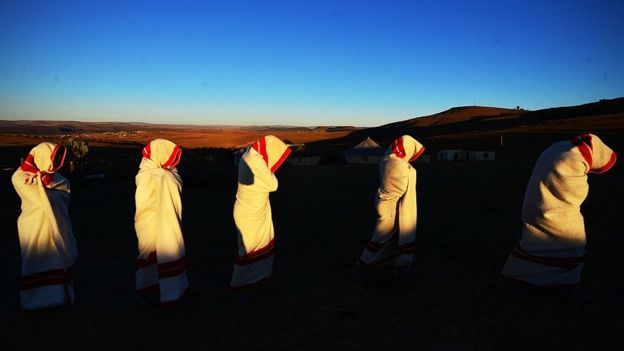 The initiation ceremonies are an important part of cultural life for many South AfricansThe role of the elder would be to find a reputable surgeon in the village with a proven track record.So any greater involvement of the state may not be welcome.Traditional circumcision remains a contentious issue in South Africa even within the communities that practise it.While there are no easy answers, many agree that young boys should not be dying simply for wanting to be recognised as a man.
Why do people get circumcised?
Every year, tens of thousands of initiates aged between 15 and 17 spend time in seclusion in the bush where they are taught about how to be upstanding men in society.But exactly what happens there is kept a secret.Ukwaluka, or traditional initiation, is seen as a necessary part of the passage from boyhood to manhood by some of the country's largest ethnic groups, including the Xhosa andThe homecoming, seen here for Ndebele men in 2013, is seen as a time of celebrationFor many who practise the ritual, the homecoming is a time of celebration, where a feast is prepared for the family and community to enjoy. It is a celebration of the young men's safe return and more importantly their new adult status.But sometimes things go terribly wrong, with some initiates dying or left disfigured from a botched circumcision.Hundreds of boys were taken to hospital last year where they were treated for penile amputation, septic wounds and dehydration.Why is there a 'circumcision season' and what happens?
South Africa's circumcision season typically falls during two periods, in June and in December.This is when most boys are home from school and have time to complete the rituals, which can last up to a month.When young Xhosa boys are aged between 15 and 17, their families prepare to take them to an initiation school - where they will be under the care of an "ingcibi", a traditional surgeon, and an "ikhankatha", a traditional nurse.Circumcision in South Africa
- More than 400 boys have died from botched circumcisions in South Africa since 2012
- South Africa's initiations seasons are in June (winter) and December (summer)
- Tens of thousands of young boys undergo male circumcision in the bush, carried out by traditional surgeons
- More than 100 boys were rescued from unregistered school in June this year
- Dehydration, malnutrition and wounds going septic are the leading causes of deaths of initiates
If children are dying why not just outlaw the practice?
Circumcision is steeped in tradition that has been passed down through many generations. It offers a profound cultural connection with the past.And while some have described it as an outdated and increasingly dangerous tradition, the right to practise one's culture is protected by South Africa's constitution.But what is causing the deaths?
Most of the deaths have been as a result of dehydration and wounds going septic, pointing to a lack of proper care and ill-treatment of initiates at the schools.Many of those who have died were attending initiation schools which had not been registered with the authorities. These schools are on the rise because initiation has become a lucrative exercise with the surgeons and nurses being paid for their work.There is also a problem that some underage children, who may not be able to cope, go through the ritual without their parents' approval.In June, more than 100 boys were rescued from unregistered schools in the Eastern Cape province."We are seeing the mushrooming of these illegal initiation schools, where individuals are inviting people to send their boys at an exorbitant fee. That's why we are saying it's now the commercialisation of the practice which is against tradition," local government spokesperson Mamkeli Ngam was quoted by News24 as saying.The ingcibi now need to be registered before being allowed to carry out circumcisions.The government is also now paying for medics to visit the registered schools to check on the well-being of the boys. It is harder to check up on the unregistered schools, because of their illicit nature.Should the government take over the circumcisions?
Government-funded health centres now also perform circumcisions as an alternative to the traditional route, but cultural purists see this as a Westernisation of their custom.Traditionally, initiation has been a private matters, usually arranged by the boy's father or a male elder within the family.The initiation ceremonies are an important part of cultural life for many South AfricansThe role of the elder would be to find a reputable surgeon in the village with a proven track record.So any greater involvement of the state may not be welcome.Traditional circumcision remains a contentious issue in South Africa even within the communities that practise it.While there are no easy answers, many agree that young boys should not be dying simply for wanting to be recognised as a man.DISCLAIMER: The Views, Comments, Opinions, Contributions and Statements made by Readers and Contributors on this platform do not necessarily represent the views or policy of Multimedia Group Limited.
DISCLAIMER: The Views, Comments, Opinions, Contributions and Statements made by Readers and Contributors on this platform do not necessarily represent the views or policy of Multimedia Group Limited.
Latest Stories
-
Sammi Awuku to question GMA in Parliament over vessel linked to alleged drug trafficking
12 minutes -
Trapped miner rescued from flooded Mexican tunnel after 14 days
20 minutes -
NPRA to prosecute employers over unpaid Tier 2 Pension contributions — Deputy CEO warns
26 minutes -
ACCPA calls for Africa’s strategic repositioning at NUS, Singapore
34 minutes -
Oil prices rise as concerns grow over ‘fragile’ US-Iran ceasefire
37 minutes -
NPP revises internal election guidelines to strengthen transparency and inclusiveness
1 hour -
NACOC set to issue licences to qualified applicants for cannabis cultivation – Deputy Director-General
2 hours -
Easter Outreach: Victory Bible Church offers free healthcare, NHIS support to hundreds
2 hours -
NPP cannot pressure Mahama to sign a bill not yet received—Solomon Owusu
2 hours -
MPs, institutions deepen support for Ghana Sports Fund with fresh contributions
2 hours -
Four people die trying to board boat in Channel crossing attempt
2 hours -
Abirem MP announces GH₵500,000 education fund to support needy students
2 hours -
African stakeholders call for stronger ‘One Health’ action on climate and health crises
2 hours -
DVLA to commission 5 new service centres in Greater Accra
2 hours -
Agenda 111 and the right to health: A broken social contract
2 hours