

Audio By Carbonatix
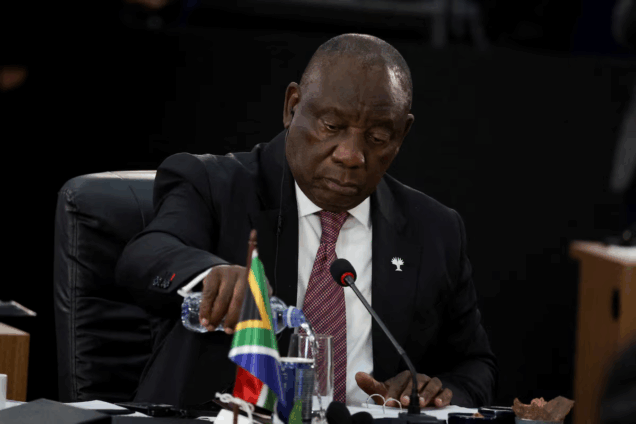
South African President Cyril Ramaphosa on Thursday launched a G20 experts taskforce to examine global wealth inequality and its impact on growth, poverty and multilateralism — the first initiative of its kind for the G20.
The six-member taskforce, chaired by Nobel Economics Prize laureate Joseph Stiglitz, is expected to present its findings to G20 leaders due to convene in Johannesburg in November.
South Africa has sought to use its Group of 20 presidency this year to highlight issues affecting poorer nations, including rising inequality and sovereign debt burdens.
"South Africa's G20 presidency today is proud to launch an initiative that will target this issue of global wealth inequality - a first for the G20 - and offer a practical way forward," Ramaphosa said in a statement.
He said people globally were aware of how inequality undermines dignity and the chance for a better future, citing unfair vaccine distribution during the COVID-19 pandemic as an example.
"They see the impacts of rising food and energy prices, of debt, of trade wars, all driving this growing gap between the rich and the rest of the world, undermining progress and economic dynamism," Ramaphosa added. "A new oligarchy in our global economy is becoming apparent."
Stiglitz said the task force's goal is to turn public frustration over inequality into actionable policy proposals for G20 leaders. "Inequality was always a choice – and G20 nations have the power to choose a different path on a range of economic and social policies," Stiglitz said.
According to the World Inequality Report, the poorest half of the world's population owned just 2% of global wealth in 2021, while the richest 10% controlled 76% of it.
The task force includes other prominent figures such as UNAIDS Executive Director Winnie Byanyima and Jayati Ghosh, a development economist and professor at the University of Massachusetts Amherst.
The United States is set to take over the rotating G20 presidency at the end of this year.
The G20 was founded to coordinate financial policy after the Asian financial crisis of the late 1990s, before expanding to state leaders during the 2008 global financial crisis.
Latest Stories
-
OpenAI changes deal with US military after backlash
38 minutes -
Mexican drug lord ‘El Mencho’ buried in golden coffin
48 minutes -
Building gold reserves, losing hospitals? – Finance professor flags 1% GDP cost
1 hour -
Trump ‘does not care’ if Iran play at World Cup
4 hours -
Burna Boy’s associate, Rahman Jago confirms singer converted to Islam
4 hours -
Amazon says drones damaged three facilities in UAE and Bahrain
5 hours -
NDC’s Baba Jamal wins Ayawaso East by-election
5 hours -
Integrity over individuals: Economic Fighters League maintains vote-buying stance in Ayawaso East
5 hours -
How to follow European football
5 hours -
A new dawn: Formula One charges into an unpredictable 2026
5 hours -
Trump threatens to halt trade with Spain over military base access
6 hours -
Trump says US Navy will protect ships in Middle East ‘if necessary’
6 hours -
Ghana shines in GSMA DNSI and DPRI 2025 report due to E-Levy repeal and tech neutrality
7 hours -
NJA College of Education inducts 379 students amidst infrastructure gains and calls for professional discipline
7 hours -
GJA President, executives join Sammy Gyamfi to observe One-Week memorial of father-in-law
7 hours