

Audio By Carbonatix
For years, the origins of the Guanches have been a mystery, with some people speculating they could have been descendants of Atlanteans.
The Canary Islands’ subtropical climate, aquamarine waters and otherworldly volcanic and desert landscapes led more than 15 million people to visit the archipelago last year.
The islands are considered the southernmost region of Spain, with their easternmost point located just 100km west of Morocco.
But long before the first Spanish settlers arrived to the islands in the 1470s, another civilization was already thriving there: the Guanches.
The Guanches’ origins have long been debated and speculated by archaeologists and historians.
Some theorise they were descendants of the Celts, or perhaps the Vikings. Others believe they could even be descended from the mythical inhabitants of Atlantis.
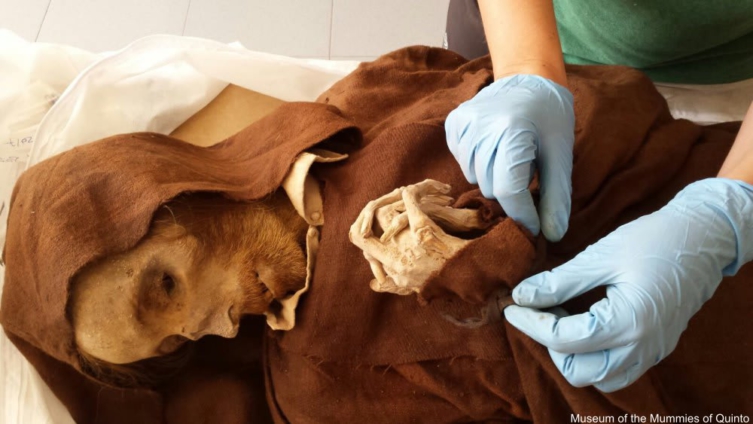
A 2019 study of the DNA from ancient mummies from the islands, however, revealed they were most likely Berbers from North Africa, who arrived there around 100AD or even earlier.
How exactly the Guanches reached the archipelago remains unclear. One theory suggests they crossed in small vessels, landing in the islands of Lanzarote and Fuerteventura.
And although the number of settlers also remains a mystery, studies estimate that 14 couples would have been enough to populate the archipelago.
Archaeological studies suggest the Guanches were organised in a tribal society, where chieftains or kings ruled almost absolutely.
They relied on farming, hunting and gathering, and their diet included milk, goat, pork and fruits.
They mainly dressed in goat-skin leather tunics and vests made of plaited rushes and lived in caves or simple low-stone houses.
They adapted caves and grottoes to be used as silos and temples.
Some of those structures have been preserved to this day and indicate the Guanches’ sophisticated astronomical knowledge: holes on the caves’ walls allowed sunlight in at certain positions during different times of the year, marking solstices and equinoxes.
One of the most noteworthy of those structures is Risco Caído, a settlement that consists of 21 caves excavated on a volcanic tuff about 100m high above the Barraco Hondo River in the island of Gran Canaria.
The site is believed to have been used as a silo, a temple and a place for astronomical observation, with holes that allowed sunlight and moonlight to enter the caves and illuminate symbolic drawings on the walls.
In 2019, Risco Caído became the first Unesco World Heritage site in the Canary Islands.
Latest Stories
-
Kobina Atta-Bedi criticises government’s sole-sourced contracts, calls for reform
36 minutes -
Kwahu to become industrial powerhouse under new 24-Hour Economy – Goosie Tanoh
45 minutes -
Lawra MP donates transformer to Eremon SHTS to resolve power crisis
1 hour -
Lawra MP delivers medical equipment, commissions renovated nurses’ quarters
1 hour -
Livestream: Newsfile discusses galamsey taxes, sole-sourcing probes, Black Stars coach sacking and presidential dialogue
2 hours -
Ghana-Russia partnership supports mothers and children at Princess Marie Louise Hospital
2 hours -
Mother arrested for allegedly severing daughter’s toe in Juaboso
2 hours -
Iran and US race to find missing American crew member downed in fighter jet
4 hours -
Gomoa Easter Carnival: Samini, Ofori Amponsah and Kwabena Kwabena rock Day 2; Obrafour and Kwaw Kese set for Day 3 showdown
5 hours -
‘Comical joke’: Atta Akyea disputes ‘personal account’ claim in former NSB boss Adu-Boahene case
5 hours -
Kenpong intervenes as Afua Asantewaa, husband reconcile after public scrutiny
5 hours -
“Pay this, pay that, and the patient dies” – Former UGMC boss demands end to cash-and-carry in emergency care
5 hours -
Free Primary Healthcare: Gov’t floods clinics with 24,500 medical tools ahead of April 15 launch
6 hours -
Agyarko bolsters NPP chairmanship bid with Henry Quartey and Osei-Owusu as campaign leads
7 hours -
Sky-high spectacle as 2026 Kwahu Easter Paragliding Festival takes flight
7 hours