

Audio By Carbonatix
Stakeholders have called for increased investment in health workforce development, sustainable financing and stronger governance to accelerate Ghana’s attainment of Universal Health Coverage (UHC).
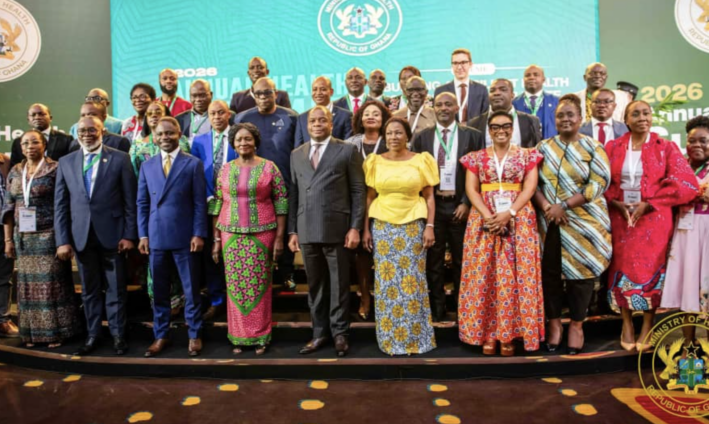
The call dominated discussions at the 2026 Annual Health Summit in Accra, where participants reviewed health sector performance and explored strategies to strengthen healthcare delivery nationwide.
The appeal was made by religious leaders, parliamentarians and development partners at the opening of the three-day summit on the theme: “Building a Resilient Health Workforce to Accelerate the Attainment of Universal Health Coverage”.
The Rev. Stephen Yenusom Wengam, General Superintendent of Assemblies of God Ghana and Chairman of the opening ceremony, commended government and health sector leaders for promoting inclusive stakeholder engagement and pursuing reforms to improve access to healthcare.
He described the summit as an important platform for assessing achievements, addressing challenges and identifying practical solutions to strengthen the health system.
Rev. Wengam said Ghana had demonstrated a longstanding commitment to universal health coverage through the evolution of the country’s health insurance system into the National Health Insurance Scheme (NHIS).
He praised the financing of the NHIS through tax revenues and government’s decision to uncap the National Health Insurance Fund, describing them as significant steps towards ensuring equitable access to healthcare.
Rev. Wengam said achieving UHC meant ensuring that all people could access quality healthcare services without suffering financial hardship.
He said the goal could only be achieved through strong health system governance, sustainable financing and a well-trained, adequately motivated and equitably distributed health workforce.
Rev. Wengam expressed concern about persistent shortages of health professionals and their concentration in urban areas, noting that in some parts of the country one doctor serves more than 25,000 people.
“This undermines equitable access to health services and calls for deliberate policies and incentives to ensure a more balanced distribution of the workforce,” he said.
Rev. Wengam urged government to continue investing in primary healthcare, workforce development and community-based interventions while exploring innovative approaches to leverage private sector participation in the delivery of essential health services.
Dr Mark Kurt Nawaane, Chairman of Parliament’s Select Committee on Health, reaffirmed the Committee’s commitment to supporting policy, legislative and oversight measures required to translate the summit’s outcomes into improvements in healthcare delivery.
He said workforce issues, including training, specialisation, equitable deployment, retention, professionalism and leadership development, remained central to achieving quality healthcare for all citizens.
Dr Nawaane stressed the need to improve the welfare and remuneration of health professionals while maintaining professional ethics and standards.
“The financial welfare of health professionals must be top-notch,” he stated.
Dr Nawaane said Parliament was prepared to work with the Ministry of Health, professional councils and training institutions to review laws and regulations that hinder workforce distribution and career progression.
Mr Dominic Farrell, Development Partners Lead and representative of the Foreign, Commonwealth and Development Office, said Ghana was at a critical stage in its transition towards greater domestic financing of the health sector.
He noted that external support for key health priorities, including vaccines and essential commodities, was expected to decline, making sustainable domestic financing increasingly important.
Mr Farrell identified three immediate priorities as stronger coordination between government and development partners, harmonised financing of critical health services and clear multi-year financing plans aligned with national priorities.
He welcomed government’s efforts to secure sustainable vaccine financing and address the risk of stock-outs of essential health commodities.
On maternal health, Mr Farrell described recent increases in institutional maternal mortality as a serious concern requiring urgent intervention.
He said targeted actions under the Presidential Initiative on Maternal Health and Emergency Response, together with expanded access to primary healthcare and essential services, would be critical to reversing the trend.
Mr Farrell also highlighted the need for increased investment in health workforce recruitment, rural retention incentives and specialist training to address persistent staffing gaps and improve healthcare delivery nationwide.
The summit brought together policymakers, development partners, health professional associations, academia and civil society to deliberate on strategies for strengthening Ghana’s health system.
Stakeholders agreed that achieving a safe, sustainable and internationally compliant health system required continuous collaboration, investment in workforce development, stronger regulatory enforcement and increased public participation.
Latest Stories
-
Every year, the lawyers come out, and so does the nonsense! – Ace Ankomah writes
13 seconds -
Digital transformation without an ownership culture can digitise poor service
3 minutes -
Fishing communities demand revocation of offshore gold exploration licences over livelihood concerns
6 minutes -
How Ghanaian tycoon Manoj Lakhiani built a water and plastics empire from a $25,000 loan
8 minutes -
GoldBod recovers GH¢38.7m of GH¢55.8m outstanding receivables; remainder subject to legal action – Sammy Gyamfi
15 minutes -
GEXIM Bank donates GH¢200,000 worth of medical equipment to Korle-Bu Child Health Department
18 minutes -
Majority rejects Minority’s claims over GH¢49.7m South Africa evacuation
19 minutes -
GEXIM urges banks to support refurbishment of Korle-Bu Teaching Hospital’s Child Health Department
23 minutes -
Don’t appoint your cheerleader as referee
27 minutes -
Ghana needs stronger international cooperation to fight cybercrime – CSA
29 minutes -
CSA warns of growing cyber threats as Ghana’s digital dependence increases
36 minutes -
USTED dean warns GAUA strike could disrupt Ghana’s restored academic calendar
48 minutes -
Bechem meat processing factory 50% complete, set for March 2027 completion – Kwakye Ofosu
1 hour -
NDC can appoint whoever they want to EC, but Ghanaians will make a decision in 2028 – Titus Glover
1 hour -
GoldBod initiative has created over 1,300 public and private sector jobs – Sammy Gyamfi
1 hour