

Audio By Carbonatix
Available statistics indicate the rate of poverty in the Ashanti province has fallen by 50 percent from 2005 to 2017.
However, the nature of development has led to increasing pressure on the environment and natural resources, endangering the sustainable future of the region.
The Bureau of Integrated Rural Development (B.I.R. D) at the KNUST is seeking avenues to reverse the trend.
With an annual population growth rate of 4%, the city’s population is projected to increase from 2.5 million in 2015 to 4.2 million in 2030.
Over the past 30 to 40 years, research has shown that the landscape population of Greater Kumasi has almost doubled.
This has resulted in a shift from the city to the nearby communities, resulting in conflict in certain areas in the region.
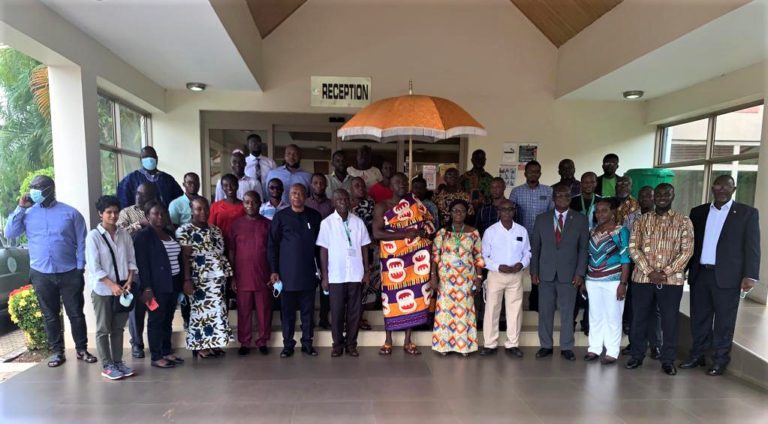
The Bureau of Integrated Rural Development (B.I.R.D) at the KNUST, in collaboration with the PBL Netherlands Environmental Agency organized a multi-stakeholder workshop on planning and shared vision for inclusive development of Greater Kumasi landscape.
Dr. Albert Arhin, a research fellow at the Bureau, believes the changes in the landscape of Greater Kumasi has a lot of implications for the city.
He observed the recent flooding in homes, streets and other places is as a result of people building on waterways. He says until action is taken, the floods will continue to happen.
‘’we are having a lot of people building in waterways, places where water needs to pass being enclosed. There is one report that shows that about 50% of the network of streams and rivers within the Greater Kumasi have vanished over the past 30 years so clearly, these are all issues that contribute to the flooding. If action is not taken, we are likely to continue to see these flood happening.
Policy direction is one and commitment to act on those policies for example there are clear laws and regulations that affect the building and how people should construct. Part of the responsibility is the government, the private actors and the citizens,’’ he noted
A representative of the Asantehene, Otumfuo Osei Tutu II, attributed the current challenges faced by Greater Kumasi to lack of planning and unlawful sale of lands.
He lauded the organizers of the workshop and expressed hope the outcomes will be implemented.
“Ever since the sale of land became a thing that the chiefs and other people became accustomed to, we faced the problem of how to make Kumasi look beautiful.
As a chief, if my grandson sells a piece of land that is not supposed to be sold and the district assembly has not even drawn a layout of the place.
Where do we go from here? This is why I think that chiefs and district assembly have to find a way of structuring the layout around the community that already exists," he said.
Globally, the pressure on nature from accelerated demand for land, water, and other natural resources, coupled with human-induced climate change, has generated discussions on using a landscape approach towards planning and response interventions.
Prof. Ernestina Fredua Antoh from the regional coordinating council, says the goal is to identify strategies and shared stakeholder ambitions for the Kumasi landscape.
“We hope to transform these strategies into visualizing future development narratives and scenarios in relation to the sustainable development goals.
"We have been working over the past few months with some existing regional platforms to map out and sketch out what a business as scenario currently looks like for the trajectory towards inclusive and resilient city landscape for the 2030 agenda of sustainable development," he emphasized.
Latest Stories
-
Sammi Awuku to question GMA in Parliament over vessel linked to alleged drug trafficking
13 minutes -
Trapped miner rescued from flooded Mexican tunnel after 14 days
21 minutes -
NPRA to prosecute employers over unpaid Tier 2 Pension contributions — Deputy CEO warns
27 minutes -
ACCPA calls for Africa’s strategic repositioning at NUS, Singapore
35 minutes -
Oil prices rise as concerns grow over ‘fragile’ US-Iran ceasefire
38 minutes -
Crude production hits 6-year low—PIAC calls for urgent investment plan
47 minutes -
NPP revises internal election guidelines to strengthen transparency and inclusiveness
1 hour -
NACOC set to issue licences to qualified applicants for cannabis cultivation – Deputy Director-General
2 hours -
Easter Outreach: Victory Bible Church offers free healthcare, NHIS support to hundreds
2 hours -
NPP cannot pressure Mahama to sign a bill not yet received—Solomon Owusu
2 hours -
MPs, institutions deepen support for Ghana Sports Fund with fresh contributions
2 hours -
Four people die trying to board boat in Channel crossing attempt
2 hours -
Abirem MP announces GH₵500,000 education fund to support needy students
2 hours -
African stakeholders call for stronger ‘One Health’ action on climate and health crises
2 hours -
DVLA to commission 5 new service centres in Greater Accra
2 hours