

Audio By Carbonatix
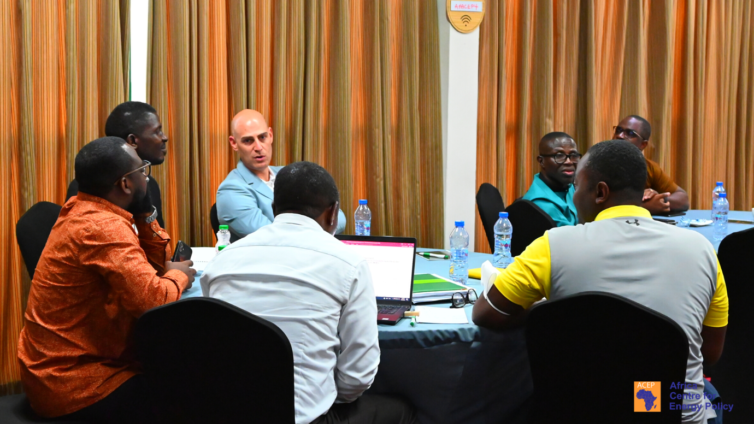
Stakeholders relevant to climate financing met on Thursday, September 22, 2022, to discuss the implementation and delivery of climate finance in Ghana.
The support pledged to Africa for climate finance by the world’s wealthiest economies is yet to materialize.
As of 2020, only $83 billion of the $100 billion per annum commitment made for climate action by developed countries to developing countries had been met. Of this, only $20 billion was provided to Africa between 2016 and 2019.
In Ghana, an estimated $9 billion to $15 billion is required to implement the program of actions in the revised Nationally Determined Contributions (NDCs), a climate action plan to cut emissions and adapt to climate impacts.
To understand the climate finance landscape in Ghana, the Africa Centre for Energy Policy (ACEP), in partnership with APRI - Africa Policy Research Institute (APRI), a think tank based in Berlin, Germany, engaged key stakeholders, who met on Thursday, September 22, 2022, at Alisa Hotel in Accra, Ghana.
The stakeholders were drawn from government agencies, green funding agencies, banks and other organizations that are active in the climate finance landscape. They examined the systems that underpin public finance delivery and implementation in Ghana.
Mr Benjamin Boakye, the Executive Director at ACEP, indicated that there was a need to identify the gaps and tools required to build systems to attract climate financing and discuss both internal and external approaches of generating finance, and how to use these resources to solve climate issues.
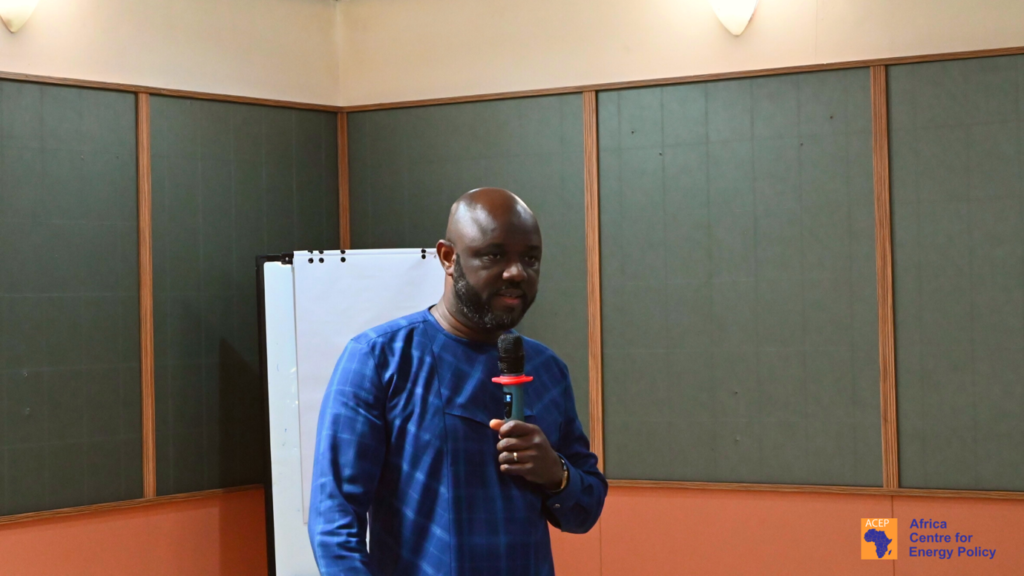
According to Dr Olumide Abimbola, Executive Director of APRI, it is important to have a very clear understanding of the experiences of Ghanaian stakeholders regarding climate finance.
“We need to have an empirical analysis of the gaps, both in terms of the amount coming into the country as well as in terms of the policy priorities of the Ghanaian government”, he said.
Speaking on the challenges Ghana faces in accessing climate finance, participants highlighted the need for applicants of international climate funds such as the Green Climate Fund (GCF) and the Global Environment Facility (GEF) to build capacity in areas relevant to the management of the projects they plan to embark on.
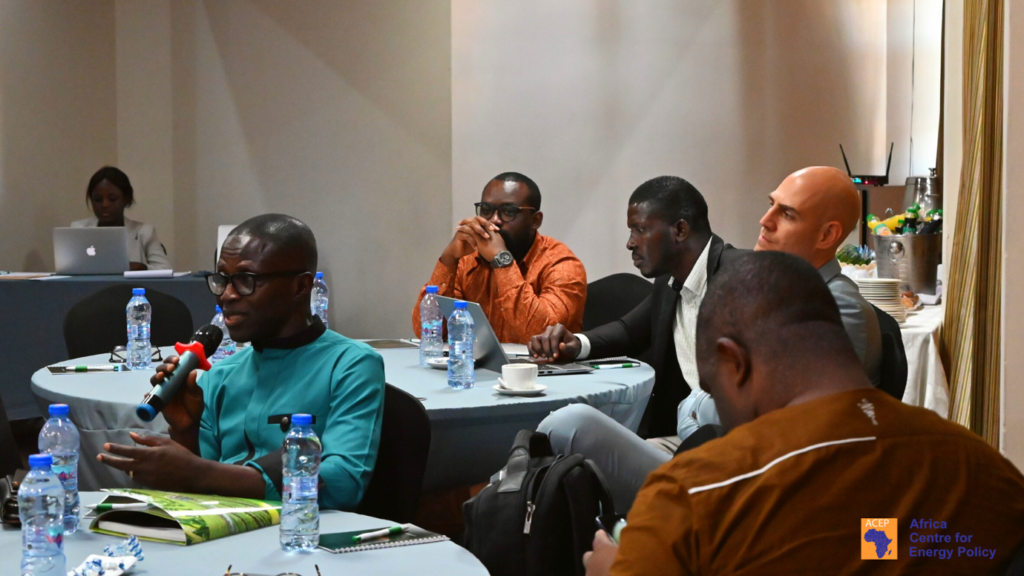
The discussions also revealed that the lack of transparency in allocating the funds, the high demand for climate data and funding proposals, and co-financing requirements, among other factors, make access to climate financing challenging for Ghana.
Participants believed that qualified human resource is necessary to undertake documentation to receive funding.
Representatives from the banking sector highlighted the importance of financial intermediaries (e.g. Commercial banks, Microfinance institutions, mutual fund companies) towards climate financing.
The discussions revealed that such intermediaries are relevant to access finance for green-focused businesses that do not have capacity to access green funds from major funding sources.
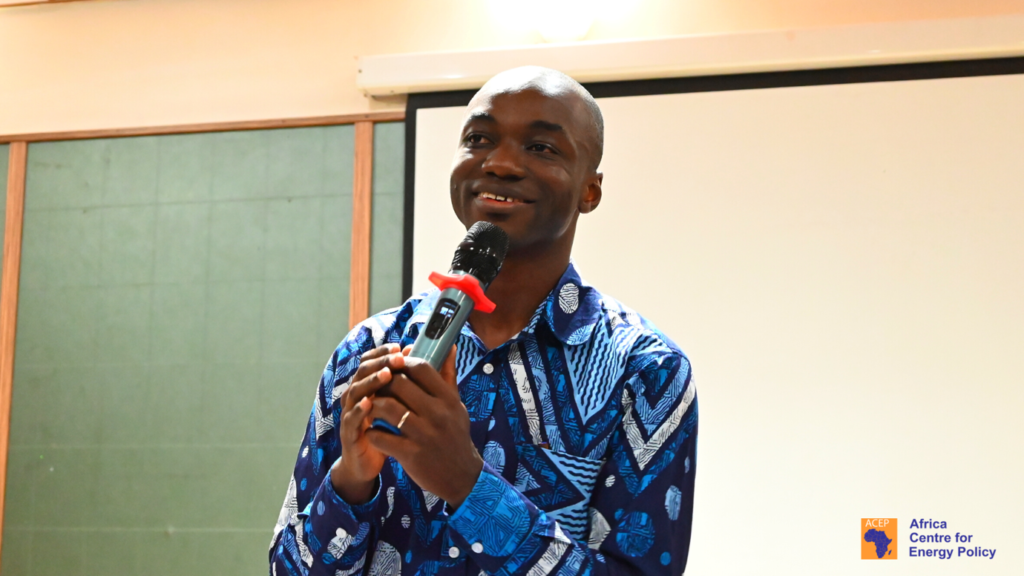
Stakeholders from the government agencies also reiterated the need for developed countries to redeem their commitment to provide finance towards climate actions.
This was particularly important as Ghana needs adequate funding to meet its climate action targets it has highlighted in its revised Nationally Determined Contributions (NDCs) under the Paris Agreement.
The stakeholder engagement was carried out in the context of an ongoing research project on climate finance in Africa.
This engagement helps ACEP and APRI build evidence on climate finance needs, perceptions, challenges, and pathways to solutions, and contribute to discussions before and during COP27 by providing empirical evidence to support negotiating positions around equity and fairness in accessing finance and effectiveness.
The study will be published at the end of October 2022, followed by a larger stakeholder workshop in Accra that details the results and communicate appropriate steps for Ghana to obtain the relevant funding for climate action.
Key Highlights
- Ghana needs an estimated $9-14 billion to implement its climate action plan as communicated in the country’s Nationally Determined Contributions (NDCs).
- Stakeholder engagement reveals challenges in terms of capacity building, transparency issues on fund allocation, and missing climate data
- Local banks called for cheap financing (i.e., low-interest rates) to ease on-lending to green businesses who do not have the capacity to access core financing from the major climate funds.
- The engagement also called for international agencies and developed countries to redeem pledges made to support climate action in developing countries
- The stakeholder engagement is part of a wider project on climate finance in Africa, Study to launch in October
Latest Stories
-
Meet us halfway – Trade Minister tasks private sector with AfCFTA success
2 hours -
After more than 14 years at Atletico Madrid, what next for Simeone?
2 hours -
Conquering the World – Building on the foundations laid by Otto Addo
2 hours -
[Watch Live] Kwaw Kese, Kwami Eugene, Tinny, Keche and others thrill fans at Gomoa Easter Carnival
3 hours -
Gomoa Easter Carnival: Experts charge indigenes to own festival to ensure sustainability
4 hours -
Gomoa Easter Carnival: Edem Agbana and Joy Prime fans shower festival with huge endorsements
5 hours -
Gov’t to overhaul free zones into manufacturing hubs for local production – Trade Minister
6 hours -
Ghana losing $2.5bn yearly from raw exports – Trade Minister reveals
6 hours -
Mahama unveils plans for Kwahu Airport, Convention Centre
6 hours -
World’s oldest leader, Paul Biya to get a deputy for first time in 43-year rule
6 hours -
Search for missing US airman continues as Trump threatens ‘hell’ if Iran does not reach deal
6 hours -
US says it has arrested relatives of late Iranian general Qasem Soleimani
7 hours -
La Liga: Real Madrid’s title hopes hang in the balance as Mallorca snatch stoppage-time winner
7 hours -
FA Cup: Haaland hat-trick powers Man City past Liverpool into semi-finals
7 hours -
FA Cup: Chelsea thrash Port Vale to reach Wembley semi-final
7 hours