

Audio By Carbonatix
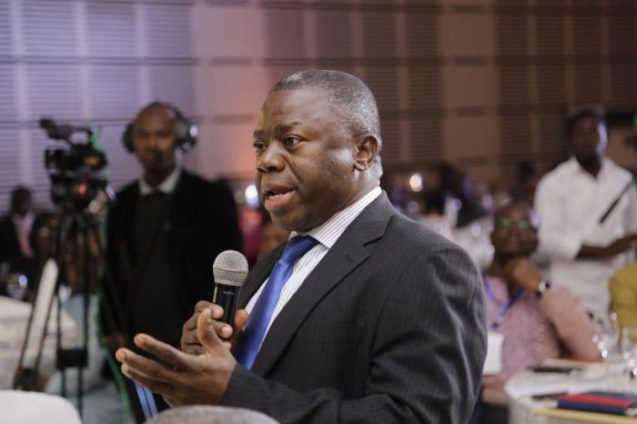
Former President of the Ghana Association of Banks, Alhassan Andani, says the institutions of state must not lose sight of their responsibility to raise red flags at the right time.
According to him, the recent banking sector crisis and its subsequent clean-up operation which cost the country an estimated GH₵10.98bn ($2.1bn), equivalent to just over 3% of the nation’s GDP in 2019, could have been mitigated had state institutions raised red flags on time.
He noted that their long silence despite the canker staring them in the face is what had led to the so-called crisis.
“So when people say banking crisis as we had and they collapsed, most of it wasn’t crisis. We saw that these entities that failed were simply not doing banking; they were not doing banking as we know it.
“That’s why I am saying we should never compromise institutional discipline for keeping the society clean, keeping the economy clean, and making sure that people can believe where they’re going to put money,” he said on JoyNews’ PM Express Business Edition.
“So we had all these people gathering money from people and promising interest rates that were out of this world. And for those of us who were in regular banking knew that there wasn’t any kind of investment that you could deploy borrowed funds, I mean, clients’ deposits to earn the kind of interest rates that they were promising people who were depositing monies with them.
“So straight away, institutions were there, whether it was SEC, whether it was Bank of Ghana, whether it was other governmental agencies, they were there that knew that this was not right but we allowed it. So for me it wasn’t crisis. We allowed thievery, we allowed just outright wrongdoing to persist for a very long time,” he explained further.
In 2017, the Akufo-Addo-led government implemented the financial sector clean-up initiative to prevent the financial sector from collapsing.
This followed an asset quality review in 2015 and 2016 by the Bank of Ghana. The report noted that there were severe challenges with solvency, liquidity and asset quality in the country’s banking industry.
According to reports, about nine banks, 23 savings and loans companies, 386 microfinance companies and 53 fund management institutions were collapsed.
Many employees lost their jobs due to the financial sector clean-up.
Latest Stories
-
Nurse laureate launches Cancer Care Africa Foundation to tackle late diagnosis, workforce gaps
30 minutes -
Ghana to lose GH¢18.15bn in revenue by 2027 from abolishing Covid levy, E-levy – CPS study
44 minutes -
Reintroduce scrapped taxes to close revenue gap – Tax expert
59 minutes -
GRA applauds CPS study, urges continuous policy scrutiny
1 hour -
Wear blue or green hat to survive – IBAG president says insurance industry ‘captured by politics’
1 hour -
AGI commends government’s move to resolve the power crisis in Volta and Oti Regions
2 hours -
Broker sector worse hit by state interference – IBAG president reveals
2 hours -
IBAG president alleges political interference driving kickbacks in insurance sector
2 hours -
Trump agrees to two-week ceasefire, Iran says safe passage through Hormuz possible
2 hours -
Dozens killed as Angola flood death toll rises
3 hours -
Russia confirms deaths of 16 Cameroonians fighting in Ukraine war, Yaounde says
3 hours -
Plan to scrap presidential elections puts Zimbabweans at loggerheads
3 hours -
Guinea-Bissau transporters strike over higher fuel prices
3 hours -
Iran ceasefire deal a partial win for Trump – but at a high cost
3 hours -
Oil slides below $100 after Trump announces two-week ceasefire
4 hours