

Audio By Carbonatix
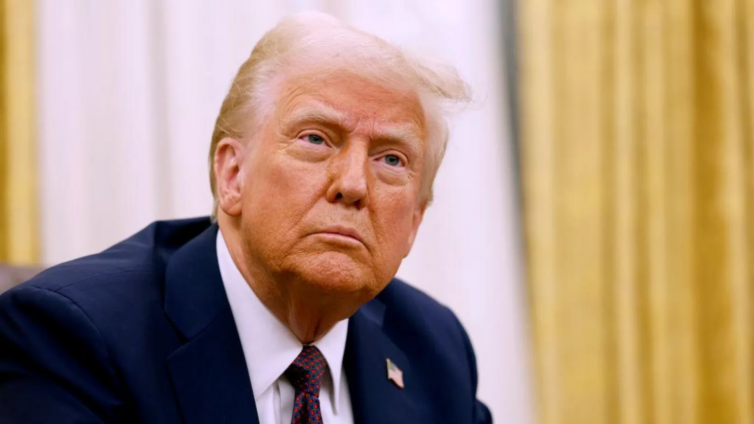
Stocks markets have fallen in the US and Asia over concerns about the negative economic impact of President Donald Trump's tariffs.
It followed the president saying in a TV interview that the world's biggest economy was in a "period of transition", when asked about suggestions of a potential recession.
Since those remarks were broadcast on Sunday, top Trump officials and advisers have sought to calm investor fears.
"The previous notion of Trump being a stock market president is being re-evaluated," said Charu Chanana, an investment strategist at investment bank Saxo, told the BBC.
In a Fox News interview broadcast at the weekend but recorded on Thursday, Trump appeared to acknowledge concerns about the economy. "I hate to predict things like that," he said.
"There is a period of transition because what we're doing is very big. We're bringing wealth back to America. That's a big thing."
In morning trade on Tuesday, Japan's Nikkei 225 was down 1.7%, South Korea's Kospi was 1.3% lower and Hong Kong's Hang Seng Index was off by 1%.
On Monday in New York, the S&P 500, which tracks the biggest American companies, ended the trading day 2.7% lower, while the Dow Jones Industrial Average dropped 2%.
The tech-heavy Nasdaq was hit particularly hard, sinking 4%.
Tesla shares fell by 15.4%, while artificial intelligence (AI) chip giant Nvidia was down more than 5%. Other major tech stocks including Meta, Amazon and Alphabet also fell sharply.
"Trump is keeping political leaders guessing regarding his next moves on tariffs, but the problem is that he's also keeping investors guessing and that's reflected in the dire market mood," said Tim Waterer, chief market analyst at financial services firm KCM Trade.
"Whilst recession talk may be premature, the mere prospect of this coming to fruition is enough to put traders into a defensive mindset."
After trading closed on Monday, a White House official told reporters: "We're seeing a strong divergence between [the] animal spirits of the stock market and what we're actually seeing unfold from businesses and business leaders."
"The latter is obviously more meaningful than the former on what's in store for the economy in the medium to long term," the official added.
In a separate statement later in the day, White House spokesman Kush Desai said "industry leaders" had responded to Trump's agenda, including tariffs, "with trillions in investment commitments".
Last week, the main US markets fell back to the level seen before Trump's election victory last November, which had initially been welcomed by investors due to hopes of tax cuts and lighter regulation.
Investors fear Trump's tariffs - which are taxes on goods applied as they enter the country - will lead to higher prices and dent growth in the world's largest economy.
"The level of tariffs that Trump is imposing, I think no doubt, will have to cause inflation somewhere down the line," Rachel Winter, investment manager at Killik & Co, told the Today programme.
The president introduced the measures after accusing China, Mexico and Canada of not doing enough to end the flow of illegal drugs and migrants into the US. The three countries have rejected the accusations.
Economist Mohamed El-Erian said investors were initially optimistic about Trump's plans for de-regulation and lower taxes, while under-estimating the likelihood of a trade war.
He said the recent falls in the stock market, which started last week, reflect the adjustment of those bets.
"It's a complete change in what the market expected," he added, noting that investors are also responding to signs that businesses and households are starting to hold off on spending due to uncertainty, which could hurt economic growth.
But Kevin Hassett, an economic adviser to President Trump, has pushed back against those projecting this bleak outlook.
In an interview with CNBC, Hassett said there were many reasons to be optimistic about the US economy and that that tariffs imposed on Canada, Mexico and China were already bringing manufacturing and jobs to the United States.
"There are a lot of reasons to be extremely bullish about the economy going forward," he said.
He admitted there were some "blips in the data" for this quarter, which he pinned on the timing of Trump's tariffs and the "Biden inheritance".
Latest Stories
-
NPA to enforce stricter registration rules for petroleum tankers
25 minutes -
Manhyia South MP laments decline in hospitality operations in his constituency
39 minutes -
How a simple clean charcoal innovation could benefit Ghana’s climate future
42 minutes -
NPA, COMAC launch Safety Week 2026 to promote risk management in petroleum sector
43 minutes -
Stakeholder engagement resolves onion trade impasse
51 minutes -
Gender Ministry holds staff durbar, welcomes new Chief Director
1 hour -
Unexpected illness sparked my radio career – Tommy Annan-Forson
1 hour -
Bolt Ghana awards GH¢50,000 to women entrepreneurs through “She Moves to Win” campaign
1 hour -
NRGI Country Manager questions speed of ministerial approval in Damang mining deal
1 hour -
Publish the assessment — NRGI demands transparency in Damang mining deal award to E&P
2 hours -
Tamale: Alhaji Hussein Fuzak funds construction of 3-storey classroom block at Ambariya Islamic School
2 hours -
Gender Ministry holds staff durbar, welcomes new Chief Director
2 hours -
Anti-LGBTQ+: Mahama prioritises sentiments of development partners over Ghanaian values – Ntim Fordjour
2 hours -
CPA intensifies crackdown on fake diapers across public hospitals
2 hours -
Deputy Defence Minister urges failed GAF applicants to check medical disqualification reasons
2 hours